
fxTsignals.com — Expert Forex Insights
Best Forex Broker for Scalping:
Unlock Your Profit Potential in 2025
A no-fluff, trader-first guide to picking the ideal broker for lightning-fast scalping strategies — written for everyone from weekend warriors to full-time pros.
Why Your Choice of Broker Can Make or Break Your Scalping Game
Imagine placing twenty trades in a single morning session, only to realise that slow execution speeds and wide spreads have quietly eaten most of your gains. It happens more often than traders care to admit. If scalping is your chosen weapon in the forex battlefield, then finding the best forex broker for scalping is not just important — it is absolutely critical to your success.
Scalping is a short-term trading strategy where you capture small price movements, often holding positions for just a few seconds or minutes. The margins are thin by design, which means every pip counts. A broker that introduces unnecessary delays, widens spreads during volatile moments, or restricts your trading frequency can silently drain your performance over time.
In this guide, we will break down everything you need to know — from the key characteristics of a top scalping broker, to actionable tips for comparing your options and stepping into the market with confidence. Whether you are a seasoned trader or just beginning to explore scalping strategies, this is the resource you have been looking for.
0.1s
Avg Execution Speed
Top Scalping Brokers
Top Scalping Brokers
0.0
Minimum Spread (pips)
on Major Pairs
on Major Pairs
38%
of Retail Traders
Use Scalping Methods
Use Scalping Methods
What Exactly Is Scalping and Why Do Traders Love It?
Scalping is the art of speed. Traders who scalp enter and exit the market in rapid succession, aiming to collect small but consistent gains across dozens — sometimes hundreds — of trades per day. The appeal is clear: you are never overexposed to the market for long, and a disciplined scalper can build steady profits without having to predict major market swings.
The strategy thrives during high-liquidity sessions, particularly the London–New York overlap when spreads tighten and price action is at its most dynamic. EUR/USD, GBP/USD, and USD/JPY are the go-to pairs for scalpers because of their historically tight spreads and deep liquidity pools.
Scalping is not about being lucky — it is about being consistent. A good scalper with the right broker can turn a 2-pip average gain per trade into a genuinely profitable long-term strategy.
However, scalping is demanding. It requires intense focus, a robust risk management framework, and above all, a trading environment built for speed. That is exactly where broker selection becomes your biggest competitive advantage.

Active scalpers monitor multiple currency pairs simultaneously
5 Non-Negotiable Characteristics of the Best Forex Broker for Scalping
Not all brokers are built equally. Many platforms designed for long-term investors perform poorly when pushed to the speed and frequency that scalping demands. Here is what separates an exceptional scalping broker from the rest.
Lightning Execution Speed
Every millisecond matters in scalping. The best brokers use advanced server infrastructure, often with direct market access (DMA), to ensure your orders are filled instantly without requotes or delays.
Ultra-Tight Spreads
Spreads are the hidden cost of every trade. On a scalping strategy targeting 3–5 pips per trade, a 1.5-pip spread can wipe out half your target return before the trade even moves in your favour.
Minimal Slippage
Slippage occurs when your order is filled at a different price than requested. Even a 0.5-pip slippage on 50 trades per day stacks up quickly. Reliable brokers minimise this through superior order routing.
No Scalping Restrictions
Some brokers bury fine print that limits how quickly you can open and close trades, or require minimum holding times. Always verify a broker's terms of service before committing your capital.
Pro-Grade Platforms
MetaTrader 4, MetaTrader 5, and cTrader remain the gold standards for scalpers. One-click trading, depth-of-market visibility, and customisable hotkeys can genuinely sharpen your edge.
Solid Regulation
Regulation by bodies such as the FCA, ASIC, or CySEC ensures your funds are protected, your trades are executed fairly, and the broker operates within strict transparency standards.
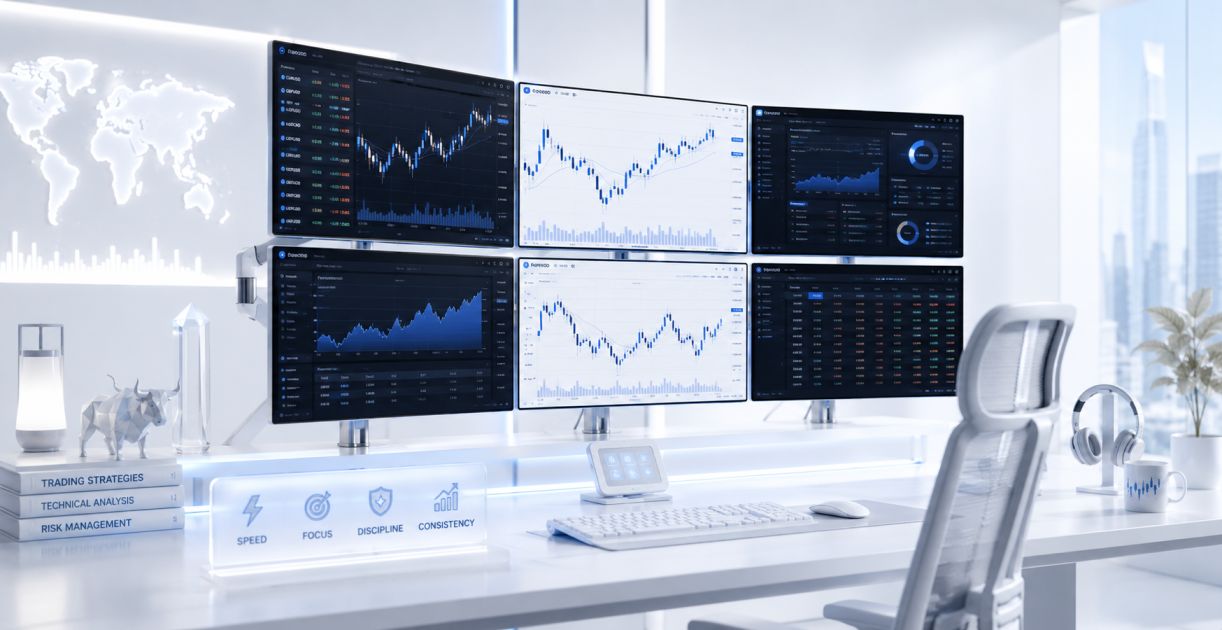
A professional scalping setup — multiple screens, real-time data feeds, and low-latency connections

Take time to compare brokers before committing real capital
How to Choose the Best Forex Scalping Broker — A Step-by-Step Approach
The forex broker landscape is crowded, and marketing material can be misleading. Here is a practical, no-nonsense approach to finding the right fit for your scalping style.
Step 1: Start With Regulation
Before anything else, check the regulatory status of every broker you consider. A broker regulated by a tier-one authority is your baseline minimum. Regulation is not a bureaucratic formality — it is the difference between your funds being protected in a segregated client account and potentially disappearing if the brokerage faces insolvency. Look for FCA (UK), ASIC (Australia), or CySEC (EU) licensing as a starting point.
Step 2: Evaluate Trading Costs Holistically
The advertised spread is rarely the full picture. Commission-based ECN accounts often show 0.0-pip raw spreads but charge a per-lot commission. Do the maths properly: a $3.50 commission on a standard lot with a 0.0 spread can still be cheaper than a commission-free account with a 1.2-pip spread, depending on your average trade size. Look at the total round-trip cost — spread plus commission — for a complete picture.
Step 3: Test Execution in Real Conditions
Open a demo account and trade it as aggressively as you would in live conditions. Pay attention to slippage, requotes, and platform behaviour during major news events like NFP or central bank announcements. If the platform struggles in demo under simulated volatility, it will almost certainly struggle with your live capital during actual market spikes.
Step 4: Scrutinise the Terms of Service
- Look for any minimum trade hold time — even five seconds can disqualify a broker for high-frequency scalping
- Check whether Expert Advisors (EAs) are fully supported on the live account environment
- Confirm whether there are any daily trade limits or maximum position size restrictions
- Verify the broker's policy on hedging, if that is part of your scalping toolkit
- Read community feedback on forums like Forex Peace Army or Trustpilot for real trader experiences
Step 5: Test Their Customer Support
When a trade is live and something goes wrong, you need support that responds in minutes, not hours. Before depositing, contact the broker's support team with a technical question. Test their live chat, email, and phone lines. A responsive, knowledgeable support team is a sign of a professionally run operation — and an absolute necessity for active scalpers.
What to Look For in a Top-Tier Scalping Broker
Rather than endorsing specific named brokers — which can change rapidly in terms of quality and terms — here are the defining features you should be actively looking for across any shortlist you build.
Broker Profile A — The Speed Specialist
The ideal speed-first broker prioritises execution infrastructure above everything else. Look for brokers that are co-located on major financial exchange servers (typically in Equinix data centres in London, New York, or Tokyo). Their spreads on EUR/USD during London open should consistently sit below 0.2 pips on ECN accounts. One-click execution with no requotes is a firm requirement. These brokers typically cater to algorithmic traders and HFT operations, meaning their infrastructure is battle-tested.
- Sub-20 millisecond order execution as standard
- Raw ECN spreads from 0.0 pips on major pairs
- Full EA and automated strategy compatibility
- Deep liquidity pools with multiple tier-one bank feeds
Broker Profile B — The Low-Slippage Operator
Slippage management is a distinct skill from raw speed. A good low-slippage broker uses intelligent order routing to match your trade with the most favourable available price across a network of liquidity providers. During volatile news events, a standard broker might slip your order by 2–5 pips. A top-tier slippage-aware broker will routinely deliver positive slippage or zero slippage on limit orders. This type of broker is ideal for scalpers who trade around scheduled news events.
- Aggregated liquidity from 10+ tier-one providers
- No dealing desk (NDD) execution model
- Transparent slippage reporting available in account statements
- Multiple account types including micro lots for position sizing flexibility
Broker Profile C — The Platform Powerhouse
Some scalpers live and die by their tools. A platform-focused broker invests heavily in charting capabilities, custom indicator support, and advanced order types. Depth-of-market (DOM) windows, one-click order entry, and the ability to place bracket orders simultaneously can meaningfully accelerate your workflow. These brokers often offer proprietary platforms alongside MetaTrader, giving you options based on your preferred workflow.
- Real-time market depth and order flow data
- Advanced charting with 100+ built-in indicators
- Customisable keyboard shortcuts for rapid order entry
- Integrated economic calendar with impact-level filters
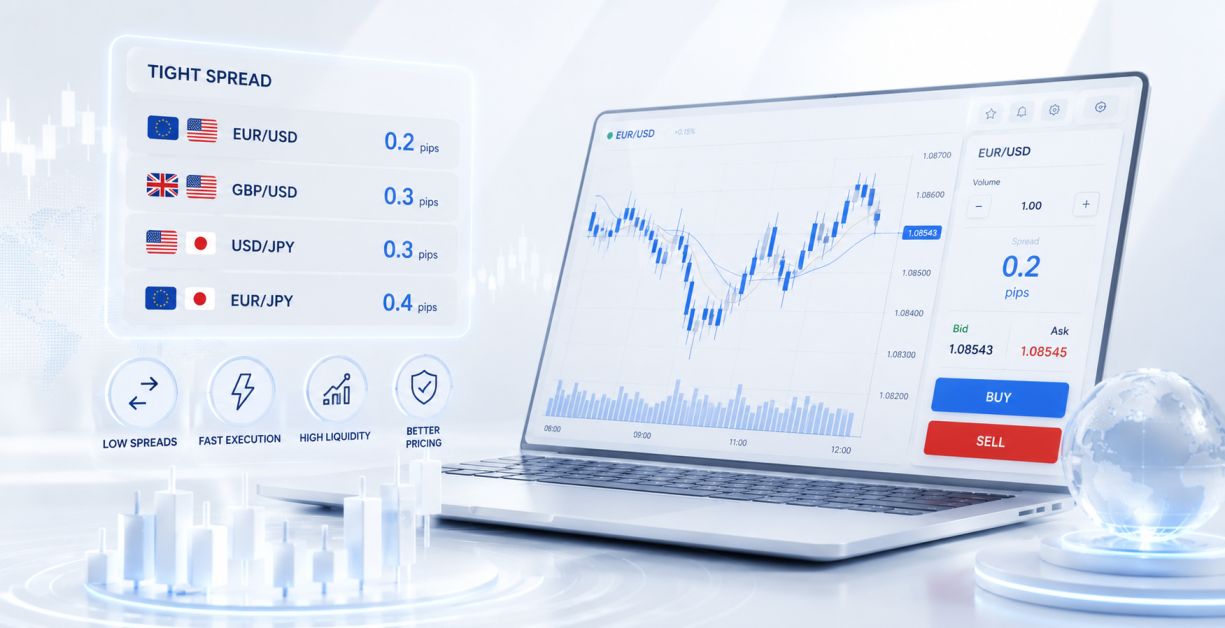
Tight spreads are visible directly on your trading platform

Volatility creates opportunity — when your broker is fast enough to keep up
Practical Scalping Tips to Maximise Your Edge
Even with the best forex broker for scalping in your corner, strategy and discipline remain the foundation of sustainable performance. Here are actionable tips used by experienced scalpers around the world.
- Stick to the highest-liquidity sessions — London and New York overlap (8am–12pm EST) offers the tightest spreads and most predictable price action
- Use limit orders where possible — they guarantee your entry price and can even generate positive slippage on quality ECN platforms
- Keep your risk per trade at 0.5–1% of account equity — high trade frequency means losses compound just as fast as gains if you oversize
- Trade the majors first — EUR/USD and GBP/USD offer the tightest spreads and deepest liquidity for scalping strategies
- Use a VPS for EA-based scalping — a virtual private server keeps your automated strategy running 24/7 with minimal latency regardless of your internet connection
- Avoid trading within 2 minutes of major news events unless your strategy is specifically built for news spikes — spreads widen dramatically in the immediate pre-release window
- Backtest extensively before going live — any scalping system should be tested across at least 200 historical trades before you risk real capital
- Keep a trading journal — recording your entries, exits, emotional state, and market context is invaluable for identifying patterns in your own behaviour
Frequently Asked Questions About Forex Scalping Brokers
Ready to Elevate Your Scalping Strategy?
Join thousands of traders who trust fxTsignals.com for expert market insights, broker comparisons, and real-time trading signals — built specifically for active scalpers who demand more from their trading environment.
See Our Recommended Regulated Brokers →