
The foreign exchange market has always been the beating heart of global finance. Trillions of dollars change hands every single day — a relentless cycle of buying, selling, and betting on the fortunes of nations. But something is shifting. The traders of tomorrow won't just be watching charts from a desktop screen; they'll be harnessing the power of artificial intelligence, riding the wave of emerging markets, and trading in ecosystems secured by blockchain. If you're a forex trader — whether you're scalping pips on a Monday morning or building long-term currency strategies — understanding what's coming next isn't optional. It's survival.
At fxTsignals.com, we keep our finger on the pulse of market evolution so you don't have to start from scratch. In this article, we break down the most powerful forces reshaping forex trading and what they mean for your strategy, your tools, and your profits.
Technological Advancements Fueling Forex Growth
1. Artificial Intelligence Is Now Your Trading Partner
Forget the image of a lone analyst buried in spreadsheets at 3 AM. Artificial intelligence has already redefined how top-tier traders approach the forex market — and it's only getting started. AI-powered systems can ingest and process data at speeds no human brain can match: economic reports, sentiment analysis from social media, central bank signals, geopolitical news — all processed in milliseconds to surface patterns invisible to the naked eye.
Machine learning models don't just react to the market. They learn from it. Every candle, every spike, every failed breakout feeds back into the model, sharpening its predictive edge. For retail forex traders, this levels a playing field that was long tilted toward institutional giants with deep pockets and Bloomberg terminals.
Practical takeaway: AI-assisted platforms now offer smart signal alerts, risk scoring, and even emotional bias detection. Start using tools that incorporate at least basic ML functionality — and stay competitive.

Artificial intelligence is not replacing the forex trader — it is transforming the forex trader into something far more powerful than before.
2. Automation & Algorithmic Trading: Speed That Never Sleeps
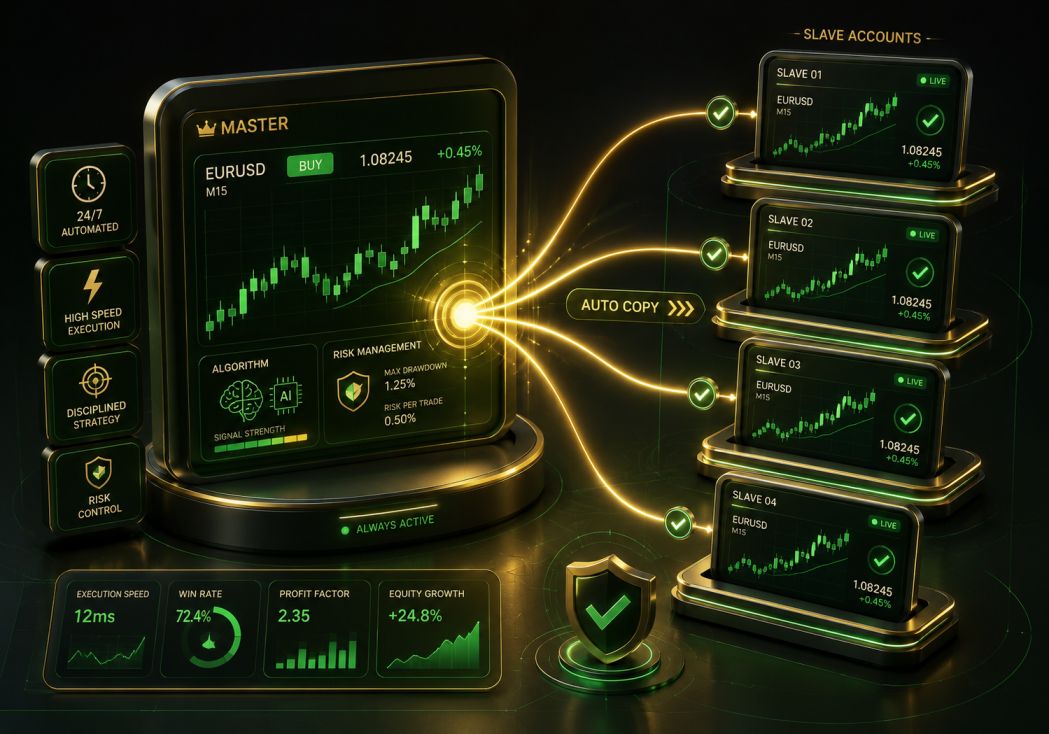
The human trader has one major weakness: they have to sleep. Algorithmic trading doesn't. Custom-built trading bots execute hundreds of rule-based trades per hour — capturing micro-movements in currency pairs that would blink past any human. The advantage isn't just speed; it's discipline. An algorithm never panics during a flash crash, never overrides a stop-loss out of hope, never revenge-trades after a losing streak.
Today's algorithmic tools are more accessible than ever. Platforms now allow retail traders to build, test, and deploy their own strategies using drag-and-drop interfaces — no coding degree required. Backtesting against 10 years of historical data takes seconds, not weeks.
- Eliminate emotional decision-making from your trade execution
- Capture opportunities across multiple pairs simultaneously
- Run consistent risk management rules on every single trade
- Test new strategies in a simulated environment before going live
3. Big Data & Quantitative Analysis: Trade on Evidence, Not Emotion
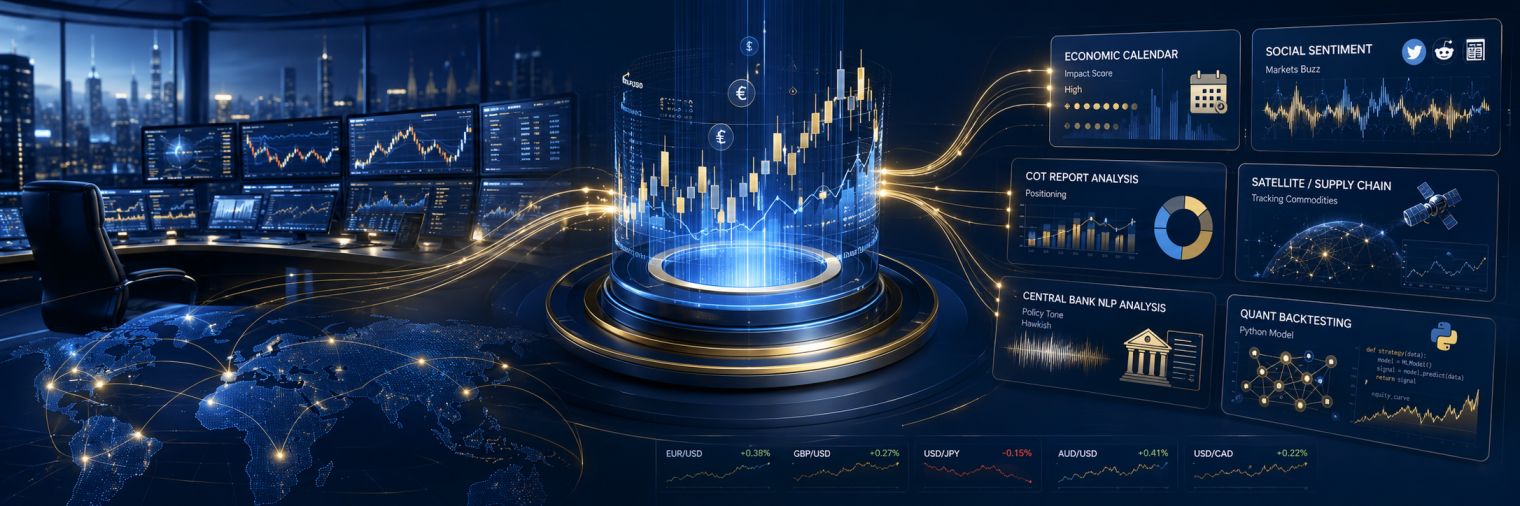
The era of gut-feel trading is fading. Big data has arrived in the forex market, and it's transforming how traders build their edge. We're talking about correlating currency movements with shipping data, tracking social media sentiment across 50 languages in real time, and cross-referencing central bank minutes with bond yield shifts — all simultaneously.
Quantitative analysts — or "quants" — have long exploited data-driven edges at hedge funds. Now, with cloud computing costs plummeting and open-source analytics tools maturing rapidly, retail traders can build their own quantitative models without a six-figure salary. Platforms like Python-driven backtesting frameworks, accessible through any laptop, put institutional-grade analysis in everyday hands.
Key Data Sources Modern Forex Traders Are Using:
- Economic calendars with real-time impact scoring
- COT (Commitment of Traders) report analysis tools
- Social sentiment aggregators tracking Twitter, Reddit, and news feeds
- Satellite data tracking commodity supply chains (affecting AUD, CAD, NOK pairs)
- Central bank speech NLP analysis for policy tone shifts
Globalization & Market Accessibility: Everyone Gets a Seat at the Table
Cross-Border Trading in a Connected World
Twenty years ago, retail forex trading required a broker relationship, significant capital, and access to dedicated trading terminals that cost thousands per month. Today, a trader in Lagos, Karachi, or Ho Chi Minh City can open an account, fund it with $100, and start executing trades on EUR/USD within the same afternoon. The democratization of forex is real — and it's still accelerating.
Online trading platforms have collapsed the geographical barriers that once protected institutional traders from retail competition. Mobile trading apps now account for a significant share of daily forex volume, with millions of traders managing positions from their smartphones during lunch breaks.
Emerging Markets: The Next Big Currency Plays
Emerging economies — from Southeast Asia to Sub-Saharan Africa — are growing at rates that make developed-world GDP look pedestrian. As these economies mature, their currencies become increasingly tradable, liquid, and volatile in ways that create genuine opportunity for informed traders. The Indonesian Rupiah, the Nigerian Naira, the Vietnamese Dong — currencies once reserved for specialist desks are now entering mainstream forex conversations.

Regulation, Blockchain & the Architecture of Trust

Stronger Regulatory Frameworks Are Good for Serious Traders
The era of wild-west forex brokers operating from unregulated jurisdictions is drawing to a close. Major regulatory bodies — the FCA in the UK, ASIC in Australia, CFTC in the US, and increasingly unified EU frameworks — are strengthening oversight, demanding segregated client funds, tighter leverage caps, and transparent pricing. For casual gamblers, this may feel restrictive. For professional traders building sustainable careers, stricter regulation is a gift.
Regulated markets reduce counterparty risk, protect your deposits, and build the kind of institutional confidence that brings deeper liquidity into the market — ultimately tightening spreads and improving execution quality for everyone.
Blockchain: The Settlement Layer of Tomorrow's Forex
Blockchain technology — the distributed ledger system underlying cryptocurrencies — holds transformative potential for forex infrastructure. Traditional currency settlement can take T+2 days; blockchain-based settlement protocols can reduce this to seconds, slashing counterparty risk and freeing up working capital. Smart contracts can automate forward contracts and FX swaps, removing human error and intermediary costs in the process.
Blockchain won't replace forex brokers overnight — but it will fundamentally change the plumbing beneath the trades, making the market faster, cheaper, and harder to manipulate.
How Blockchain Is Already Impacting FX:
- Real-time gross settlement eliminating multi-day clearing delays
- Tokenized forex pairs enabling 24/7 trading beyond traditional market hours
- Immutable audit trails reducing broker manipulation risks
- Decentralized FX protocols offering on-chain liquidity pools
Actionable Tips: How to Position Yourself for the Future of Forex
Knowing trends is one thing. Profiting from them is another. Here's how to start bridging that gap right now:
- Embrace AI-assisted platforms — Test at least one AI signal tool or smart analytics platform in demo mode before the end of this month.
- Learn Python basics — Even a beginner-level understanding lets you run quantitative backtests and automate routine analysis tasks.
- Diversify into emerging market pairs — Add one EM currency pair to your watchlist and study its macro drivers over 90 days.
- Trade only with regulated brokers — Verify your broker's license on the regulator's official register before depositing a single dollar.
- Monitor blockchain FX developments — Follow projects like Ripple (XRP), JPM Coin, and SWIFT GPI modernization efforts to stay ahead of settlement changes.
- Audit your emotional trading habits — Review your last 50 trades and identify how many were driven by FOMO, revenge, or hope rather than your system.
Frequently Asked Questions
AI is making sophisticated analysis tools previously only available to institutional traders accessible to everyday retail traders. From smart signal generation and pattern recognition to sentiment analysis and automated risk management, AI-powered platforms help retail traders make more data-driven, less emotional decisions. The barrier to entry is lower than ever, with many platforms offering AI-assisted features at low monthly costs or even free tiers.
Algorithmic trading has a learning curve, but it's no longer exclusively the domain of coders and quants. Modern platforms offer visual strategy builders, pre-built algorithm templates, and extensive backtesting tools. Beginners should start by studying how simple rule-based systems work — for example, a moving average crossover strategy — before attempting to build or deploy more complex systems. Always test thoroughly in demo mode before live trading.
Several emerging market currencies are attracting growing trader interest. The Indian Rupee (INR), Brazilian Real (BRL), South African Rand (ZAR), and Mexican Peso (MXN) are among the more liquid EM pairs. Each is driven by a unique mix of commodity prices, central bank policy, and political stability. Traders should study the macro fundamentals of each economy before entering positions, as EM currencies can exhibit sharp volatility around elections, rate decisions, and commodity price swings.
Blockchain addresses several pain points in traditional forex infrastructure. It can reduce settlement times from days to seconds, create tamper-proof records of all transactions, eliminate some intermediary layers (reducing costs), and enable smart contracts to automate complex FX agreements. While widespread adoption is still in progress, blockchain-based settlement pilots from major banks and FX platforms are showing genuine promise in improving market efficiency and transparency.
Stronger regulation is a net positive for serious, professional forex traders. It protects trader deposits through segregation requirements, reduces broker manipulation through transparency rules, and improves overall market integrity. While tighter leverage limits may reduce short-term profit potential for some strategies, the increased trust and liquidity that come with well-regulated markets tend to benefit disciplined long-term traders. Always verify that your broker holds a current license from a recognized regulatory authority before depositing funds.
Ready to Trade Smarter in the New Forex Landscape?
The future of forex trading belongs to those who prepare now — not those who adapt later. Join thousands of traders at fxTsignals.com who are already leveraging AI-driven signals, real-time market analysis, and expert strategy insights to stay ahead of the curve.
Start Copy Trading with fxTsignals →Disclaimer: This article is for informational and educational purposes only and does not constitute financial advice. Forex trading carries significant risk and may not be suitable for all investors. Always conduct your own research and consult a qualified financial advisor before making any trading decisions.