Is Forex Trading Halal in Islam?
The Truth Every Muslim Trader Needs to Know
Millions of Muslim investors are turning to the forex market — but the big question remains: does currency trading align with Islamic principles? We break down the rulings on riba, gambling, and ethical trading, so you can trade with full confidence.
Why This Question Matters More Than Ever
Forex trading has exploded in popularity — and Muslim traders are no exception to that trend. Walk into any financial community from Dubai to Jakarta, and you will find Muslim investors eagerly exploring currency markets in search of legitimate, ethical income. But before a single trade is placed, a critical question must be answered: is forex trading halal or haram?
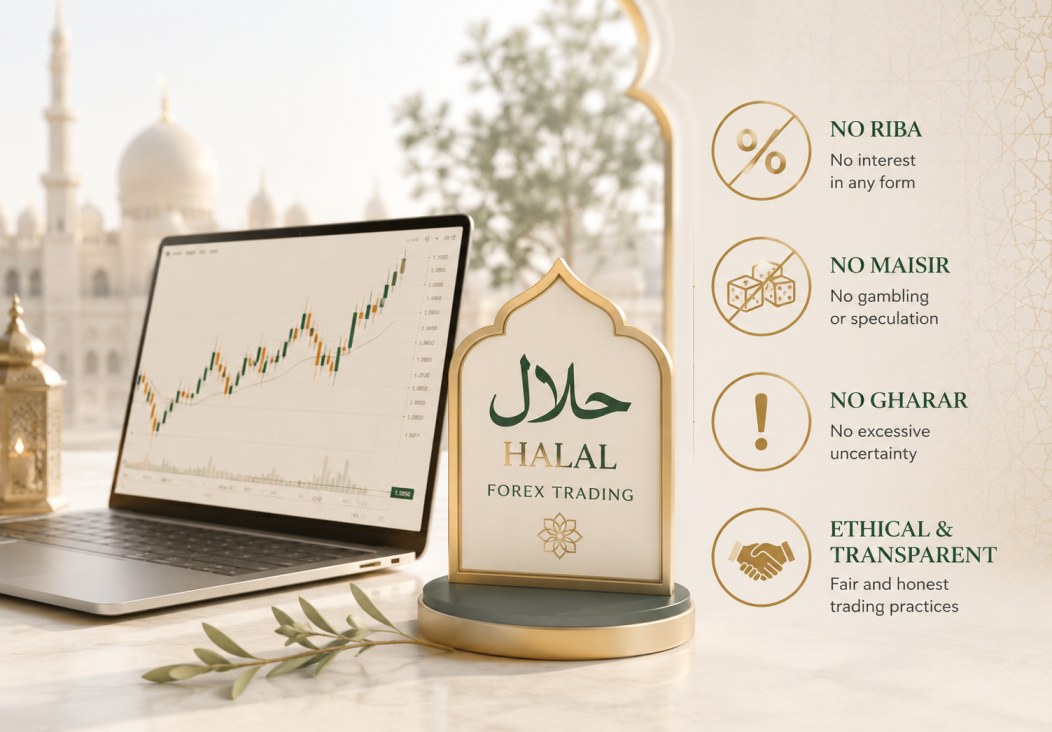
The answer is not a simple yes or no. Like most financial questions in Islamic jurisprudence, the permissibility of forex trading depends entirely on how you trade — not just the act of trading itself. Interest charges, speculative gambling, and unethical broker practices can all turn a potentially halal activity into something clearly prohibited. And knowing the difference is the difference between blessed profit and forbidden gain.
This guide cuts through the confusion. We will walk through the core Islamic principles — riba, maysir (gambling), and gharar (uncertainty) — and show you exactly how each one applies to the modern forex market. Whether you are brand new to trading or a seasoned investor looking for clarity, this is the complete resource you have been searching for.
Understanding the World's Largest Financial Market
Forex trading — short for foreign exchange trading — is the simultaneous buying of one currency and selling of another. Traders profit when the exchange rate moves in their favour. If you buy the Euro against the US Dollar and the Euro strengthens, you make a profit when you close the trade.
The forex market runs around the clock, five days a week, and sees daily trading volumes exceeding $7.5 trillion. It is by far the largest and most liquid financial market on the planet — bigger than all the world's stock markets combined.
What Islam Says About Speculation
Islam is not opposed to trade or profit-seeking. In fact, the Quran encourages commerce and the pursuit of fair gain. What Islam guards against is reckless speculation driven by pure chance — the kind that resembles gambling. Informed, knowledge-based decision-making, on the other hand, is widely considered permissible by Islamic scholars.
"Allah has permitted trade and has forbidden usury." — Quran (2:275)
Riba: The Non-Negotiable Prohibition in Forex
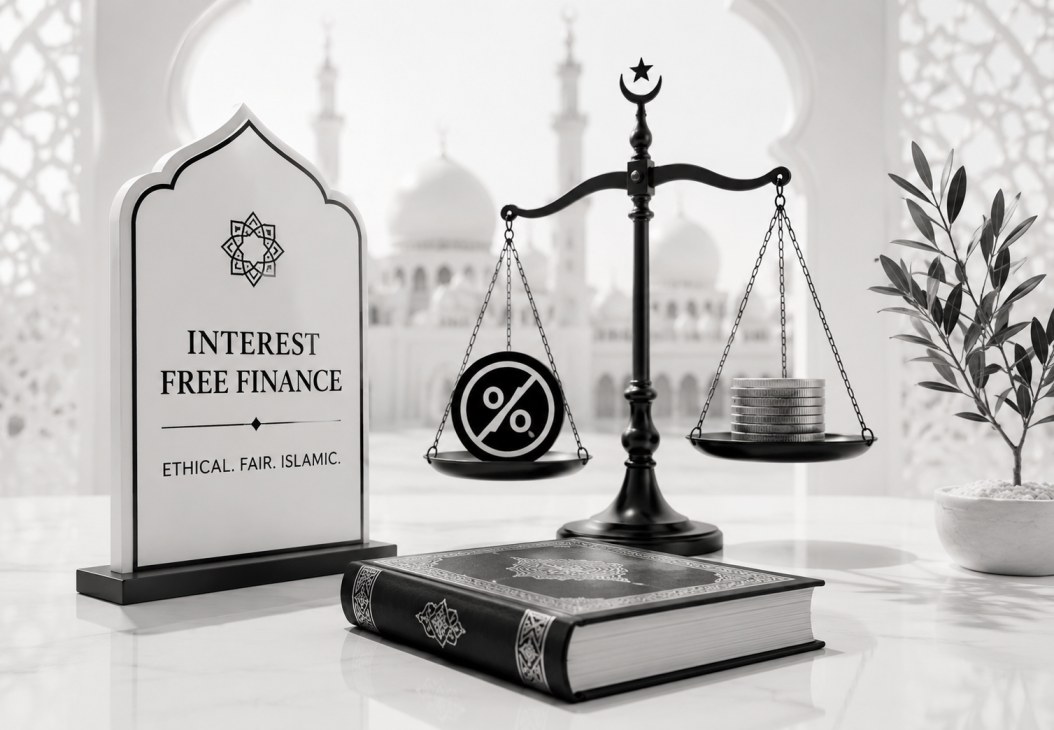
Riba — the Arabic term for interest or usury — is one of the most strictly forbidden elements in Islamic finance. The prohibition is unambiguous, repeated throughout the Quran and Hadith, and applies universally to both giving and receiving interest. Riba exploits financial vulnerability, creates economic inequality, and transfers wealth without productive effort.
So how does riba connect to forex trading? The answer lies in something many retail traders encounter every single day: the overnight swap fee — also called the rollover rate. When you hold a forex position open past the daily cut-off time (typically 5 PM New York time), most brokers charge or credit you an interest-based fee that reflects the interest rate differential between the two currencies in the pair you are trading.
Spot Forex vs. Forward Contracts
Spot forex trading — where currencies are exchanged for immediate delivery and the transaction is settled on the spot — is generally viewed as permissible by Islamic scholars, because no interest is involved in the transaction itself. The exchange happens hand-to-hand, meeting the Islamic requirement for prompt settlement in currency dealings.
Forward contracts and currency futures, by contrast, involve deferred delivery and often include interest-based pricing mechanisms, making them far more contentious from an Islamic standpoint.
Does Margin Trading Violate Riba Rules?
Margin trading — borrowing capital from a broker to open positions larger than your account balance — is where many Muslim traders hit a grey area. The broker charges interest on the borrowed amount overnight. Most Islamic scholars consider this form of borrowing-with-interest to be a clear violation of riba, making conventional margin trading haram. However, Islamic (swap-free) accounts were specifically designed to remove this element, replacing interest charges with fixed administrative fees instead.
Is Forex Trading Just Another Form of Gambling?
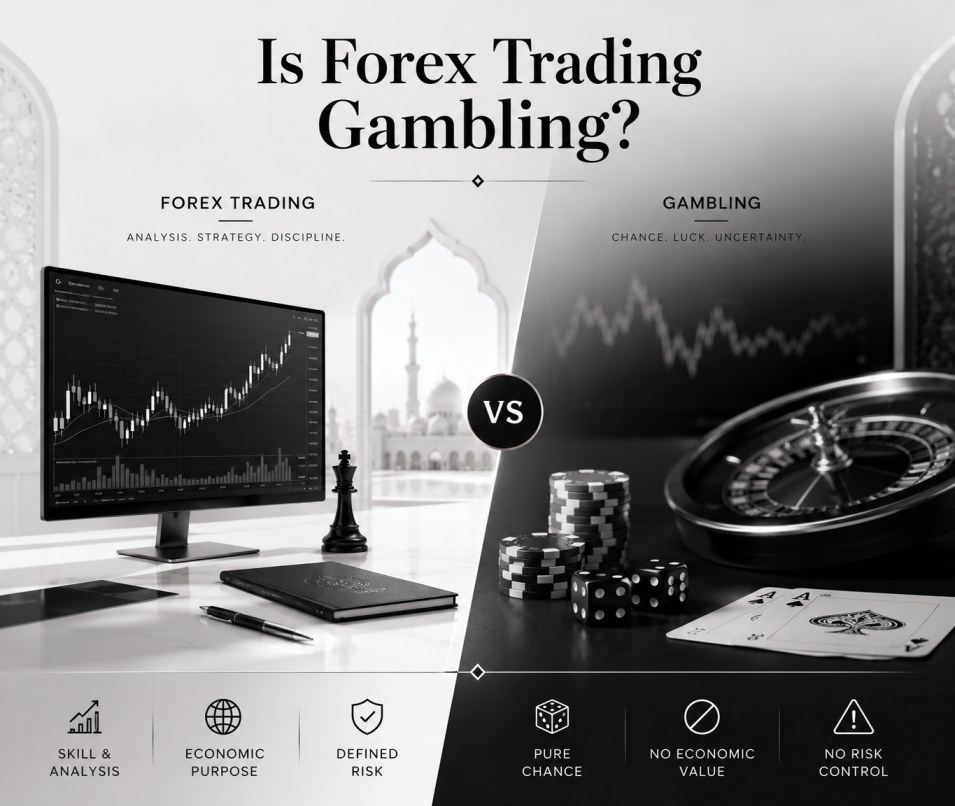
This is the objection most commonly raised by those who question the halal status of forex. On the surface, forex trading shares similarities with gambling: both involve uncertainty, risk, and the possibility of losing money. But the similarities end there.
Key Differences Between Forex and Gambling
- Skill vs. Pure Chance — Forex traders rely on technical analysis, economic fundamentals, and risk management strategies. Gambling outcomes are determined entirely by chance, with no skill factor involved.
- Economic Purpose — Currency exchange facilitates real-world commerce. International businesses, importers, exporters, and travellers all need forex markets to function. Gambling creates no economic value.
- Defined Risk — Responsible forex traders use stop-loss orders and position sizing to control their exposure. Gambling typically offers no such structured risk management.
- Market Transparency — Forex pricing is driven by macroeconomic data, geopolitical events, and central bank policies — factors traders can research and analyze.
- Excessive Speculation Warning — That said, Islam's concern remains valid when traders abandon analysis and start placing highly leveraged, emotionally-driven trades. This behaviour does cross into the territory of maysir (gambling) and must be avoided.
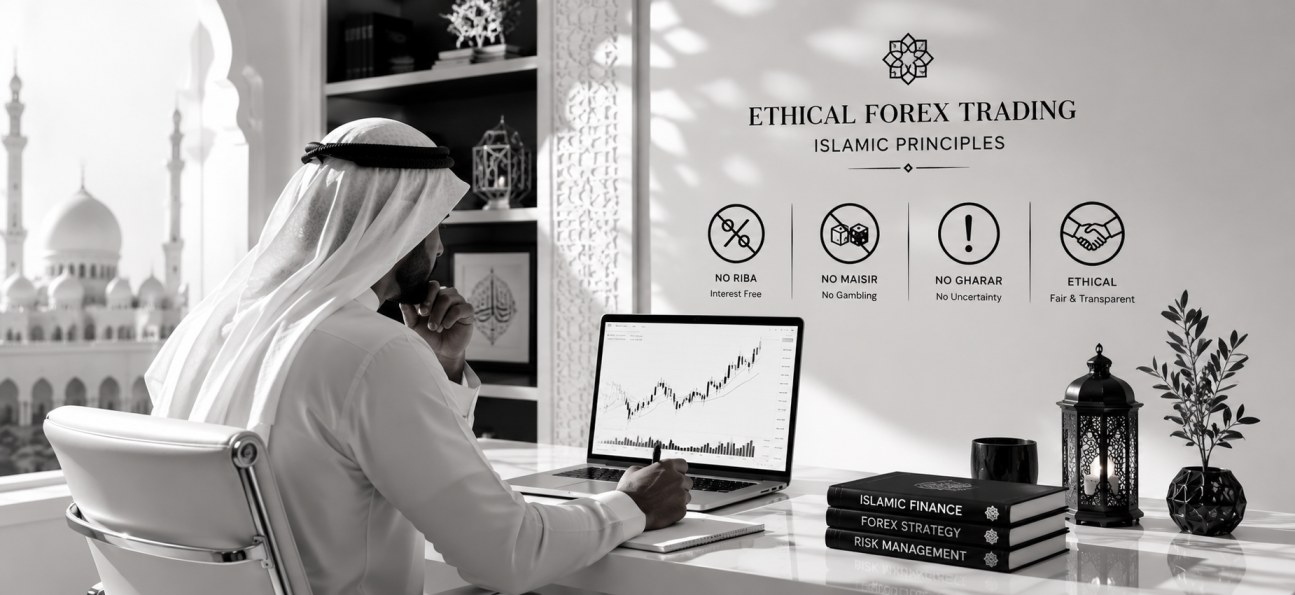
Ethical Trading: The Islamic Standard Every Muslim Trader Must Meet
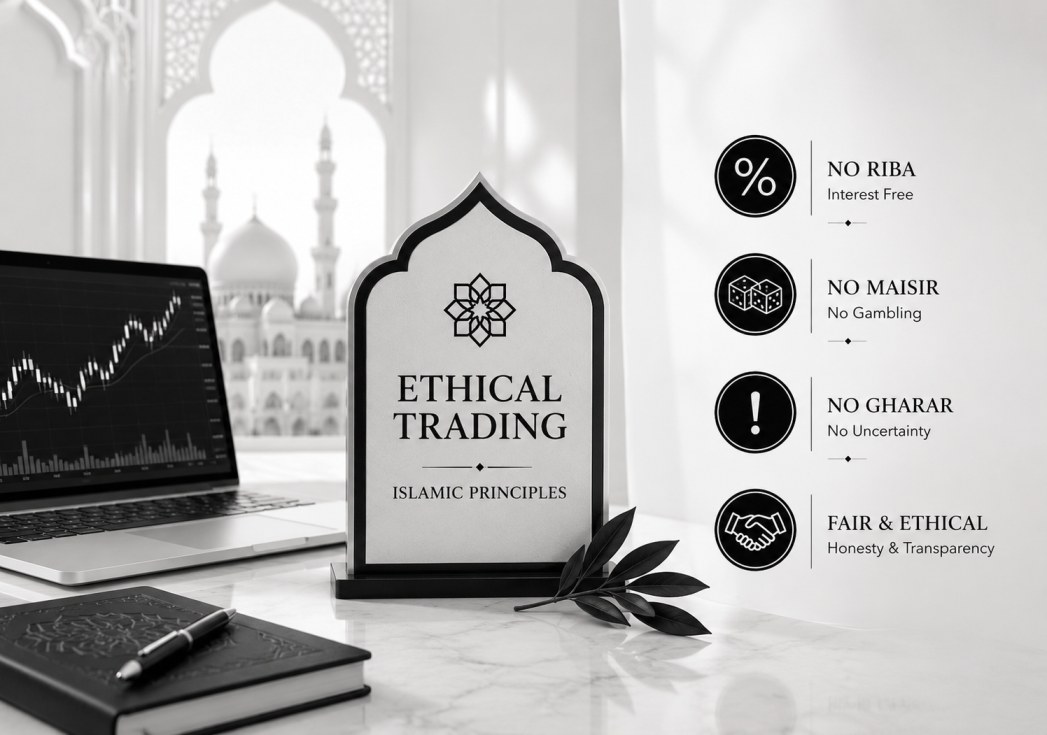
Honesty, Transparency, and Fair Dealing
Islam places enormous weight on ethical conduct in all forms of commerce. The Prophet Muhammad ﷺ was himself a successful merchant, and his conduct in trade became a model for Muslim business ethics for centuries. In forex trading, this translates directly into a clear set of expectations:
- No Market Manipulation — Spreading false information to move prices, coordinating to manipulate currency pairs, or engaging in any deceptive price action is strictly haram.
- No Insider Trading — Using confidential government or central bank information before it is publicly available is both illegal and Islamically impermissible.
- Honest Broker Relationships — Choose regulated, transparent brokers who disclose all fees and conditions upfront. Hidden charges or manipulated spreads violate the principle of honest dealing.
- Avoiding Excessive Leverage — While leverage itself is not inherently forbidden, using it to take reckless, unmanaged positions pushes trading into the realm of gharar (harmful uncertainty).
Forex markets are naturally volatile, and some degree of short-term speculation is inevitable. But there is a meaningful difference between a trader who sizes positions carefully, uses stop-losses, and bases decisions on genuine market analysis — and one who is essentially gambling with leverage, chasing losses, and acting with reckless disregard for financial consequences. The former is consistent with Islamic ethics; the latter is not.
"Whoever would love to meet Allah as a Muslim, let him treat the people the way he would love to be treated." — Prophet Muhammad ﷺ
How to Make Your Forex Trading Halal — Practical Steps
- Open an Islamic (Swap-Free) Account — Ask your broker specifically for a swap-free or Islamic account. This eliminates overnight interest charges and brings your trading in line with riba-free requirements.
- Trade Spot, Not Futures — Stick to spot forex transactions where settlement is immediate, rather than forward contracts or options that involve deferred delivery.
- Use Only Your Own Capital — Avoid borrowing money on interest to fund your trading. Trade with capital you own outright.
- Build a Knowledge Base First — Informed, analysis-driven trading distinguishes forex from gambling. Invest time in learning before investing money.
- Set Strict Risk Limits — Never risk more than you can afford to lose. Use stop-loss orders and position sizing to keep exposure controlled and rational.
- Choose Regulated, Ethical Brokers — Verify your broker is regulated by a reputable authority (FCA, ASIC, CySEC) and operates with full transparency.
- Seek Scholar Guidance — For personal situations, especially if you trade professionally, consult a qualified Islamic finance scholar for a fatwa that addresses your specific circumstances.
Frequently Asked Questions
Forex trading is not inherently haram. Its permissibility depends on the conditions under which it is conducted. Spot forex trading without interest (riba), executed without deception or excessive speculation, and carried out with an Islamic (swap-free) account is considered halal by a majority of Islamic finance scholars. What makes forex haram are elements like interest-based swaps, unethical practices, and gambling-like behaviour with no analytical basis.
An Islamic forex account — also called a swap-free account — is designed specifically for Muslim traders. It eliminates overnight interest (swap) charges that would otherwise apply when holding positions open past the daily rollover time. Instead, the broker may charge a small fixed administrative fee. Most Islamic scholars consider this structure permissible, though the legitimacy of specific accounts should always be verified with a qualified scholar, as some brokers disguise interest as "administrative fees" in a way that still violates riba prohibitions.
No — but it can become gambling if approached irresponsibly. Forex trading is based on analysis, economic data, risk management, and market knowledge. Gambling relies purely on chance with no rational basis. However, when a trader ignores analysis, uses extreme leverage recklessly, chases losses emotionally, or treats trading as entertainment rather than a disciplined financial activity, the line between forex trading and maysir (gambling) can blur. Islam condemns the behaviour — the mindset of pure speculation — not the market itself.
This is a nuanced question. Leverage itself is not automatically haram, but conventional leveraged trading often involves borrowing money from a broker at interest — which is riba. On Islamic swap-free accounts, the interest component is removed. Even so, excessive leverage that leads to reckless, gambling-like trading behaviour introduces elements of gharar (harmful uncertainty) and maysir. Most scholars advise Muslim traders to use leverage conservatively and only within the structure of a properly structured Islamic account.
While it is not strictly required for every individual to obtain a personal fatwa, it is strongly advisable — particularly if you intend to trade professionally or invest significant capital. General guidance from this article and from established Islamic finance bodies can provide a solid foundation. However, your specific circumstances — the broker you choose, the account type, your trading strategies, and your intentions — may affect permissibility in ways that only a qualified Islamic scholar can properly assess. At fxTsignals.com, we always encourage seeking qualified religious guidance before committing to any trading activity.
Trade Smart, Trade Ethically, Trade with Confidence
The question of whether forex trading is halal in Islam does not have a single, universal answer — and that is actually a good thing. It means the decision is in your hands, guided by your intentions, your methods, and your commitment to Islamic principles. The market itself is not the enemy. Riba, deception, and reckless gambling are.
When approached correctly — through an Islamic swap-free account, with disciplined risk management, honest broker relationships, and decisions grounded in genuine market analysis — forex trading can be a legitimate and even productive means of earning income for Muslim traders around the world.
The key principles to carry forward are straightforward: avoid interest in all its forms, never deceive or manipulate, do not gamble with your capital, and always seek knowledge before seeking profit. At fxTsignals.com, these values are not just compliance checkboxes — they are the foundation of everything we believe trading should be.
"Do good deeds properly, sincerely, and moderately. Always adopt a middle, moderate, regular course — whereby you will reach your target." — Prophet Muhammad ﷺ
Get professional forex signals, Islamic account guidance, and expert market analysis — designed specifically for Muslim traders who refuse to compromise on their values.