
Every year, millions of people are drawn to the forex market with one goal in mind — financial freedom. The allure of round-the-clock trading, global currencies, and massive liquidity makes it one of the most exciting financial arenas on the planet. But here's the honest truth: most retail traders struggle not because the market is unfair, but because they never learn to think like a professional.
So what separates a seasoned currency trader from someone who blows their account in three months? It's not a magic indicator. It's not a paid signal group. It's a combination of mindset, method, and discipline that takes deliberate effort to develop. In this guide, we break down the real strategies, habits, and mental frameworks that professional forex traders use every single day — and how you can apply them too.

The Trader's Mindset: Treating the Market Like a Battlefield
Professional forex traders don't just study charts — they study themselves. The market doesn't know who you are or what you need. It doesn't care about your mortgage, your goals, or how long you've been watching a particular currency pair. What it rewards is clarity, preparation, and the ability to make rational decisions under pressure.
Think of every trade as a calculated military operation. Before a professional enters a position, they've already mapped out the terrain: where is the entry? Where is the stop? Where is the target? What are the conditions that would invalidate the setup? Only when those questions are answered does the trade get taken.
Forex trading is like a battlefield. Every decision and trade is a strategic move made under intense pressure. It's about managing risk, spotting opportunities, and staying disciplined.
— John Mason, Professional Forex TraderThis battlefield mindset removes impulsive decision-making from the equation. You're no longer reacting emotionally to a candle that moved the wrong way — you're executing a plan you already made with a calm, clear head. That shift in perspective alone can transform your results dramatically.

Emotional Discipline: The Skill Nobody Talks About Enough
Ask any experienced forex trader what their biggest challenge has been, and the answer is almost never "finding a good strategy." It's almost always some version of "staying disciplined when things go against me." Emotional discipline is arguably the most important — and most overlooked — skill in trading.
Why Emotions Are the Enemy of Profit
Fear causes you to exit winners too early. Greed makes you hold losers hoping for a reversal. Impatience leads you to trade setups that don't meet your criteria. All three of these impulses feel perfectly logical in the moment and destroy accounts over time. Professional traders have developed systems to protect themselves from their own worst instincts.
- They journal every trade — entry, exit, reasoning, and emotional state at the time
- They never deviate from their pre-set stop-loss levels once in a trade
- They step away from screens after a losing streak to reset their mental state
- They avoid trading during major news events unless it's part of their strategy
- They treat a string of losses as data, not as personal failures
Actionable Tip: Before each trading session, write down your emotional state in one sentence. If you're anxious, angry, or overconfident, consider sitting out. The market will be there tomorrow — your capital might not be if you trade recklessly today.
Technical Analysis: Reading the Story the Chart Is Telling
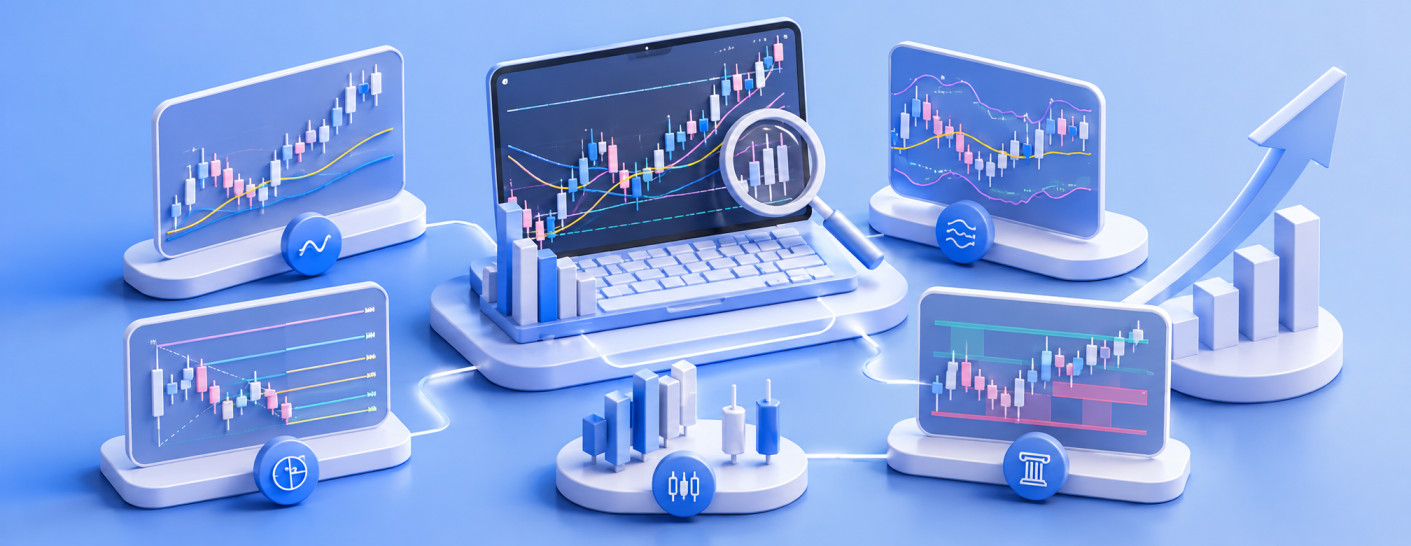
Technical analysis is the foundation of most professional forex trading strategies. At its core, it's the practice of studying price history to identify patterns, trends, and potential future movements. While no method is perfect, technical analysis gives traders a probabilistic edge — a way to identify high-probability setups rather than just guessing.
The Tools That Actually Matter
Professional traders don't load their charts with twenty indicators. They typically rely on a clean, focused setup built around a few key tools they understand deeply rather than many tools they understand superficially. Here's what the pros commonly use:
- Moving Averages (MA / EMA): Used to identify trend direction and dynamic support/resistance levels. The 50 EMA and 200 EMA are particularly popular for confluence
- Fibonacci Retracements: Helps identify potential pullback zones within a trending market, allowing traders to enter at better prices
- Bollinger Bands: Measures volatility and helps identify when a currency pair is overextended or consolidating before a breakout
- Price Action & Candlestick Patterns: Reading raw price movement — pin bars, engulfing candles, inside bars — to understand the psychology of market participants
- Support & Resistance Levels: The most fundamental concept in technical analysis, these zones show where price has historically reacted
The real skill lies in combining these tools with context. A pin bar at a major support level that also aligns with a 61.8% Fibonacci retracement and the 200 EMA? That's the kind of high-confluence setup that pros wait for patiently. They don't force trades — they let the market come to them.

Fundamental Analysis: Understanding the 'Why' Behind Currency Moves
Technical analysis tells you what price is doing. Fundamental analysis tells you why. While many retail traders focus exclusively on charts, professional traders understand that currency values are ultimately driven by macroeconomic forces — and ignoring those forces means trading blind.
What Moves Currency Pairs?
Every major currency move has a story behind it. Central bank interest rate decisions, inflation data, employment reports, political instability, and trade balances all influence how much a currency is worth relative to others. A trader who understands these forces can anticipate market reactions rather than just reacting to them.
Fundamental analysis is the backbone of successful forex trading. It's essential to stay informed about economic data, monetary policies, and global events to make informed trading decisions.
— Michelle Carter, Forex Trading Expert- Interest Rate Decisions: Higher interest rates attract foreign capital, strengthening a currency. Always watch central bank meetings (Fed, ECB, BOE, BOJ)
- Inflation Data (CPI/PPI): High inflation often signals upcoming rate hikes, which can move currency pairs by hundreds of pips
- Non-Farm Payrolls (NFP): The most-watched US economic report, capable of creating explosive volatility in USD pairs
- GDP Data: Shows the overall health of an economy — strong GDP growth generally supports the domestic currency
- Geopolitical Events: Elections, trade wars, sanctions, and conflicts can all create sharp, unpredictable currency moves
You don't need to be an economist to use fundamental analysis effectively. Even a basic habit of checking the economic calendar each morning and noting which major data releases are scheduled can protect you from getting caught in surprise volatility — and help you position for it when appropriate.
Risk Management: The One Rule That Determines Who Survives Long-Term
Here's a hard truth that most new traders learn the expensive way: you don't need a high win rate to be profitable. A trader who wins 45% of their trades but consistently targets 2:1 or 3:1 risk/reward ratios will outperform a trader who wins 70% of the time but takes poor risk/reward trades. Risk management is the great equalizer in forex.
The Professional's Risk Framework
Most professional traders risk no more than 1–2% of their total trading capital on any single trade. This might sound overly cautious — but consider this: at 1% risk per trade, you could have 50 consecutive losing trades before your account is cut in half. That's virtually impossible for a trader with a sound strategy. This kind of capital preservation is what allows pros to stay in the game long enough to compound their returns.

- Always define your stop-loss before entering a trade — never trade without one
- Calculate your position size based on your stop distance and account risk percentage, not gut feel
- Use a minimum 2:1 reward-to-risk ratio on every trade you take
- Diversify across uncorrelated pairs — avoid having EUR/USD and EUR/GBP open simultaneously as large sizes
- Reduce position sizes during periods of high volatility or personal emotional stress
- Never add to a losing position ("averaging down") — this is one of the fastest ways to blow an account
- Review your overall portfolio exposure regularly, not just individual trades
Beyond position sizing, professional traders also manage their trading schedule like a business. They know which sessions are most active for their chosen pairs (London and New York overlap is notoriously the most volatile for major pairs), and they avoid trading during thin, illiquid periods where spreads widen and moves can be erratic.
Pro Tip: Before every trade, ask yourself: "If this goes wrong and I hit my stop, will I be okay?" If the honest answer is "not really" — reduce your size. Trading scared leads to poor decisions. Only risk what you can genuinely absorb without it affecting your judgment.
Building a Trading System That Works for You
Every professional trader eventually arrives at a personal trading system — a set of rules that defines when to trade, what to trade, and how to manage every trade from entry to exit. This system isn't borrowed wholesale from someone else. It's developed through trial, error, backtesting, and refinement over time.
The Core Components of a Robust Trading System
- Market Selection: Specialize in two to four pairs rather than jumping between everything. Know your pairs like old friends
- Timeframe Clarity: Decide your primary trading timeframe (H4, Daily) and your entry timeframe (H1, M30) and be consistent
- Entry Rules: Define exactly what conditions must be present before you enter — and stick to those rules with no exceptions
- Exit Rules: Know in advance where you'll take profit. Partial take-profit at 1:1 and let the rest run to 2:1 is a common professional approach
- Trade Review: Weekly review of all trades taken — what worked, what didn't, and why — is non-negotiable for improvement
The goal isn't perfection — it's consistency. A simple system executed with discipline will always outperform a complex system that gets second-guessed at every turn. Start simple. Prove your edge. Then refine.
Most professional traders honestly report it took two to five years of active learning, demo trading, and live trading with small capital before they achieved consistency. There's no shortcut — the learning curve involves real losses and real lessons. What you can do is accelerate the process by studying systematically, keeping a detailed trading journal, and focusing on risk management from day one rather than chasing quick profits.
The honest answer: both matter, and the best traders use both. Technical analysis helps you time your entries and exits with precision. Fundamental analysis helps you understand the bigger picture — why a currency is trending in a particular direction and whether that trend has legs. Using them together gives you a much fuller picture than relying on either in isolation. At minimum, know your economic calendar so you're never blindsided by a major data release.
Undoubtedly, it's poor risk management — specifically, risking too much capital on individual trades. Many beginners risk 10–20% per trade because they're chasing fast profits, which means a few bad trades can wipe out months of gains. Alongside that, overleveraging is a close second. High leverage amplifies losses just as much as gains. Start with low leverage, risk 1% or less per trade, and focus on learning rather than earning in your first year.
Professional-grade signal services provide entry, stop-loss, and take-profit levels based on in-depth analysis. Experienced traders use these as a supplementary tool — they cross-reference signals against their own analysis to confirm alignment before acting. Signals are most valuable as an educational tool and as a time-saver for traders who've already developed a foundational understanding of the market. They're not a substitute for learning, but a useful complement to a solid trading framework.
Absolutely, it can be learned — and it must be, because nobody is naturally immune to fear and greed when real money is on the line. The most effective approach is systematic: trade with predefined rules that remove discretion from the equation, keep a trading journal to identify emotional patterns, and practice mindfulness or journaling outside of trading to build general self-awareness. Over time, the habits become automatic. Many of the world's top traders openly credit their emotional discipline as the single biggest contributor to their long-term success.
Ready to Trade Smarter?
Join thousands of traders who use FxTsignals.com for precision-timed signals, in-depth market analysis, and a community built around serious, sustainable forex trading.
Start Trading with FxTsignals →