
How to Choose the Best Forex Broker
That Actually Works for You
Your complete, no-fluff guide to finding a regulated, trustworthy forex broker — and starting your trading journey on solid ground.
The Broker Decision That Can Make or Break Your Trading Career
Here's something most new traders learn the hard way: your trading strategy is only as strong as the broker supporting it. You could have the sharpest analysis, the most disciplined mindset, and a rock-solid risk management plan — and still lose money because of a broker that slips on spreads, delays withdrawals, or isn't even properly regulated.
The global forex market processes over $7.5 trillion in trades every single day. With that much money moving around, hundreds of brokers are competing for your account. Not all of them deserve it. Choosing the right forex broker isn't just a checkbox — it's a foundation. This guide will walk you through every factor that matters, so you can trade with confidence and focus on what you're actually here for: growing your capital.
Before depositing a single dollar, always verify a broker's regulatory status directly on the regulator's official website — not just on the broker's homepage.
Regulation & Safety: The Non-Negotiable First Step
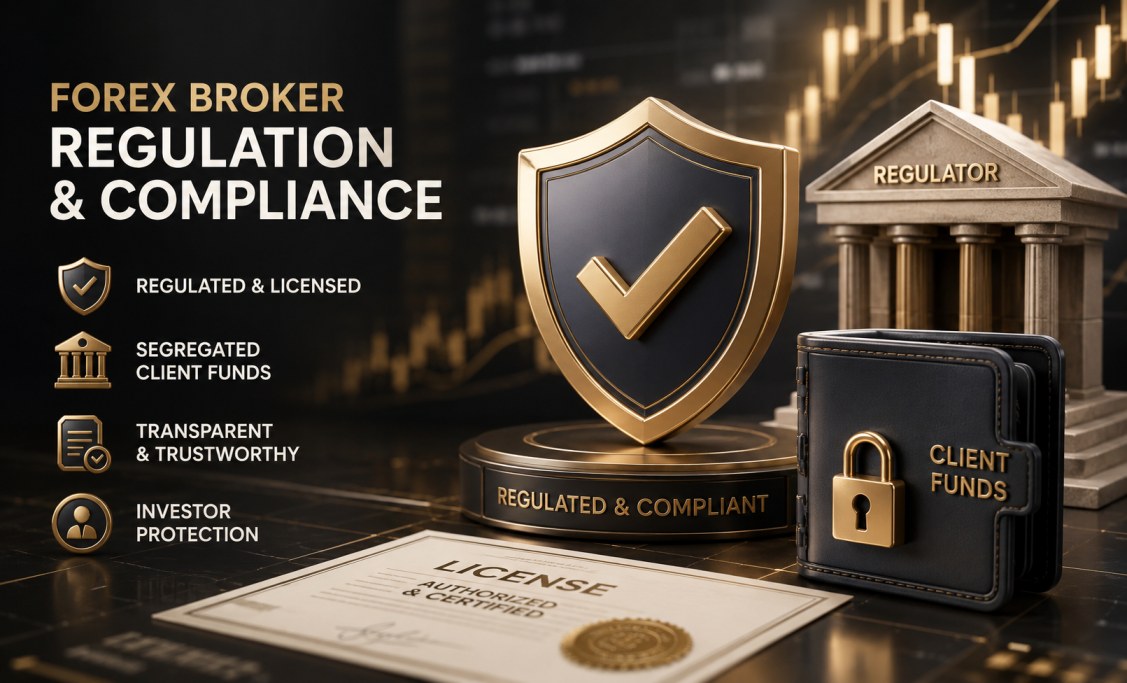
When it comes to forex trading, regulation isn't just a nice-to-have — it's the bare minimum. A properly regulated broker operates under strict rules designed to protect your money and ensure fair dealing. Without regulation, there's nothing stopping a broker from manipulating spreads, freezing accounts, or disappearing with client funds overnight.
Look for brokers licensed by globally respected authorities like the Financial Conduct Authority (FCA) in the UK, the Australian Securities and Investments Commission (ASIC), the National Futures Association (NFA) in the US, or the Cyprus Securities and Exchange Commission (CySEC). These regulators require brokers to maintain minimum capital reserves, follow anti-money laundering rules, and submit to regular audits.
Segregated Client Funds
One critical sign of a trustworthy broker is the practice of keeping your deposits in accounts that are completely separate from the broker's own operational funds. This means if the broker runs into financial trouble, your money stays protected and can be withdrawn.
- Always verify the broker's license number on the regulator's official website
- Check how long the broker has been regulated — longevity builds trust
- Look for broker participation in investor compensation schemes
- Avoid offshore brokers with little-known regulatory bodies
Understanding Trading Costs: What You're Really Paying
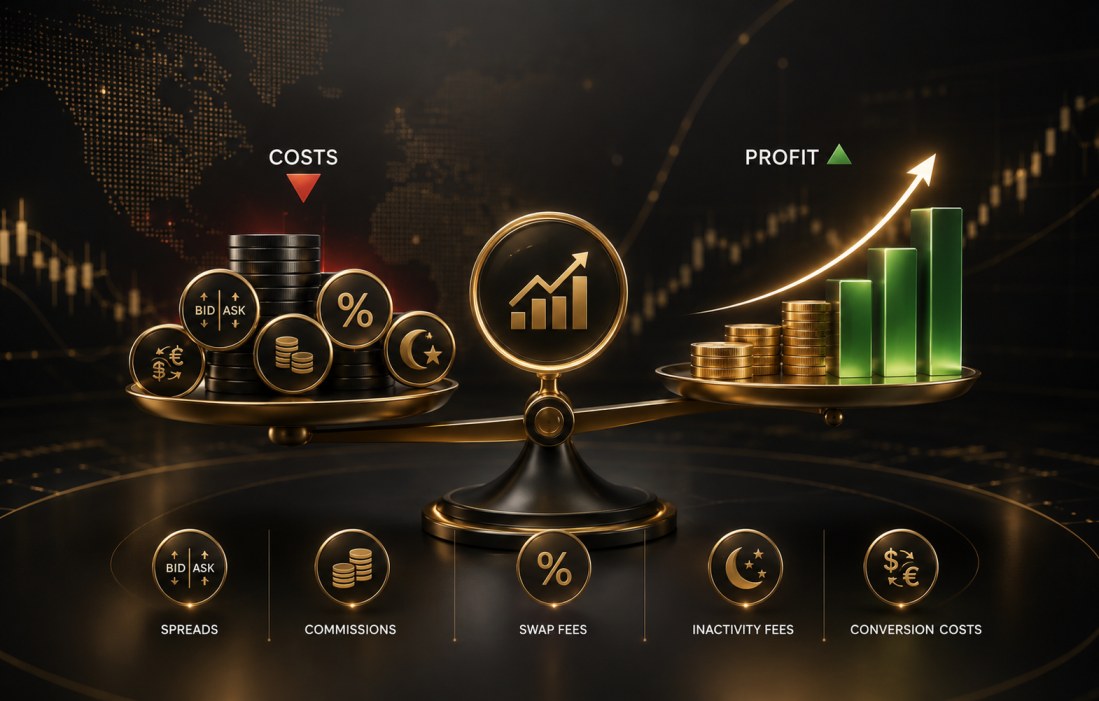
Trading costs eat into your profits quietly, and if you're not paying attention, they can turn a winning strategy into a losing one. The two main cost structures you'll encounter are spreads (the difference between the buy and sell price) and commissions (a flat fee per trade).
For high-frequency traders, even a tiny difference in spread can add up to thousands of dollars over a month. Swing traders and position traders might care less about the spread and more about overnight swap rates. Understanding your own trading style is key to knowing which cost structure works best for you.
What to Watch Out For
- Variable vs fixed spreads — variable spreads widen during news events
- Overnight swap fees on positions held past market close
- Deposit and withdrawal fees that some brokers bury in fine print
- Inactivity fees charged after a period of no trading
- Currency conversion costs if your account isn't in your base currency
Open demo accounts with 2–3 brokers you're considering and run the same trade on all of them simultaneously. The difference in execution quality and cost will become immediately obvious.
Trading Platform & Tools: Your Gateway to the Market
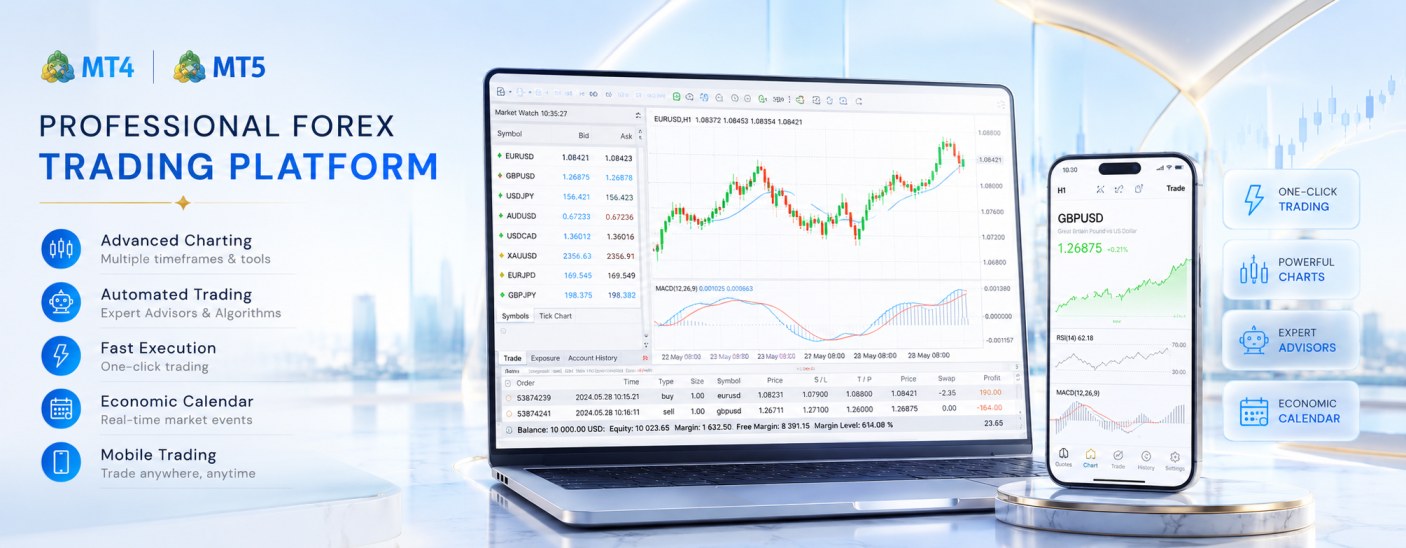
Your trading platform is where every decision gets made. It needs to be fast, reliable, and packed with the tools your strategy requires. MetaTrader 4 (MT4) and MetaTrader 5 (MT5) remain the industry standard for a reason — they offer powerful charting, extensive indicator libraries, and support for automated trading through Expert Advisors. But don't overlook brokers offering their own proprietary platforms, which can sometimes be more intuitive and innovative.
Test the demo version seriously. Not just for 10 minutes — trade it like real money for at least a week. Pay attention to how quickly orders execute, whether charts load smoothly, and how well the mobile app performs when you're away from your desk.
- One-click trading — crucial for scalpers and fast-moving markets
- Advanced charting with multiple timeframes and drawing tools
- Automated trading support (EAs, bots, algorithmic strategies)
- Mobile trading app — stable and full-featured, not a stripped-down version
- Economic calendar integration for news trading setups
Range of Instruments: More Than Just Currency Pairs
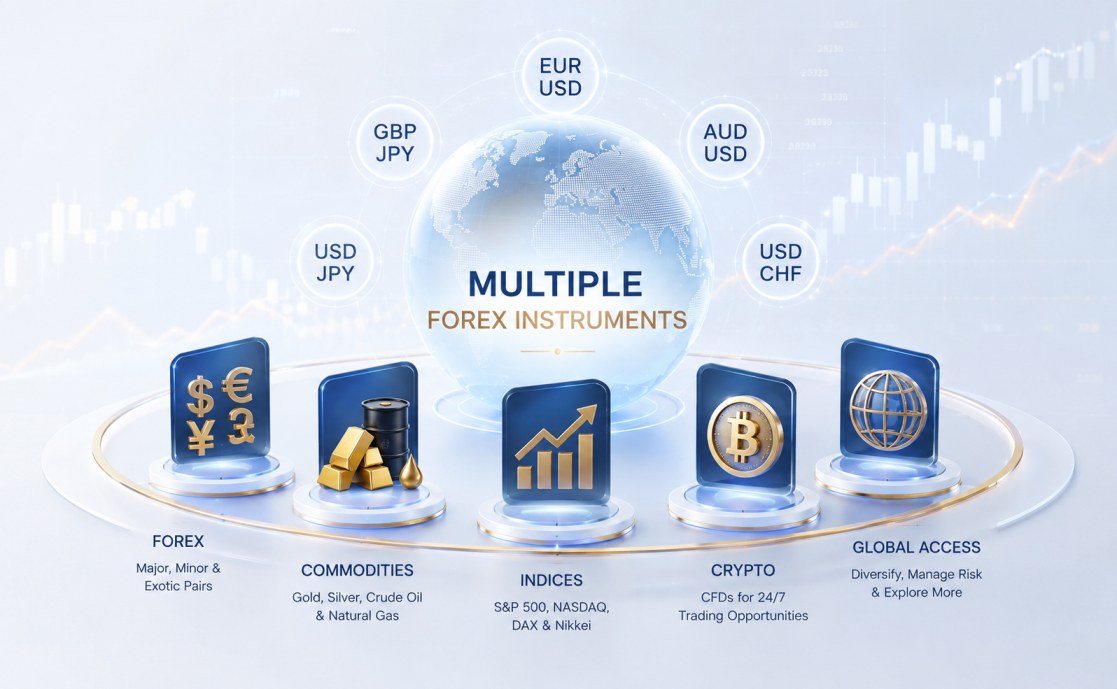
A well-rounded broker gives you access to more than just major forex pairs. As your trading skills develop, you'll want to explore commodities like gold and oil, global indices, and even cryptocurrencies. Diversifying across instruments helps manage risk and opens up more trading opportunities throughout the week.
Don't underestimate this. Some traders find their edge not in EUR/USD or GBP/JPY but in commodities or indices. Having access to those markets from the same broker account — with the same funds — is a significant practical advantage.
Essential instruments a top broker should offer:
- Major, minor, and exotic currency pairs (30+ is a good baseline)
- Commodities: gold, silver, crude oil, natural gas
- Equity indices: S&P 500, NASDAQ, DAX, Nikkei
- Cryptocurrencies as CFDs for 24/7 trading opportunities
Customer Support: Because Problems Don't Wait for Business Hours
Forex trades 24 hours a day, five days a week. So does your need for support. Whether it's a platform glitch during a live trade, a question about a withdrawal, or confusion over a margin call, you need a broker whose support team is genuinely reachable and actually helpful — not just a chatbot telling you to check the FAQ.
Evaluate responsiveness before you commit. Send a few test questions via live chat and email. See how long they take to respond. Judge whether the answers are specific and knowledgeable or vague and templated. A broker that treats potential clients well usually treats existing ones even better.
- 24/5 live chat with real human agents, not just automated bots
- Email support with responses under 24 hours — ideally under 4
- Phone support for urgent account issues
- Multilingual support if English isn't your first language
- A comprehensive and regularly updated knowledge base
Security Measures: Protecting Your Capital and Identity
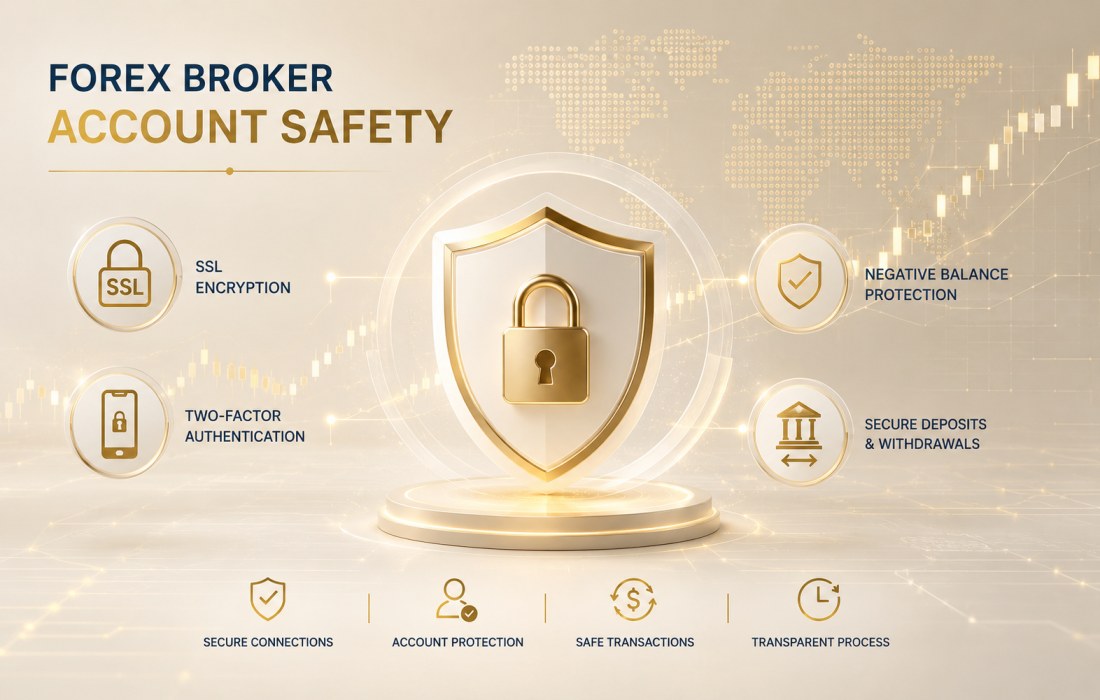
Beyond regulation, look at the practical security layers a broker has in place. Industry-standard SSL encryption protects your login and transaction data. Two-factor authentication (2FA) adds another barrier against unauthorized account access. These aren't luxuries — they're basics that every reputable broker should offer by default.
Also check how deposits and withdrawals work. Trustworthy brokers will return funds to the same method they were deposited through — a safeguard against money laundering and also a layer of protection for you. Be cautious of brokers who push unusual payment methods or make withdrawals unnecessarily complicated.
- SSL encryption across all website and platform connections
- Two-factor authentication (2FA) for account login
- Negative balance protection — so you can never lose more than deposited
- Transparent withdrawal process with clear timelines
Our Recommended Brokers
At fxTsignals.com, we only recommend brokers we've personally reviewed for regulation, cost structure, platform quality, and client service. These six consistently rank at the top:
Frequently Asked Questions
Regulation is the single most critical factor. A properly regulated broker is legally required to maintain segregated client funds, meet minimum capital requirements, and submit to regular audits. Without this foundation, no other advantage — low spreads, great platform, slick customer service — can compensate for the risk you're taking on.
Visit the official website of the regulatory body the broker claims to be registered with (FCA, ASIC, CySEC) and search for the broker by name or license number. This takes two minutes and will immediately confirm whether their regulatory claim is genuine. Also search for the broker's name plus "review" or "scam" on independent forums to see real trader experiences.
Not necessarily. It depends on your trading style. Scalpers who open and close dozens of trades a day benefit enormously from tight spreads, even if it means paying commissions. Swing traders holding positions for days or weeks may find that overnight swap rates matter far more than the spread itself. Always evaluate the full cost structure against how you actually trade, not just the advertised headline spread.
Technically yes, but it's strongly inadvisable. Unregulated brokers operate without oversight, meaning there's no authority to report to if they manipulate prices, delay withdrawals, or close down suddenly. Many traders have lost their entire account balance to unregulated brokers with no legal recourse available. The small benefit of potentially looser trading conditions is never worth that level of risk.
Many brokers allow you to open a live account with as little as $10–$100. However, a realistic starting amount that allows proper risk management is typically between $500 and $2,000. Trading with too little capital forces you to over-leverage, which increases risk dramatically. Our recommended brokers like Exness and Fusion Markets offer flexible minimum deposits while maintaining the regulatory protections you need.
Ready to Start Trading With a Broker You Can Actually Trust?
Choosing the right forex broker is one decision you'll make once — but live with every time you open a trade. Take the time to verify regulation, compare costs, test platforms on a demo account, and read real trader reviews. The brokers we recommend at fxTsignals.com have been vetted across all these criteria so you can start with confidence.
Your edge in forex starts before you ever place a trade. It starts with the broker you choose today.
Open Your Live Trading Account