
Introduction
Why Every Forex Trader Needs to Backtest First
Picture this: you've spent weeks crafting what feels like the perfect forex trading strategy. The logic is tight, the indicators align beautifully, and your gut says this is it. Then you go live — and the market humbles you in three days.
Sound familiar? That painful cycle is exactly why backtesting your forex strategy is not just a nice-to-have — it's your first line of defense. Backtesting lets you run your trading rules through real historical price data to see how they would have performed. No emotion. No guesswork. Just cold, hard evidence.
Whether you're a day trader, swing trader, or somewhere in between, this guide will walk you through everything you need to know about backtesting — step by step, in plain English.
The Foundation
What Is Backtesting in Forex Trading?
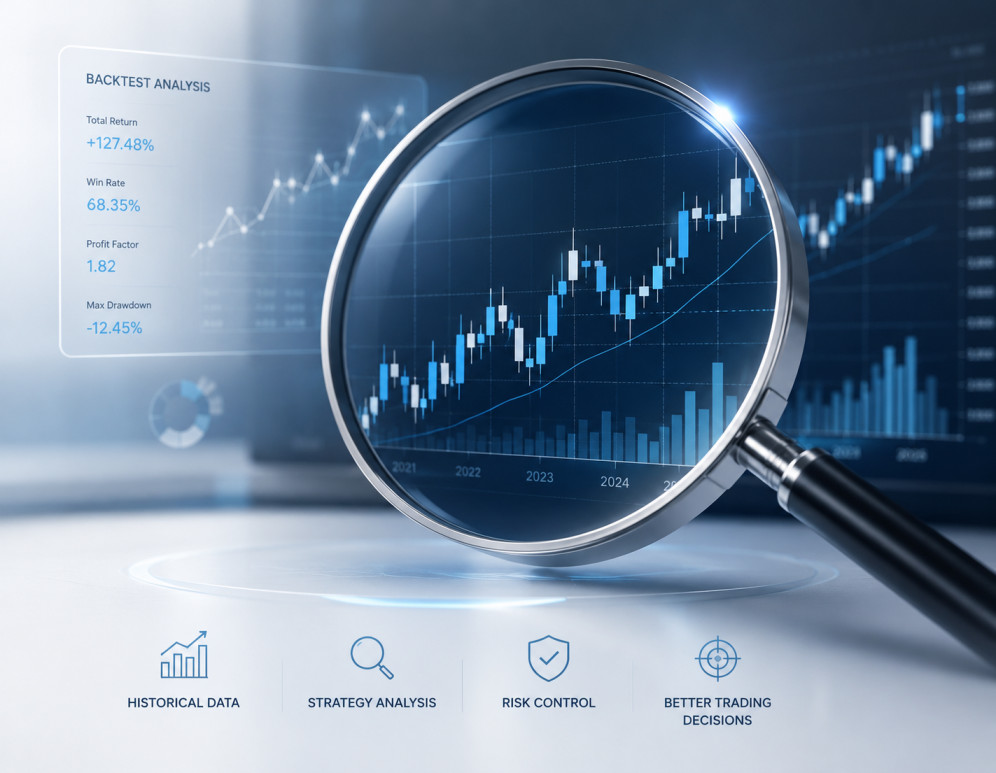
Backtesting is the process of applying your trading strategy to historical market data to evaluate how it would have performed in the past. Think of it as a time machine for your trading rules.
Instead of relying on intuition or hoping the strategy works in live markets, you're testing it under real price movements from the past — bull runs, crashes, choppy sideways markets, and everything in between. This gives you an objective look at your strategy's strengths and, more importantly, its weaknesses.
The concept is simple: if your strategy couldn't survive past market conditions, there's little reason to believe it will thrive in future ones. And if it did well historically, that's meaningful evidence — not a guarantee, but a solid foundation.
"Backtesting allows you to turn hindsight into foresight — and potentially transform your forex trading strategy from a hopeful experiment into a validated, confidence-backed system."
The Case for Backtesting
Why Backtesting Is an Indispensable Tool for Forex Traders
The forex market is the largest and most liquid financial market in the world. Trillions of dollars move through it daily, driven by a complex web of economic data, geopolitical events, and human psychology. Navigating this with an untested strategy is like sailing unfamiliar waters without a map.
Key Benefits of Backtesting Your Strategy
-
Objective validation — removes emotional bias from your strategy evaluation and replaces opinion with data
-
Risk-free discovery — find the flaws in your logic before they cost you real capital in live markets
-
Confidence building — knowing your strategy has survived various market conditions makes it far easier to execute with discipline
-
Strategy refinement — iterating on backtest results helps you sharpen entry and exit signals over time
-
Performance benchmarking — gives you baseline metrics like win rate, drawdown, and profit factor to measure against
Step-by-Step Process
How to Backtest Your Forex Strategy: A Complete Walkthrough
Ready to get hands-on? Here's a practical, clear breakdown of exactly how to backtest your forex trading strategy from start to finish. Each step matters — skip one and you risk invalidating your results.
Before touching any data, write down every single rule of your strategy. Entry signals, exit conditions, stop-loss placement, take-profit levels, position sizing, and any filters. Vague rules produce vague results.
Source accurate price data from reputable brokers, data providers, or dedicated platforms. Make sure it covers multiple years to capture different market phases — trending, ranging, and volatile conditions.
Options range from MetaTrader's Strategy Tester to TradingView's Pine Script to professional tools like Forex Tester. Pick one that matches your technical comfort level and your strategy's complexity.
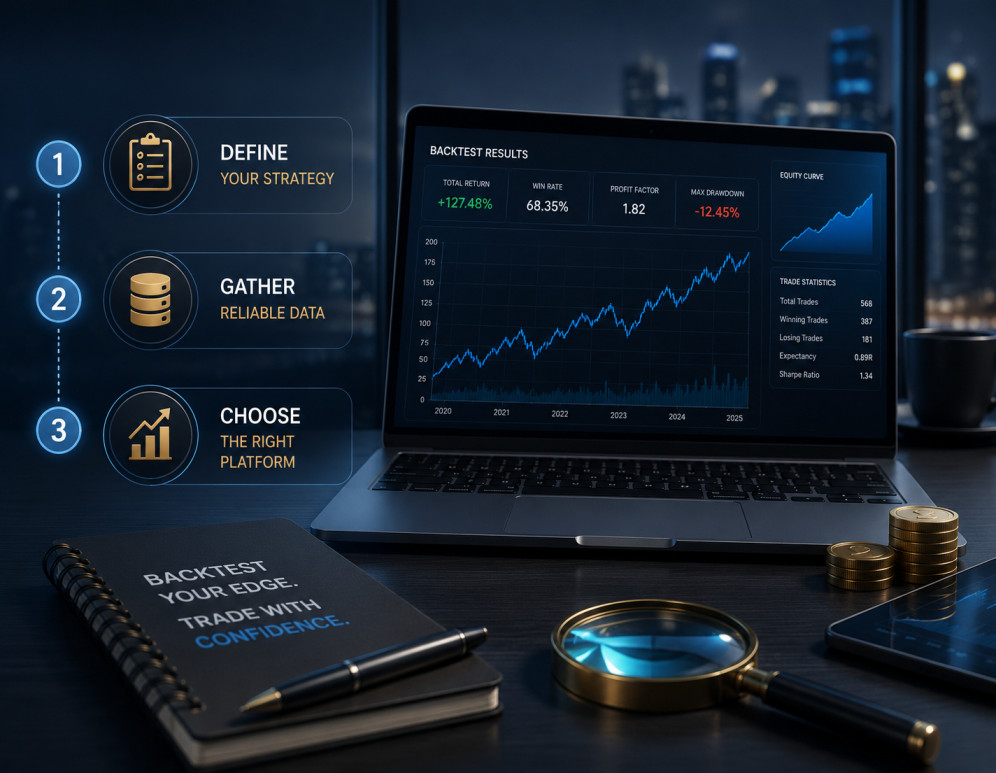
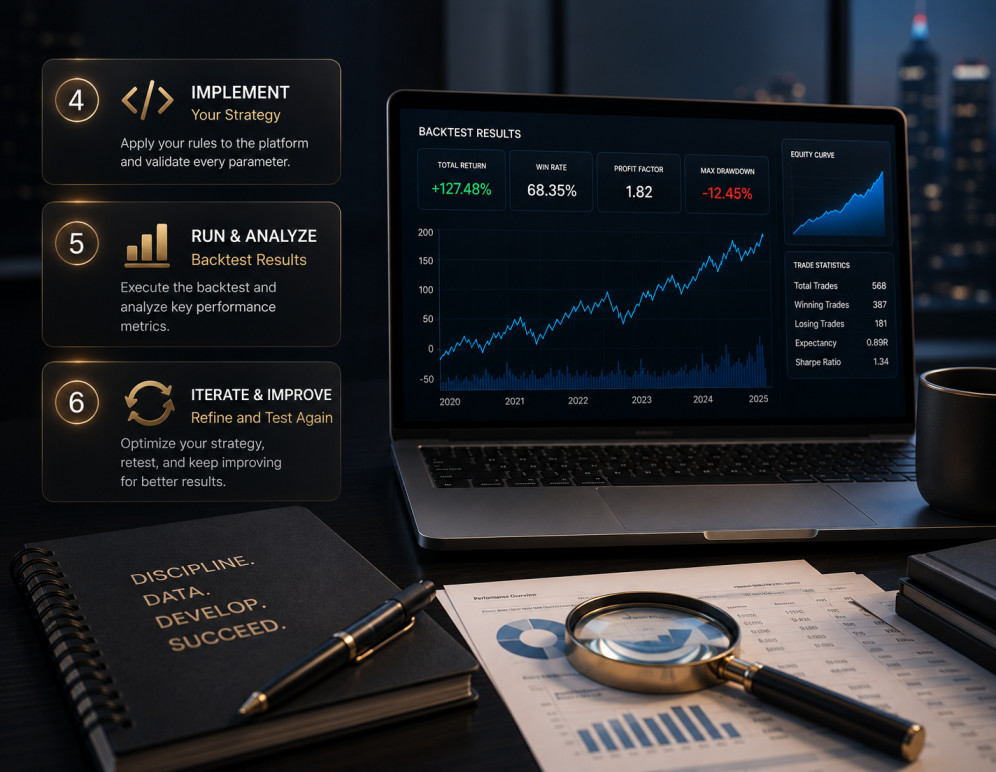
Program or manually input your trading rules into the chosen platform. Double-check every parameter. A wrongly coded condition means your backtest isn't testing what you think it's testing.
Execute the test and dig into the performance report. Focus on win rate, average risk-reward ratio, maximum drawdown, profit factor, and total number of trades. A high win rate means nothing with poor risk management.
Backtesting is a loop, not a one-off task. Use what you learn to adjust your rules and re-run the test. Keep track of each version and what changed — this discipline is what separates serious traders from casual ones.
Pro Tip: Always backtest over at least 3–5 years of data, and make sure your sample includes at least 200 trades. Smaller samples can show statistical flukes that won't hold up in real-world conditions.
Watch Out
Common Backtesting Mistakes That Traders Make
Backtesting is powerful — but it can also mislead you if done incorrectly. Here are the most common pitfalls to avoid.
Pitfalls to Avoid
-
Overfitting — tweaking your strategy until it fits past data perfectly usually means it fails in live conditions. Build rules that make logical sense, not ones that just match history.
-
Survivorship bias — testing only on pairs that performed well in the past ignores the ones that failed. Include a wide range of instruments.
-
Ignoring transaction costs — spreads, commissions, and slippage eat into profits. Always include these in your calculations or your results will be misleading.
-
Testing too short a period — a 6-month backtest might look great because it only covers a bull market. You need to test across multiple market cycles.
-
Treating backtest results as guarantees — historical performance is a data point, not a promise. Forward testing and paper trading are essential next steps.
Beyond Backtesting
Forward Testing and Demo Trading: The Next Step After Backtesting
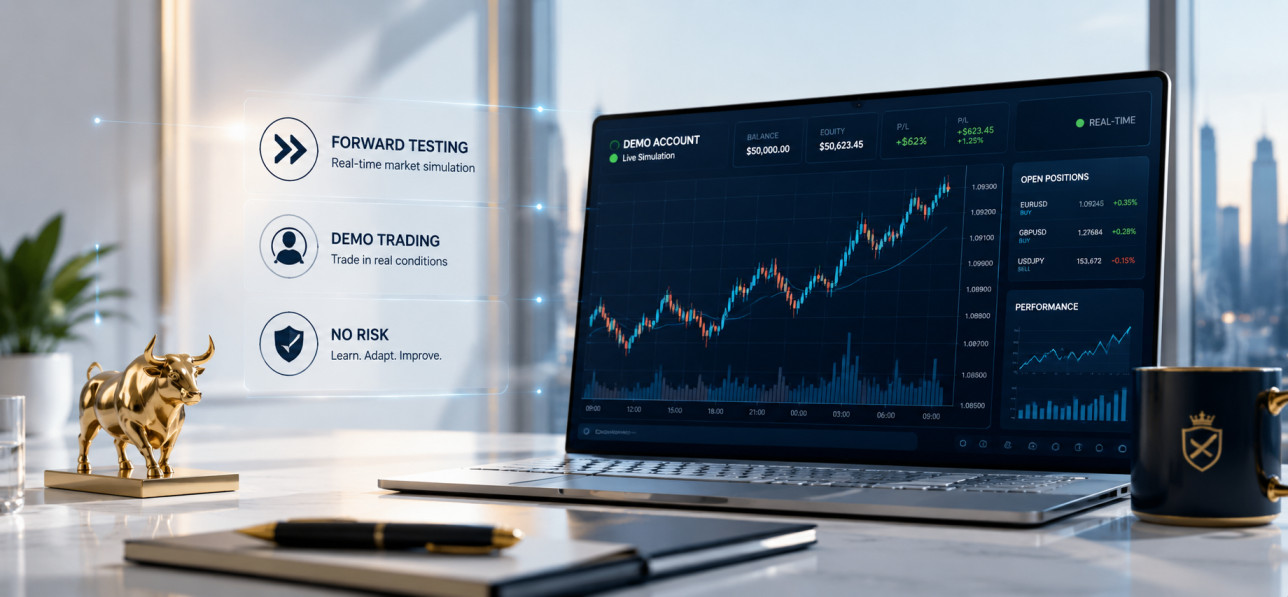
Once your backtest results look solid, don't rush to live trading. There's an important middle step — forward testing. This is where you apply your strategy in a demo account or on paper, executing trades in real time without risking actual money.
Forward testing bridges the gap between historical data and live market conditions. You'll encounter things that historical data can't fully replicate — news events, weekend gaps, execution delays, and your own psychological reactions to seeing trades move in real time.
A Practical Forward Testing Checklist
-
Run your demo account for at least 1–3 months before going live
-
Execute trades exactly as your rules dictate — no manual overrides
-
Track every trade in a journal including entry, exit, and emotional state
-
Compare demo results against backtest expectations — significant gaps need investigation
-
Only graduate to a small live account when demo results are consistent
Final Thoughts
Conclusion: Backtesting Is the Foundation of Sustainable Forex Trading
The forex market rewards preparation and punishes guesswork. Backtesting your strategy isn't just a box to tick — it's the foundation on which consistent, profitable trading is built.
By thoroughly testing your rules against historical data, you're not predicting the future — you're giving yourself the best possible evidence base to trade with confidence. You'll know where your strategy tends to struggle, where it excels, and what conditions it was designed for.
Consistency and continuous improvement are the two qualities that separate long-term forex traders from those who blow up their accounts in the first six months. Backtesting feeds both. Don't skip it — embrace it as one of the most powerful tools in your trading arsenal.
Frequently Asked Questions
Backtesting Forex Strategy — FAQs
As a general rule, you want at least 2–5 years of historical data, and your sample should include a minimum of 200 completed trades. The more data you have, the more statistically meaningful your results become. Covering multiple market cycles — including trending, ranging, and high-volatility periods — ensures your strategy isn't just optimized for one type of environment.
Backtesting is a strong indicator but not a guarantee. It tells you how a strategy would have performed historically, which is valuable — but past performance doesn't ensure future results. Factors like changing market dynamics, news events, and your own execution can all create discrepancies. That's why forward testing on a demo account is essential before committing real capital.
Popular options include MetaTrader 4/5 (with their built-in Strategy Tester), TradingView with Pine Script, Forex Tester (a dedicated backtesting tool), and Amibroker for more advanced users. If you prefer a code-free approach, Forex Tester allows manual walk-forward testing where you simulate trading bar by bar. The best choice depends on your experience level and strategy type.
The most important metrics are: Profit Factor (total gross profit divided by total gross loss — aim for 1.5 or above), Maximum Drawdown (the largest peak-to-trough decline), Win Rate, Average Risk-Reward Ratio, and the total number of trades. A high win rate with a poor risk-reward ratio is actually dangerous. Balance across all these metrics is what you're looking for.
Absolutely. Manual backtesting is a perfectly valid approach and doesn't require any programming knowledge. You simply scroll back through historical charts and manually simulate your trades according to your rules, recording each one in a spreadsheet. Tools like Forex Tester make this more structured and efficient. While slower than automated backtesting, manual testing gives you a deep, intuitive feel for how your strategy behaves in different conditions.
Ready to Trade Smarter on fxTsignals.com?
Join thousands of forex traders who use proven, signal-driven strategies — backed by rigorous backtesting and real market insight.