
Why Finding Professional Forex Traders is a Game-Changer

The foreign exchange market is the largest and most liquid financial market in the world. With over $7.5 trillion traded every single day, the opportunity is enormous — but so is the risk for those who walk in unprepared. That's exactly why finding a truly professional forex trader to guide your journey can make all the difference between consistent profit and painful losses.
Whether you're looking to copy trades, subscribe to a signals service, or simply learn from someone who has mastered the craft, understanding who qualifies as a real professional is the foundation of your search. Spoiler alert: it's not just anyone with a glossy Instagram account showing screenshots of winning trades.
"The best traders aren't the ones chasing every move. They're the disciplined ones who wait for the right setup — every single time."
Let's break down what truly sets professional forex traders apart, where to find them, and how to make sure you're not falling for smoke and mirrors.
What Makes a Forex Trader Truly "Professional"?
The term "professional" is thrown around loosely in forex circles. But there are concrete, measurable traits that distinguish elite traders from the crowd. Here's what to look for:
Deep Market Knowledge and Technical Expertise
A real professional doesn't just watch candlestick charts — they understand why price moves. They combine technical analysis (support/resistance, chart patterns, indicators like RSI and MACD) with fundamental analysis (interest rate decisions, employment data, geopolitical events). Their decisions are grounded in logic, not gut feelings.
Iron Discipline and Emotional Composure
Fear and greed are the two biggest destroyers of trading accounts. Professional forex traders have spent years conditioning themselves to follow their system regardless of how the market makes them feel. A losing streak doesn't send them spiraling. A winning streak doesn't make them reckless. That emotional discipline is a skill most casual traders never develop.
 Professional setups involve multi-screen analysis, strict protocols and risk parameters.
Sophisticated Risk Management
Here's the truth most beginner traders miss: staying in the game is more important than hitting home runs. Professional traders protect their capital fiercely. They use stop-loss orders consistently, size their positions proportionally to their account balance, and never risk more than 1–2% of their capital on a single trade.
- Always use pre-defined stop-loss and take-profit levels
- Position sizing is calculated, never arbitrary
- Risk-to-reward ratio of at least 1:2 on every trade
- Drawdown limits that trigger a pause in trading activity
- Portfolio diversification across currency pairs and asset types
A Verifiable Track Record
Anyone can post a screenshot of a winning trade. What separates professionals is a verified, audited trading history — months or years of consistent data that shows how they perform across different market conditions, not just when things go their way. Always ask for myfxbook verification, third-party audited statements, or at minimum a downloadable trade history from their broker.
Where to Actually Find Professional Forex Traders

Knowing what to look for is step one. Step two is knowing where to look. Here are the most reliable channels for discovering verified, professional forex traders:
Forex Trading Communities and Forums
Platforms like Forex Factory, BabyPips, and Trade2Win host active communities where experienced traders discuss strategies, share setups, and debate market conditions. These spaces often surface the real talent — traders who explain their reasoning clearly and consistently contribute value rather than hype.
Social Media — Used Wisely
Twitter (now X), LinkedIn, and YouTube all host professional forex traders who share genuine insights. LinkedIn is particularly useful for finding traders with institutional backgrounds or certified credentials. On YouTube, look for traders who teach methodology, not just show results.
Copy Trading and Signal Platforms
Platforms like eToro, ZuluTrade, and Myfxbook's AutoTrade feature let you browse verified trader profiles with live statistics — drawdown, win rate, monthly return, maximum consecutive losses. These numbers don't lie. This is one of the most objective ways to assess professional forex traders before committing your capital.
Trusted Referrals and Financial Networks
Personal recommendations from investors you trust — whether fellow traders or financial advisors with forex experience — remain one of the most reliable discovery methods. Before signing up with anyone, ask your network who they've worked with and what their experience was like.
Vetting a Forex Trader: Your 6-Step Due Diligence Process
Found a trader who looks promising? Before you hand over any capital or subscribe to their service, run them through this checklist. This process has saved countless investors from costly mistakes.
Review Verified Track Record
Ask for audited statements or a Myfxbook link. Look at drawdown figures, not just returns. Anyone can have a good month.
Understand Their Strategy
If they can't clearly explain how they trade — what setups they take, how they size positions — treat it as a red flag.
Check Credentials and Regulation
Look for certifications like CFTe, CMT, or regulation by FCA, CFTC, or ASIC. Unregulated traders carry higher risk.
Read Independent Reviews
Search their name plus "review" outside their own website. Real traders have a footprint — both positive and critical feedback.
Test Communication Quality
Ask them a difficult question before paying. How fast, how clearly, and how honestly they respond tells you everything.
Start Small, Scale Carefully
Never commit large capital immediately. Test with a smaller allocation over 30–60 days before increasing your exposure.
Questions You Must Ask Before Working with Any Forex Trader
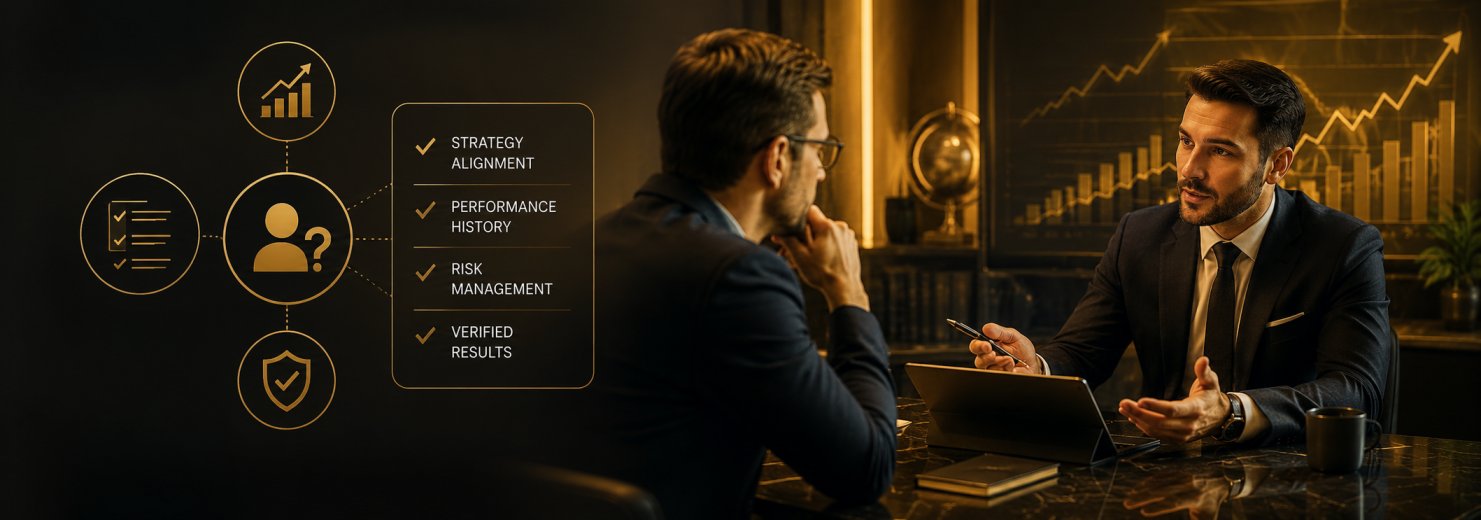 Due diligence conversations are a necessary part of finding the right professional partner.
Don't feel awkward about asking hard questions. A professional will welcome them. Here's a practical list to take into every initial conversation:
- What is your average monthly return — and what's been your worst drawdown period?
- Can you provide a third-party verified trading statement from the past 12 months?
- What specific trading strategies do you use, and are they suited to my risk tolerance?
- How do you approach risk management during high-volatility events like NFP or FOMC?
- Are you regulated by any financial authority, and can I verify that independently?
- What are your fees — performance-based, flat subscription, or percentage of profit?
- Can you provide references from current or previous clients I can speak with?
"If a trader is hesitant, evasive, or defensive when you ask basic questions about their performance — that tells you everything you need to know."
Managing Your Relationship with a Professional Forex Trader
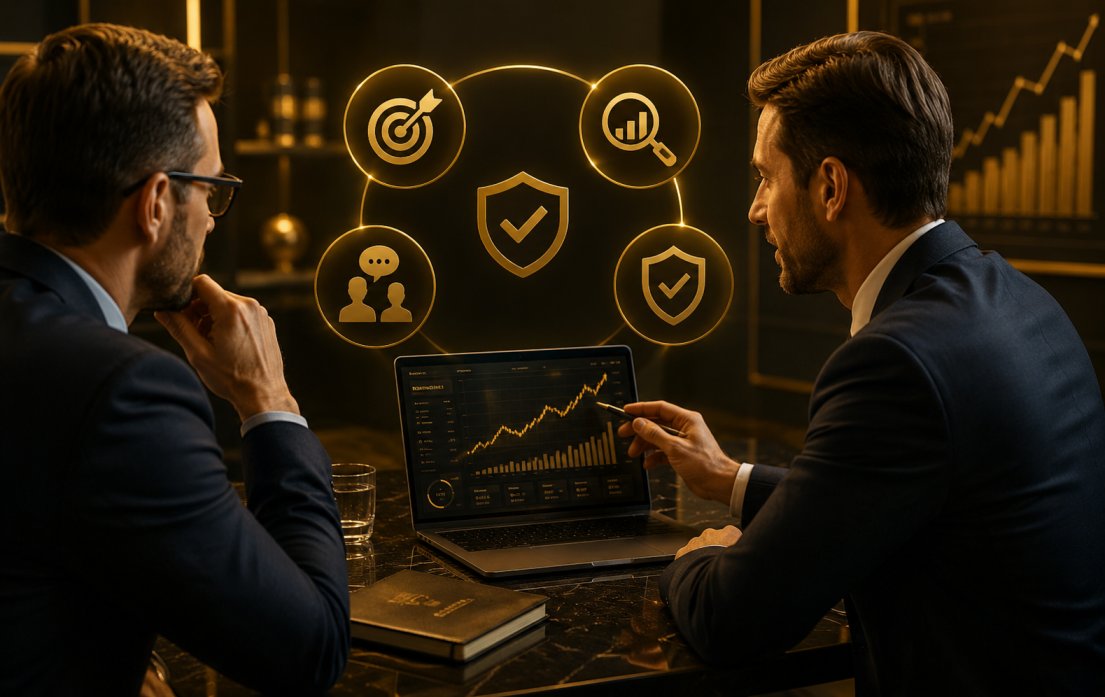
Finding a great trader is only half the equation. How you manage that relationship determines whether you actually benefit from their expertise over the long term. These practices will help you stay in control:
Set Clear Goals from Day One
Be explicit about your risk tolerance, your return expectations, your investment horizon, and any sectors or currency pairs you want to avoid. A professional trader should be able to adapt their approach — or at least be transparent about whether your goals are realistic given their strategy.
Monitor Performance Consistently
Don't set it and forget it. Review performance monthly, not just when something goes wrong. Look at consistency, drawdown levels, and whether the trader's approach is matching what they originally described. Small deviations from strategy can indicate larger issues ahead.
Maintain Open and Honest Communication
A strong professional relationship requires two-way honesty. If you have concerns, raise them early. If your financial situation changes and you need to reduce risk, communicate that clearly. The best professional forex traders will respect that transparency — and those who don't aren't worth keeping.
Never Over-Concentrate Your Portfolio
Even if you've found an exceptional trader, don't allocate your entire investment capital to one person or strategy. Diversify across traders, asset classes, or investment vehicles. This isn't a lack of confidence — it's the same risk management philosophy that top traders themselves practice.
Final Thoughts: The Right Partnership Changes Everything
The forex market rewards patience, discipline, and the ability to learn. Finding the right professional forex trader doesn't mean handing over control of your financial future — it means partnering with someone whose skills complement your goals and help you navigate one of the world's most complex markets with greater confidence.
Take your time. Do your due diligence. Ask the hard questions. And when you find a trader whose track record, communication style, and approach align with your values — that's when the real potential begins.
At fxTsignals.com, we connect serious investors with verified, performance-tracked professional forex traders who operate with full transparency. Our community is built on results, not promises — and we'd love to help you take the next step.
"The right professional forex trader doesn't just grow your account — they grow your understanding of the market and sharpen your own judgment over time."
Frequently Asked Questions
Request a verified track record through platforms like Myfxbook or FX Blue, which independently record live trading data. Also check for regulatory credentials with bodies like the FCA, CFTC, or ASIC. A real professional will have no hesitation providing this information.
Sustainable professional forex traders typically target 3–10% monthly returns, depending on their strategy and risk profile. Be highly skeptical of anyone promising more than 20% monthly — consistent returns at that level are extremely rare and often unsustainable.
Copy trading on regulated platforms (eToro, ZuluTrade) is a relatively lower-risk entry point since performance data is transparent and verifiable. The key is selecting traders with at least 12 months of track record, low drawdown figures, and a consistent win-rate rather than just high returns.
Respected certifications include the Certified Financial Technician (CFTe) offered by the IFTA and the Chartered Market Technician (CMT) from the CMT Association. While not mandatory, these credentials signal a commitment to professional standards and technical rigor in market analysis.
Always start smaller than you're comfortable with — typically 10–20% of the total you intend to allocate. Monitor performance over 30–60 days before scaling. This protects your capital while you verify that the trader performs as advertised in live market conditions.