Crack the Forex Code: The Ultimate Currency Pairs Guide Every Trader Needs

If you've ever exchanged money at an airport or watched a financial news channel flash those cryptic ticker codes like EUR/USD or GBP/JPY, you've already brushed up against the world of currency pairs. But what do those pairs actually mean? Why do traders obsess over them? And how can understanding them give you a real edge in the Forex market?
This guide breaks it all down in plain English. Whether you're a first-time forex explorer or a seasoned trader looking to sharpen your edge, this post is your complete playbook for currency pairs — from the basics right through to the five key forces that move prices every single day.
What Exactly Is a Currency Pair?
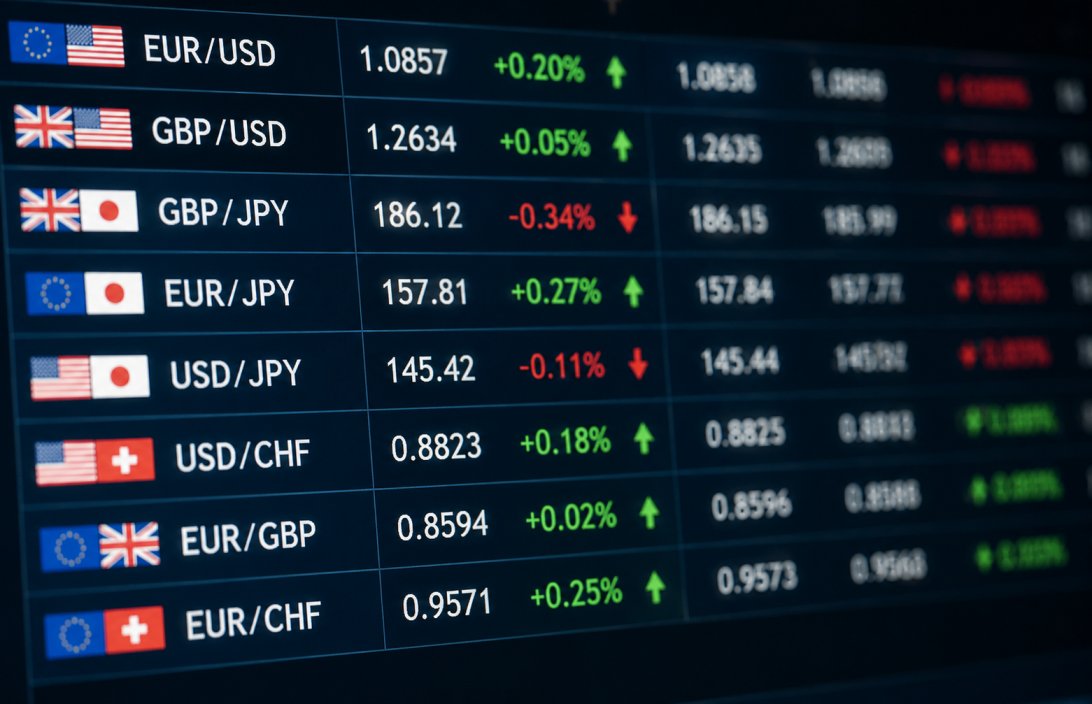
At its simplest, a currency pair is just two currencies quoted against each other. The first is the base currency — the one you're buying or selling. The second is the quote currency — the one you're paying with or receiving. Together, they form the bedrock of every single Forex trade on the planet.
Take EUR/USD as an example. The Euro (EUR) is the base. The US Dollar (USD) is the quote. If EUR/USD is trading at 1.0850, it simply means one Euro will buy you 1.0850 US Dollars. That's it. No mystery — just two economies having a conversation through price.
Understanding this relationship is more than textbook knowledge. When you grasp how the base and quote interact, you unlock the ability to read market direction, predict trade outcomes, and size your positions correctly.
The Majors: The Power Players of Forex Trading
Not all currency pairs are created equal. The "Majors" — a group of the most heavily traded pairs globally — dominate daily volume and liquidity. These pairs all share one thing in common: the US Dollar is always on one side of the trade.
Here's a quick breakdown of the four primary Majors every trader should know inside out:
Trading the Majors gives you tight spreads, deep liquidity, and mountains of analytical data to work with. For newer traders, starting here is almost always the smartest move.
Cross Currency Pairs: The Road Less Travelled
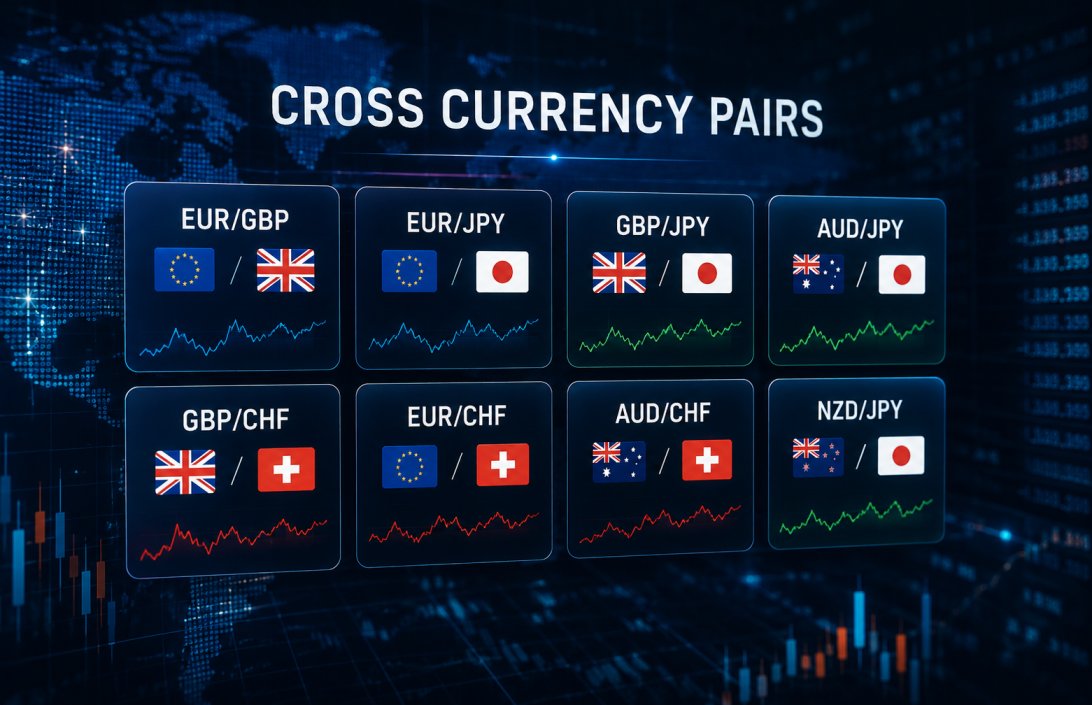
Cross currency pairs — often called "crosses" — are pairs that don't include the US Dollar. They're traded directly between two major currencies, bypassing the dollar entirely. Popular crosses include EUR/GBP, GBP/JPY, and EUR/JPY.
Why bother? Because crosses give you a purer read on the relative strength between two economies. If you believe the European economy is outperforming the UK, you don't need to involve a US Dollar view at all. EUR/GBP lets you express that thesis cleanly.
That said, crosses can be trickier to trade. Spreads are often wider, liquidity can thin out in quieter sessions, and price action can be choppier. Use them strategically — and always with a clear fundamental reason.
Actionable Tips for Trading Crosses
- Focus on crosses that align with major economic events in the respective countries.
- Avoid crosses during low-liquidity hours (like the early Asian session for EUR-based pairs).
- Use correlations between crosses and their underlying majors to confirm trade direction.
- Keep position sizing tighter than you would with majors to account for wider spreads.
5 Forces That Move Currency Pairs Every Day
Here's where most traders make or break their performance. A currency pair doesn't just move randomly. There are identifiable, recurring forces behind every significant price shift. Knowing them doesn't guarantee profits — but ignoring them almost guarantees losses.
-
Economic Indicators GDP figures, employment reports, CPI inflation data, and central bank interest rate decisions are the four pillars of currency valuation. A stronger-than-expected jobs report in the US, for instance, can send USD surging across multiple pairs within seconds of release.
-
Political Events & Policy Shifts Elections, referendums, and sudden government policy changes inject enormous uncertainty into currency markets. Brexit was a textbook example — GBP/USD moved hundreds of pips in a single night when the UK voted to leave the EU in 2016.
-
Market Sentiment & Risk Appetite When fear grips global markets, traders rush to safe-haven currencies like the Japanese Yen (JPY) and Swiss Franc (CHF). In bullish, risk-on environments, higher-yielding currencies like AUD and NZD tend to appreciate. Reading the room is a critical skill.
-
Commodity Prices The Canadian Dollar (CAD) dances closely with oil prices. The Australian Dollar tracks gold and iron ore. If you trade these pairs without watching the commodity markets, you're driving blindfolded. Commodity-linked currencies respond to supply-demand shifts often before the economic data even catches up.
-
Geopolitical Tensions Trade wars, military conflicts, and diplomatic breakdowns can shake currency pairs violently. The USD/RUB pair, for example, saw catastrophic swings following geopolitical escalations in Eastern Europe. Geopolitical risk is always present — smart traders price it into their risk management.
💡 Quick Trader Checklist: Before Opening Any Trade
- Check the economic calendar — any high-impact releases in the next 4 hours?
- Review the sentiment dashboard — risk-on or risk-off environment today?
- Confirm commodity prices if trading CAD, AUD, or NZD pairs.
- Scan any overnight geopolitical headlines that could create gap risk.
- Verify your stop-loss accounts for the typical daily range of the pair.
Choosing the Right Currency Pair for Your Trading Style
Not every pair suits every trader. Your choice should align with your personality, schedule, and strategy. Here's a simple framework:
Scalpers and day traders thrive on EUR/USD and USD/JPY — both offer maximum liquidity and the tightest spreads during the London and New York sessions. Every pip has meaning when you're in and out within minutes.
Swing traders often find more opportunity in pairs like GBP/USD or GBP/JPY, where wider daily ranges create room to catch a multi-day move without being shaken out by noise.
Position traders with a longer time horizon may gravitate towards commodity pairs like AUD/USD or USD/CAD, letting fundamental macro themes play out over weeks or months.
The most important rule? Master a few pairs deeply rather than spreading your attention across twenty. The traders who truly understand the personality of a single pair — how it behaves around key data releases, where it tends to find support, how it reacts to risk-off events — have a substantial edge over those who scatter their focus.
Frequently Asked Questions