Unlock powerful profit opportunities during the world's first major trading window. Real tactics, timing insights, and risk controls — built for every level of forex trader.
Most traders focus on the high-voltage London and New York sessions — and for good reason. But here's what many miss: the Asian session forex trading strategy quietly offers consistent, lower-noise opportunities that, when traded correctly, can form the foundation of a highly profitable forex approach.
The Asian session runs through the night for Western traders, covering the Tokyo, Sydney, and Shanghai markets. It sets the tone for the global trading day. Currency pairs involving the Japanese yen, Australian dollar, and Chinese yuan tend to move with a rhythm that's easier to anticipate — making this session a perfect training ground for newer traders and a reliable edge for experienced ones.
"The Asian session doesn't shout — it whispers. And traders who learn to listen are consistently ahead of the curve."
At fxTsignals.com, we believe every trader deserves to understand the full 24-hour forex cycle. This guide breaks down exactly how to build and execute a winning Asian session strategy — from timing and currency pair selection to technical tools, risk management, and beyond.
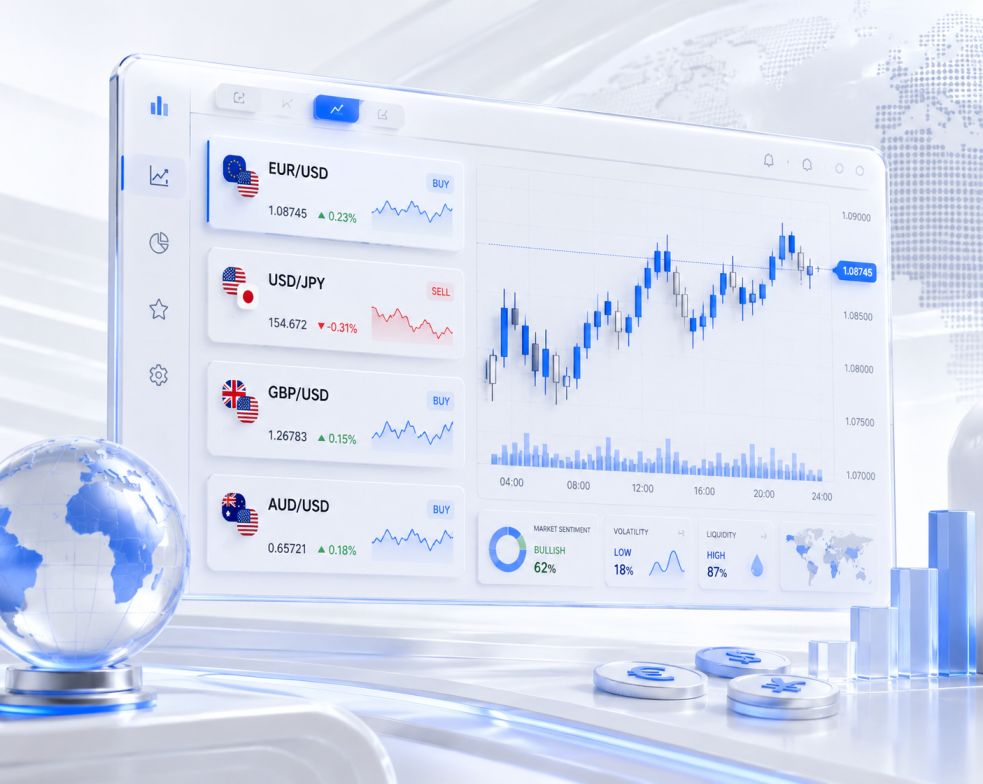
Forex — short for foreign exchange — is the global marketplace for buying and selling currency pairs. With over $7.5 trillion traded daily, it's the largest and most liquid financial market on Earth. Unlike stocks, there's no central exchange. Everything runs electronically, 24 hours a day, five days a week.
Every trade involves a pair: EUR/USD, USD/JPY, AUD/USD. When you buy a pair, you're purchasing the base currency while selling the quote. When you sell (go short), the reverse applies. The price reflects how much of the quote currency you need to buy one unit of the base.
Understanding this structure is critical before layering in session-specific strategies. The Asian session isn't just another time block — it's a distinct market personality with its own behavior patterns.
Currency pair dynamics during the Asian session
The Asian session has a reputation for being "quiet" — but that's exactly what makes it special. Here's why savvy traders actively trade it:
Pairs like USD/JPY and AUD/USD move with purpose during this session, driven by Asian economic releases and institutional flows from Tokyo and Shanghai.
Japan's GDP, Australia's CPI, and China's trade data — all released during this window — create sharp, tradeable price reactions. News traders thrive here.
Lower overall volume means less noise. Trends that form in the Asian session are often more technically precise, making them easier to identify and trade.
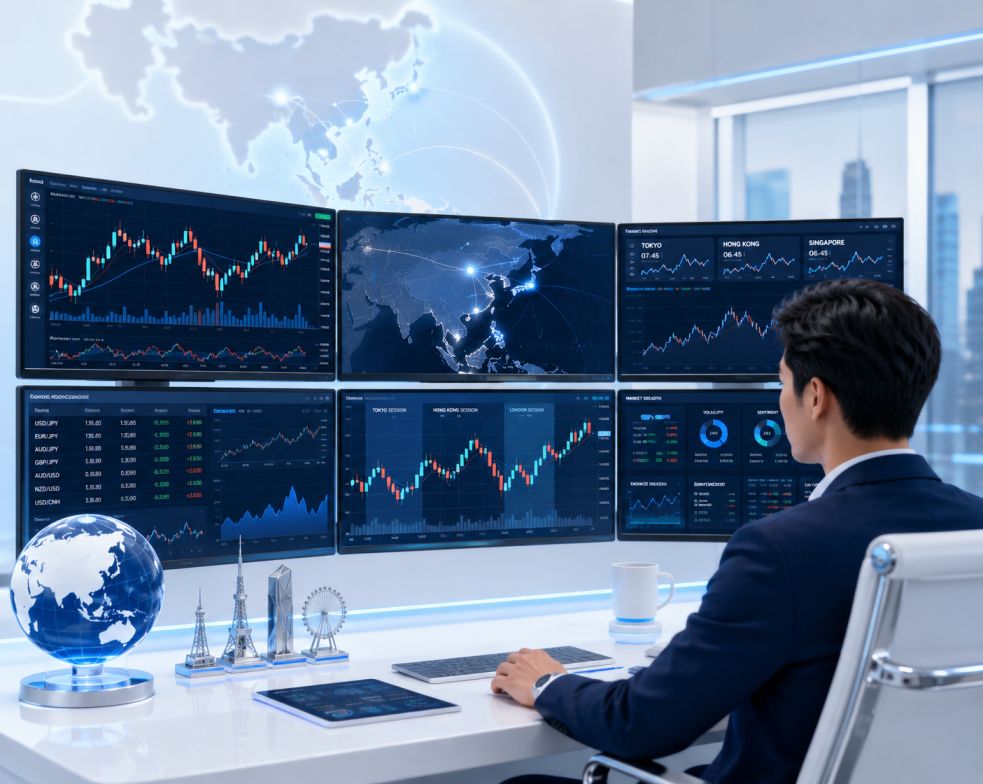
Professional traders monitoring Asian market movements
Between 07:00 and 09:00 GMT, the Asian and European sessions overlap. During this two-hour window, volume surges as Tokyo wraps up and London opens. This creates excellent short-term momentum trades — especially on JPY and AUD pairs.
Traders who position themselves ahead of this overlap — using Asian session range plays — can capture breakout moves as European institutional money enters the market.
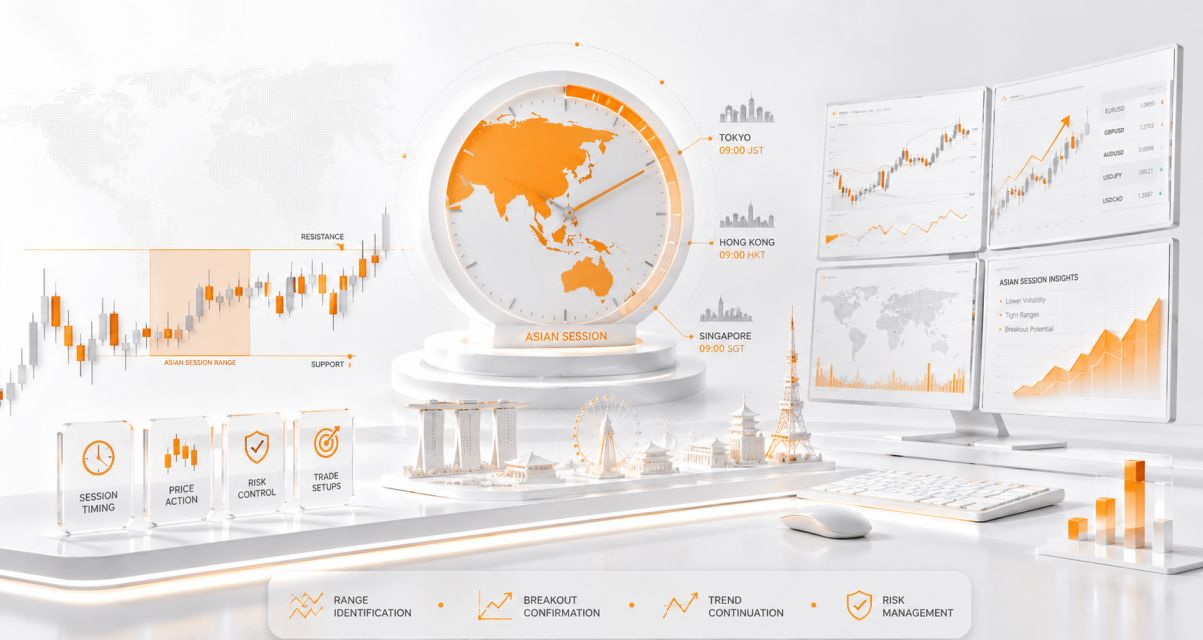
The Asian session officially begins at 22:00 GMT (Sydney open) and runs through 09:00 GMT (Tokyo close). If you're in Doha (GMT+3), that's 01:00–12:00 local time — a manageable morning window. Before anything else, map this to your schedule and identify your optimal active hours within the session.
Set a daily profit target and a maximum loss limit before you open a single chart. Without these guardrails, emotions will drive your decisions. Many professional traders risk no more than 1–2% of their account per trade — and this discipline is especially important during the Asian session's subtle price action.
Structured planning is the foundation of consistent profits
| Market | Open (GMT) | Close (GMT) | Status |
|---|---|---|---|
| Sydney | 22:00 | 07:00 | Active |
| Tokyo | 00:00 | 09:00 | Active |
| Shanghai | 01:30 | 07:00 | Active |
| EU Overlap | 07:00 | 09:00 | High Volume |
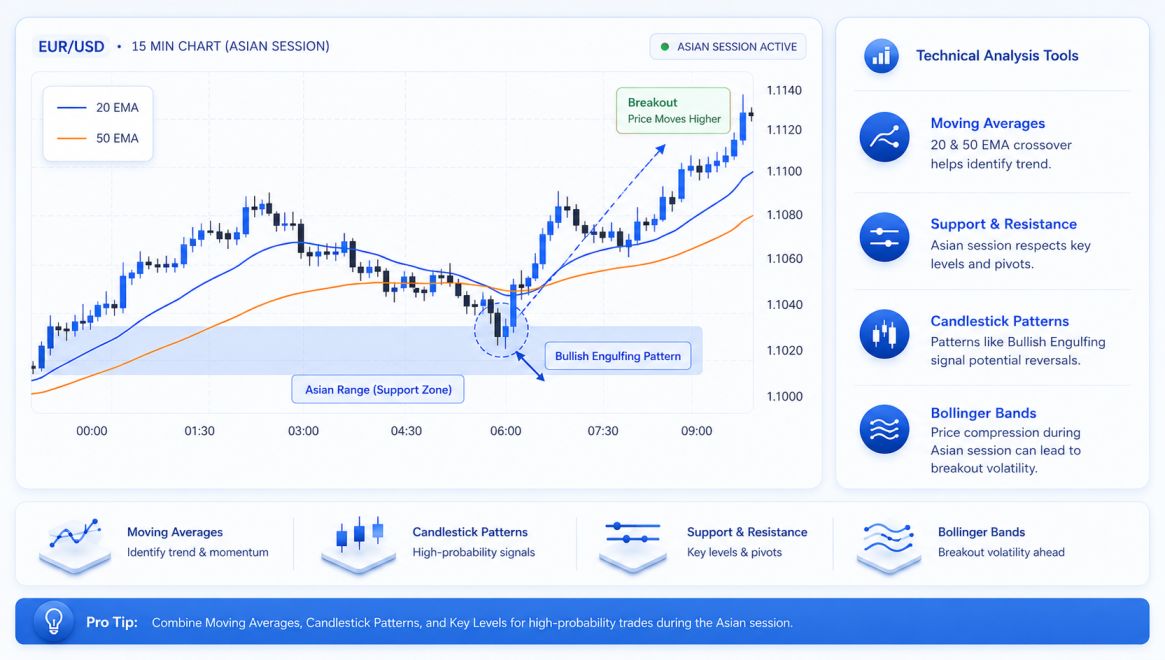
The Asian session responds particularly well to technical analysis because of its range-bound nature. Here are the tools that deliver results:
Technical confluence across multiple indicators increases trade accuracy
Fundamental data releases can override any technical setup. Build these into your pre-session routine:
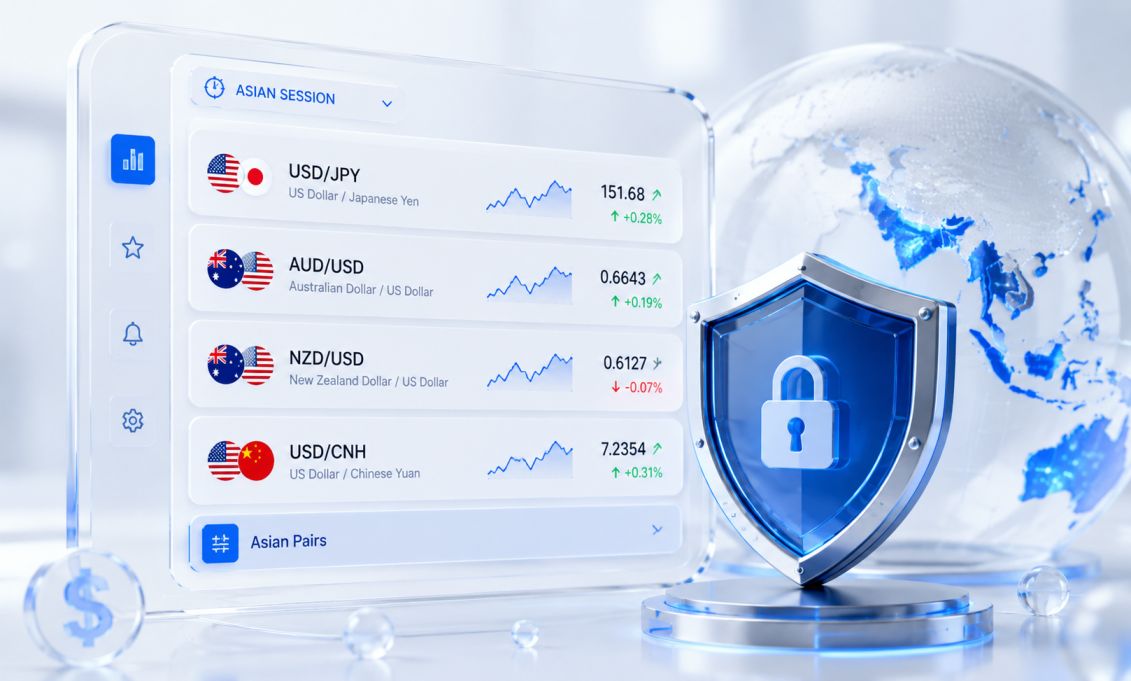
Not every pair behaves well during Asian hours. Focus your energy where the session's unique characteristics give you an edge:
Selecting the right pairs is half the battle won
Precision matters. Vague entries lead to poor risk-reward ratios. Use these practical methods:
The Asian session's calmer nature can lull traders into a false sense of security. Volatility spikes — especially around news — can hit fast. Here's how to stay protected:
Always use stop-losses. They're your insurance policy. Set them at logical levels — not just "50 pips below entry." Market structure is your guide.
Use the percentage risk model. Risk 1–2% of your account per trade maximum. This ensures one bad trade never destroys your week.
Don't move your TP just because a trade looks good. Respect your original analysis. The market doesn't care about your feelings.
Never enter a trade with less than a 1:1.5 risk-reward ratio. Professionals typically aim for 1:2 or higher on Asian session setups.
Practical Example: If your account is $5,000 and you risk 1.5% per trade, your maximum loss per trade is $75. With a 1:2 risk-reward setup, your potential gain is $150 — per trade, per session.
This is the single most underutilized habit in trading. After every Asian session, log your trades: the setup, the entry, exit, result, and — crucially — your emotional state. Over time, patterns emerge. You'll spot your strongest setups and your most common mistakes.
Review your journal weekly. Ask: which currency pairs performed best for me? Were my stop losses too tight? Did I miss setups by sleeping through the Tokyo open? The answers will sharpen your strategy faster than any course or indicator.
The forex market evolves. Central bank policies shift. Economic themes rotate. What worked in Q1 may need refinement in Q3. Stay engaged with market news from the Bank of Japan, Reserve Bank of Australia, and the People's Bank of China — these three institutions move Asian markets more than anything else.
The Asian session begins with Sydney's open at 22:00 GMT and ends with Tokyo's close at 09:00 GMT. The most active period is between 00:00–07:00 GMT, when Tokyo and Shanghai are both open. For traders in Doha (GMT+3), this runs from approximately 01:00–10:00 local time.
The top pairs for the Asian session are USD/JPY, AUD/USD, and NZD/USD. These pairs are directly influenced by Japanese, Australian, and New Zealand economic data. EUR/JPY and GBP/JPY can also offer strong setups, especially during the Asian-European overlap from 07:00–09:00 GMT.
Yes, the Asian session is often recommended for beginners because its lower volatility and range-bound price action are more forgiving. Technical setups tend to be cleaner, and the slower pace gives newer traders more time to analyze and make decisions. That said, news releases can cause sharp spikes — always use stop-losses regardless of experience level.
The best protection is a combination of stop-loss orders, strict position sizing (1–2% risk per trade), and awareness of scheduled news events. Check the economic calendar before each session — Japanese CPI, Australian employment data, and Chinese PMI can dramatically move markets. Also avoid holding positions through major announcements unless you have a clear directional thesis.
The London and New York sessions are characterized by high volume, fast moves, and frequent trend reversals. The Asian session is generally quieter — ranges tend to hold longer, and price action is more methodical. This makes it ideal for range trading, breakout setups, and news-driven trades. The trade-off is that large directional moves are less common, so patience and selectivity are key.
The Asian session forex trading strategy isn't about chasing massive moves. It's about precision — knowing when to trade, which pairs to focus on, and how to manage risk in a market that rewards preparation over impulse.
From mastering your timing around the Tokyo open to reading Japanese candlestick signals and staying on top of RBA data releases, every element of this strategy is learnable. The traders who consistently profit during Asian hours aren't doing anything magical — they've simply built a plan and stuck to it.
Start by trading one pair during one defined time window. Keep a journal. Review your results weekly. Refine and repeat. That's how the edge is built.
Ready to take your Asian session trading to the next level? Visit fxTsignals.com for premium signals, live market analysis, and a community of professional traders who trade the Asian session every single day.
Get real-time Asian session signals, market alerts, and expert analysis delivered straight to your device. Join thousands of traders already using fxTsignals.com to stay ahead of the market.