Forex Robots Exposed: Smart Edge or Costly Trap?
The full, unfiltered truth about automated trading systems — what the vendors won't tell you, and how to protect your capital.

Why Every Trader Is Asking the Same Question
You've seen the ads. A sleek dashboard, candles flying green, and a bold headline promising to "turn $500 into $50,000 on autopilot." Forex robots — also called Expert Advisors (EAs) or automated trading systems — have exploded in popularity over the last decade. And honestly? That's not surprising.
The foreign exchange market trades over $7.5 trillion every single day. For a retail trader sitting at a laptop, the idea that a piece of software can tap into that flow 24 hours a day, seven days a week, without emotion or fatigue, sounds almost too good to be real.
Here's the honest answer: some forex robots work. Most don't. And a significant slice of them are outright scams designed to drain your account before you know what hit you. In this deep-dive, we break down exactly how these systems operate, what makes them succeed or fail, and — most importantly — how to tell the difference before you risk a single dollar.
What Exactly Is a Forex Robot?
A forex robot is a computer program — most commonly built for MetaTrader 4 or MetaTrader 5 — that monitors currency pairs and executes trades automatically based on coded rules. Think of it as a rulebook brought to life. If price breaks above a resistance level with RSI below 60 and the 50-day EMA is rising, the robot buys. No hesitation, no second-guessing.
These algorithms can analyze dozens of currency pairs simultaneously across multiple time frames. They react in milliseconds. They never go to sleep, never panic during a news spike, and they certainly don't make emotional revenge trades after a bad loss.
The Core Mechanics
Most robots operate around a handful of core strategies. Scalping robots fire off many small trades aiming for tiny gains. Trend-following EAs ride sustained directional moves. Grid robots place buy and sell orders at fixed intervals — a strategy that works beautifully in range-bound markets and catastrophically in trending ones. Arbitrage bots exploit price discrepancies between brokers for risk-free theoretical profit, though in practice those windows are razor-thin and closing fast.

The Real Benefits of Automated Trading
Let's be fair. There are genuinely useful applications for well-built forex robots, and dismissing them entirely would be intellectually dishonest. Here's where they legitimately shine:
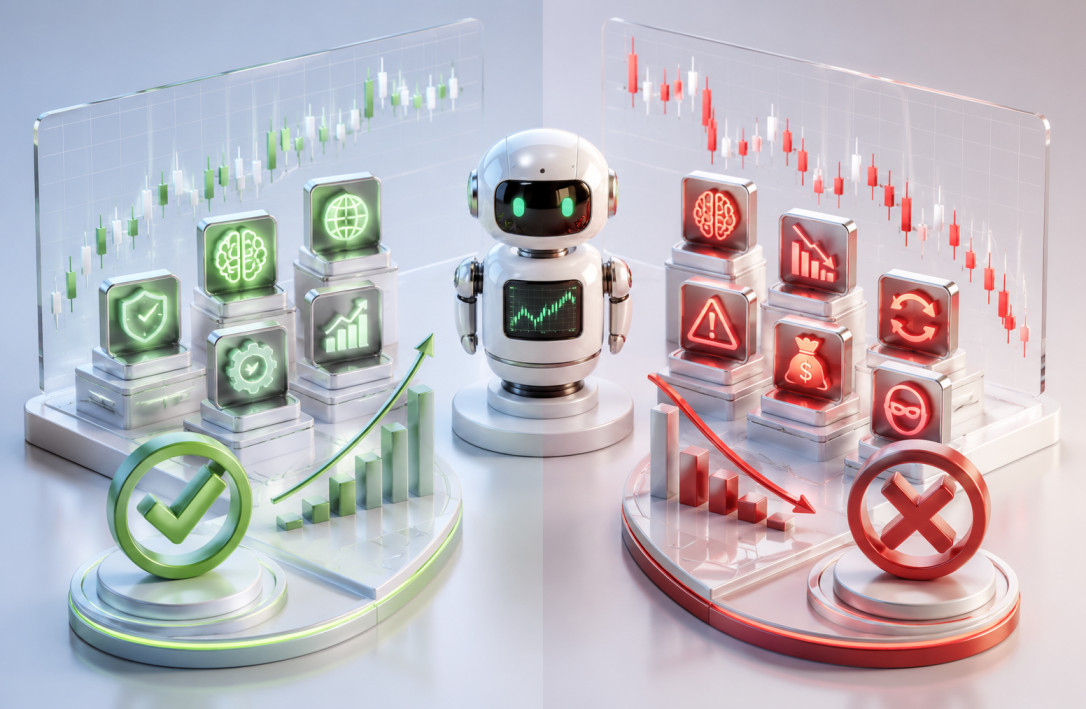
✦ Advantages
- No emotional interference — fear and greed stay out of the equation
- Operates 24/7 across global sessions without fatigue
- Back-testable against years of historical data instantly
- Executes trades in milliseconds without slippage from hesitation
- Consistent rule application — the strategy is followed exactly
- Can monitor multiple pairs and time frames simultaneously
✦ Disadvantages
- Rigid logic fails in unexpected market conditions
- Over-optimized "curve-fit" robots collapse in live trading
- Cannot interpret news events or macro sentiment shifts
- Requires constant monitoring and periodic recalibration
- VPS costs and broker compatibility add overhead
- Many vendors sell backtested fiction, not real results
The elimination of emotional bias is genuinely powerful. Ask any experienced trader what their single biggest enemy is — most will say themselves. A robot cannot deviate from its rules in a moment of panic. That consistency alone has real value, provided the underlying strategy is sound.
Round-the-Clock Coverage
The forex market never sleeps, but traders do. A well-configured robot covers the Tokyo open, the London session, the New York overlap, and everything in between without you setting an alarm. For someone with a day job trading part-time, that coverage has obvious practical value.
The Risks Nobody in the Sales Page Mentions
Forex trading involves substantial risk of loss. Automated systems do not guarantee profits, and past backtested performance is not indicative of future results. Always trade with risk capital only.
The Over-Optimization Illusion
This is the most common trap in the EA space. A developer runs their algorithm through 10 years of historical data, tweaking parameters until the equity curve looks like it goes straight up. The win rate is 78%, the drawdown is a neat 12%, and the profit factor is an impressive 2.4. Looks incredible on paper.
But here's what they did: they optimized the robot so precisely for past data that it essentially memorized history. It learned to trade a market that no longer exists. The moment it hits live conditions — real spreads, real news, real liquidity — the cracks appear fast. This is called curve fitting, and it's responsible for the graveyard of "10,000% backtested return" robots that quietly stopped working six months after launch.
Market Dependency
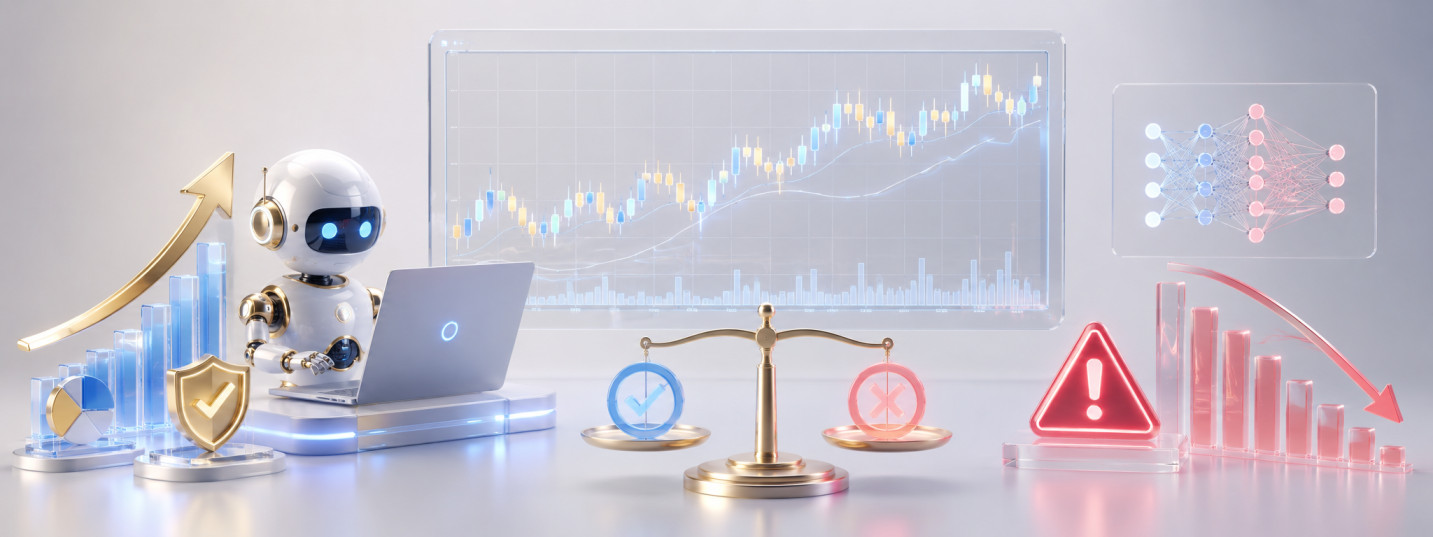
Every EA is essentially a snapshot of market behavior at a particular time. A scalping robot optimized for the low-volatility grind of 2019 will likely blow up in the volatility spikes of 2022. A trend-following EA built for trending dollar conditions will suffer badly in a range-bound, choppy market. The robot cannot tell the difference. It just keeps firing trades according to its rules, regardless of whether those rules still make sense.
Hidden Costs That Add Up
- VPS fees — Running a robot requires a Virtual Private Server for 24/7 uptime, typically $20–$50/month
- Broker spreads and commissions — Scalping robots especially are sensitive to execution costs that erode small gains
- Subscription fees — Many EAs charge $100–$500/month, meaning you need substantial gains just to break even
- License renewals — Vendors frequently update and charge for each new "version" of the same robot
- Broker restrictions — Some brokers specifically prohibit or interfere with certain EA strategies like arbitrage
How to Spot a Forex Robot Scam Instantly
The forex robot industry has a scam problem, and it's large. Here are the red flags that should stop you cold before you hand over a single dollar:
- Promises of "guaranteed returns" or specific percentages — no legitimate trading tool can guarantee anything
- Only backtested results shown, with zero verified live trading history from a third-party audit
- Unverified testimonials with stock photos and no traceable trading accounts
- No information about the strategy — "proprietary algorithm" with zero logic disclosed is a major warning
- Pressure tactics like countdown timers, "limited licenses", or "closing the offer at midnight"
- The vendor cannot answer specific questions about drawdown, position sizing, or how the robot handles news events
- No regulation or registration with recognized financial authorities (FCA, ASIC, CFTC, etc.)
- Extremely high leverage suggested — often a sign the vendor expects your account to survive weeks, not years
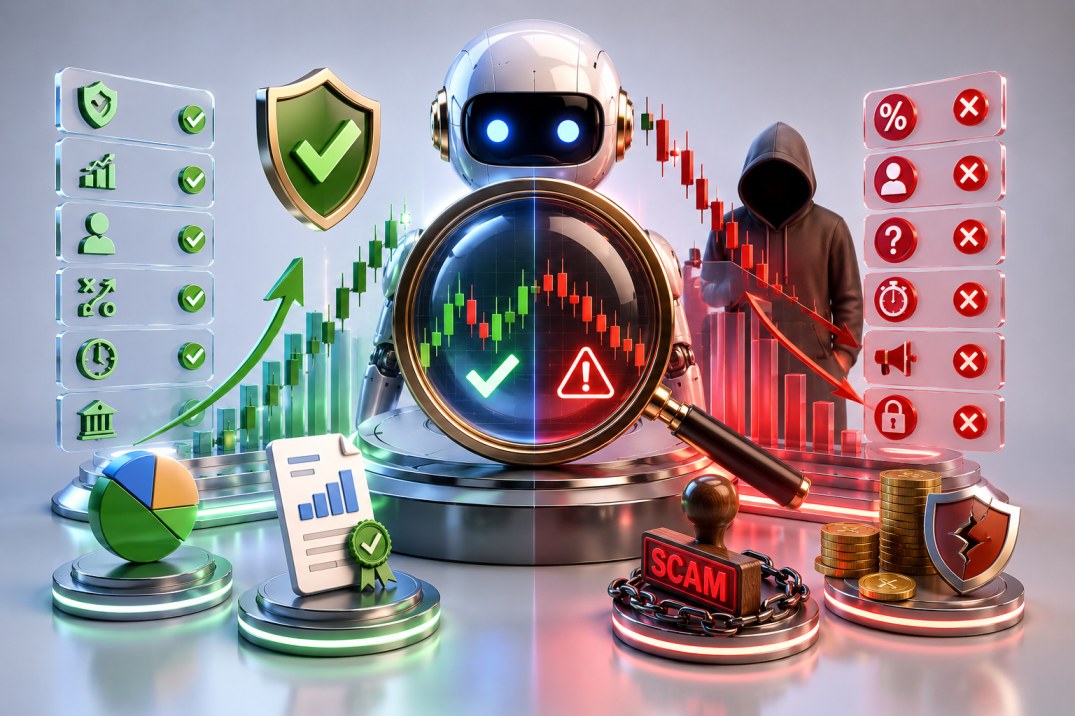
Any credible EA provider should be able to link you to a verified, live trading account on Myfxbook or FX Blue — third-party platforms that make falsification impossible. If they can't or won't provide this, walk away.
What Actually Works: A Smarter Approach to Automation
Despite all the noise, automation does have a legitimate place in a serious trader's toolkit — just not in the "set it and forget it" fairy tale that vendors sell. Here's how professional traders actually use algorithmic tools effectively:
Use Robots for Rule Execution, Not Strategy Discovery
The best use case for automation is taking a strategy you already understand and trust, then automating its execution to remove human error. If you've manually traded a moving average crossover system for two years and know its strengths, automating the entry and exit logic makes sense. Buying a black-box robot with no understanding of the underlying logic is gambling, not trading.
Walk-Forward Testing Over Backtesting
Any serious development includes walk-forward analysis — where you optimize on one segment of data and test on a fresh, unseen segment. If the robot falls apart on out-of-sample data, it's curve-fitted. Period. This one test eliminates the vast majority of useless EAs on the market immediately.
Start with a Demo, Then Micro Lots
Never, under any circumstances, drop a robot straight onto a live account with real money at scale. Run it in a demo environment for a minimum of three months to capture different market conditions. Then run it on micro lots to verify real execution quality — spreads, slippage, requotes — before scaling.
Keep the Human in the Loop
Even the best institutional algorithms have human oversight. Monitor your robot's performance weekly. If drawdown exceeds predefined thresholds, pull the plug and reassess. No robot should ever be left running unsupervised through a major geopolitical event or central bank surprise announcement.
- Review performance metrics every 30–60 trades, not just monthly
- Use conservative lot sizing — risk no more than 1–2% per trade through any automated system
- Maintain a separate manual trading account to stay sharp and market-aware
- Combine EA signals with your own market context and news awareness
- Always have a hard stop-loss on the account level to cap catastrophic drawdown
What Traders Ask Most
The Verdict: Tool, Not a Miracle
Forex robots are not a scam by definition — but a very large portion of those sold to retail traders are. The technology itself is neutral. What varies wildly is the integrity of the strategy inside the robot and the honesty of the people selling it.
Algorithmic trading at the institutional level is highly sophisticated, tightly risk-managed, constantly monitored, and regularly recalibrated. The retail equivalent — a $99 EA running on a $500 account with no oversight — is a completely different beast and should be treated with proportional skepticism.
The truth is that consistent forex profits require consistent effort, knowledge, and discipline — whether you're trading manually or through automation. A robot can execute your strategy better than your emotions allow, but it cannot replace a strategy that genuinely works. Knowledge is the real edge. The robot is just a tool to deploy it.

Get Professional Forex Signals — No Robots Required
Join thousands of traders who trust fxTsignals.com for transparent, analyst-backed signals with real, verifiable performance. No black boxes. No empty promises.