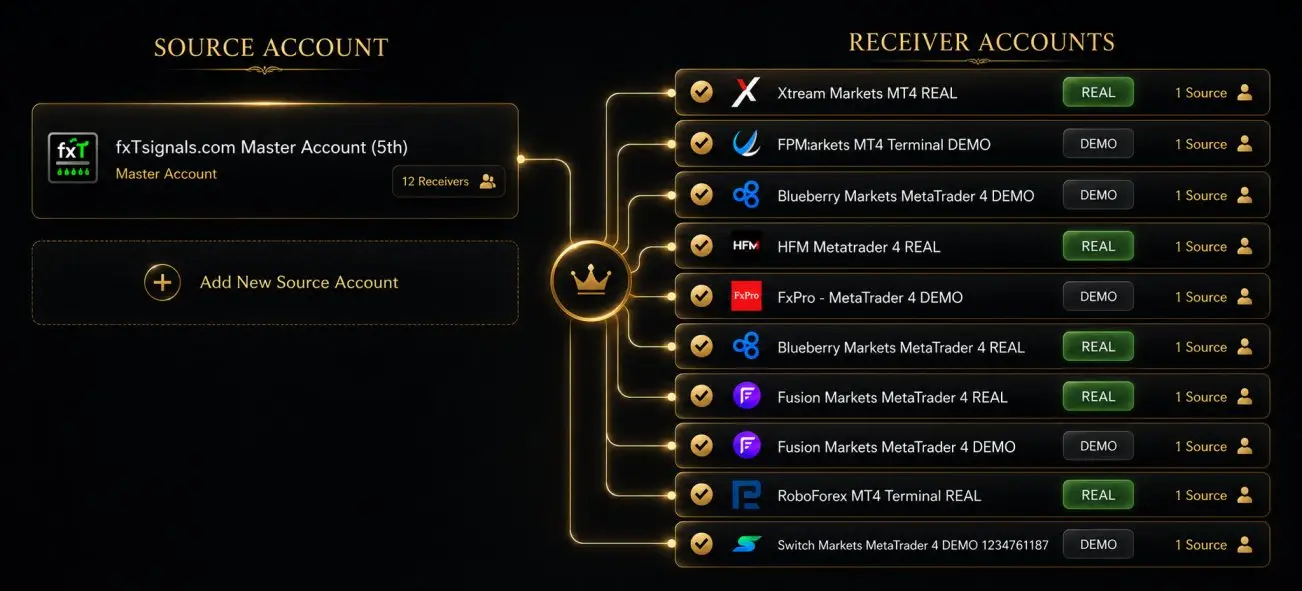
Why Copy Trading Is Reshaping Forex in 2027

Let's be honest — the forex market is brutal. Over 70% of retail traders lose money in their first year. But here is the thing: the traders who are consistently profitable are not necessarily smarter. They have just found a way to play a smarter game.
Copy trading is that smarter game. At its core, it lets you automatically replicate the trades of an experienced, vetted forex trader — in real time, without needing to watch every pip move. It sounds almost too good to be true, and yet when done correctly, it genuinely delivers. Platforms like eToro, ZuluTrade, and NAGA have built entire ecosystems around this idea, and the results speak for themselves.
But here is where most beginners go wrong: they pick a trader based purely on past profit percentages and expect the money to roll in. That approach almost always ends in disappointment. True copy trading success comes from strategy — selecting the right providers, diversifying intelligently, managing your risk exposure, and continuously reviewing performance.
At FxTsignals.com, we have studied thousands of copy trading setups across different market conditions. This guide distils everything you need to know — practical, proven, and actionable.
What Is Copy Trading — And How Does It Actually Work?
Copy trading, sometimes called mirror trading, is a method where your account automatically copies every trade placed by a chosen signal provider. When they buy EUR/USD, your account buys EUR/USD — proportionally, based on your allocated capital. When they close, you close. No manual input required.


The process works in three simple steps:
- 1You open a trading account on a platform that supports copy trading (many major forex brokers now integrate this natively).
- 2You browse a marketplace of signal providers, filtering by performance history, drawdown, win rate, trading style, and risk score.
- 3You allocate capital to one or more providers and the system handles everything else — trade execution, position sizing, and closure.
Key Distinction: Copy Trading vs Signal Services
With a signal service (like those offered at FxTsignals), you receive trade alerts and decide whether to act on them manually. Copy trading automates execution entirely. Both have merit — combining signal intelligence with selective copy execution is actually one of the most powerful hybrid approaches available today.
Real Benefits That Matter to Serious Forex Traders
The appeal of copy trading goes far beyond convenience. When you study how professional portfolio managers operate, you quickly realise they are doing something similar — they are not reinventing the wheel every day. They leverage proven systems, delegate execution, and focus on oversight and refinement.
Learning While You Earn
One underappreciated benefit is the educational value. By watching how your chosen traders respond to market events — news releases, central bank decisions, volatile sessions — you absorb a real-time forex education that no course can replicate. Over time, patterns emerge. You begin to understand why certain trades are placed, not just when.
Saving Your Most Valuable Resource
Time is finite. Most of our readers are not full-time traders — they have careers, families, and lives outside the markets. Copy trading respects that reality. Your portfolio keeps working while you are in a meeting, on a flight, or asleep.

Immediate Portfolio Diversification
One of the most powerful risk management tools in investing is diversification — and copy trading makes it remarkably accessible. Instead of having all your capital riding on a single strategy or currency pair, you can spread it across multiple traders who each specialise in different things.
- ✓Reduces the impact of any single losing streak on your total portfolio.
- ✓Exposes you to multiple trading methodologies simultaneously.
- ✓Balances high-risk/high-reward providers against more conservative ones.
- ✓Creates a more consistent overall equity curve, even when individual drawdowns occur.
5 Copy Trading Strategies That Consistently Perform

Not all copy trading setups are created equal. The difference between a profitable portfolio and a frustrating one often comes down to strategy selection. Here are five approaches that consistently deliver results — not in theory, but in real market conditions.
Before copying anyone, write down exactly what you want: "10% annual return with a maximum 15% drawdown" is a goal. "Make money" is not. Your goal determines which type of trader you should be copying — a conservative yield provider looks very different from a high-frequency scalper. Misaligned expectations cause most copy trading failures.
A trader showing 200% annual gains is meaningless without context. Always look at their maximum drawdown (ideally below 25%), their Sharpe ratio, and the number of months they have been consistently profitable. A steady 4% monthly return with 12% max drawdown is vastly more valuable than 30% gains followed by an 80% wipeout.
Spread your copy trading capital across at least three different trader archetypes: one swing trader (holds positions for days), one intraday trader (same-day open and close), and one trend follower (holds for weeks). This ensures that different market conditions — ranging, trending, volatile — are each being handled by someone specialised in exactly that environment.
Copy trading is not truly passive — it rewards attentive management. Every 30 days, review each trader's performance against their historical averages. Are they deviating from their strategy? Have they suddenly increased position sizes? Are drawdowns getting deeper? These are warning signs that warrant either reducing allocation or stopping the copy entirely. Act early, not after the damage is done.
The most sophisticated approach combines automated copy trading with curated forex signals. Use copy trading as your foundational passive layer, and supplement it with selective manual trades based on high-conviction signal setups. This hybrid model gives you the consistency of automation plus the upside potential of informed discretionary action — exactly the approach top traders at FxTsignals teach their clients.
The goal of a successful trader is to make the best trades. Money is secondary. The goal of an intelligent copy trader is the same — find the best traders, then let discipline do the rest.
— FxTsignals Trading Philosophy
Common Copy Trading Mistakes That Wipe Out Accounts

For every trader who builds wealth through copy trading, there are several who lose money simply because of avoidable mistakes. The forex market does not forgive careless decisions, and even automated strategies require human judgement at key moments. Here are the most common pitfalls — and exactly how to sidestep them.
Chasing Last Month's Top Performer
The trader topping the leaderboard last month is very often the one taking the most reckless risks. High returns over short periods frequently indicate over-leveraged positions that got lucky — not a sustainable edge. Look for consistency over 12+ months, not a single hot streak.
Over-Allocating to a Single Provider
Putting 80% of your copy trading budget behind one trader — no matter how impressive their track record — violates the foundational rule of risk management. No trader, however skilled, is immune to losing streaks. Your capital allocation should reflect that reality.
Ignoring the Platform's Risk Score
Most copy trading platforms assign a risk score to each provider. Many beginners ignore this completely. A risk score of 8/10 or higher should be approached with extreme caution — these traders are often running dangerously high leverage.
💡 Pro Tip: Set a hard stop-loss limit on your copy trading allocation — most platforms allow you to define a maximum drawdown threshold at which the copy automatically stops. Always use this feature. It is the one safeguard that prevents a bad month from becoming a catastrophic one.
How to Select the Right Traders to Copy: A Practical Framework
The selection process is where copy trading either succeeds or fails. Here is a structured framework used by experienced investors — broken down into four evaluation pillars.
Pillar 1: Track Record Depth
Minimum 12 months of verifiable trading history. Shorter records are simply not statistically meaningful — forex markets cycle through bullish, bearish, and sideways phases, and you need to see how a trader handles all three. Three years of data is ideal.
Pillar 2: Drawdown Profile
Maximum historical drawdown is one of the most honest metrics available. A trader who has never exceeded a 20% drawdown is demonstrating real discipline. One who regularly dips to 40–50% drawdown is managing risk very aggressively — and the question is not if they will hit a career-ending loss, but when.
Pillar 3: Trade Frequency and Transparency
How many trades per week does the provider place? Extremely high frequency often signals a scalping strategy that is sensitive to spread costs. Extremely low frequency might mean they are only trading in perfect conditions. Aim for providers whose trade frequency matches their stated strategy — and who have nothing to hide in their trade history.
Pillar 4: Community Feedback
Most platforms allow existing copiers to leave comments and ratings. Read these carefully. Patterns of complaints — especially around communication during drawdown periods — reveal far more about a trader's character than any statistic.
Advanced Copy Trading: Going Beyond the Basics
Once you have your foundation in place — a diversified portfolio of three to five carefully selected traders — there are advanced tactics that can meaningfully improve your results.
Portfolio Rebalancing
Just as stock investors rebalance their portfolios quarterly, copy traders should periodically review and adjust their allocations. A trader who has been performing exceptionally well may warrant a larger allocation — while one who has drifted from their strategy should have their allocation reduced.
Seasonal Awareness
The forex market has well-documented seasonal patterns. The summer months (July–August) tend to bring lower liquidity and unpredictable price action. December often sees reduced volume as institutional desks wind down for year-end. Adjusting your copy trading risk tolerance around these periods is a sophisticated touch that many beginners miss.
Combining Copy Trading With FxTsignals Intelligence
Here is something we consistently see among our highest-performing users: they treat copy trading as the baseline and use the premium signal alerts from FxTsignals as their tactical overlay. When a high-conviction signal aligns with what their copied traders are already positioned for, they increase size manually.
- →Use copy trading for consistent baseline exposure across multiple currency pairs.
- →Receive FxTsignals premium alerts for high-probability discretionary opportunities.
- →Compare signals with your current copy positions before executing anything manually.
- →Review total portfolio risk before adding any new position, regardless of conviction.
Frequently Asked Questions
Yes, copy trading can be profitable for beginners — but only when approached with realistic expectations, proper risk management, and careful trader selection. It is not a guaranteed income; the underlying market risk remains. Beginners should start with smaller allocations, diversify across at least three providers, and treat the experience as a live education while building their own market understanding in parallel.
Most copy trading platforms set minimum entry at $200–$500, though some allow as little as $50. However, to meaningfully diversify across multiple traders and correctly mirror position sizes, a realistic starting capital of $1,000–$2,500 is more practical. Starting with too little capital can prevent proportional trade replication, which undermines the entire strategy.
Absolutely, yes. Copy trading carries real market risk. If your copied trader enters a losing streak, your account loses proportionally. This is exactly why drawdown limits, diversification, and regular monthly reviews are non-negotiable. Every copy trading account should have a hard stop-loss threshold — a maximum loss level at which your copy position automatically deactivates — as your last line of defence.
Forex signals are trade recommendations you act on manually — you choose whether and when to execute each alert. Copy trading automates the entire execution process without any input from you. Both have clear advantages: signals give control and learning opportunities; copy trading delivers full automation and time efficiency. Many experienced investors combine both — using copy trading as a steady automated baseline while using premium signals for high-conviction manual trades.
Trustworthiness is proven through verified data, not promises. Look for providers with at least 12 months of audited history on a regulated platform, a maximum drawdown below 25%, consistent win rates above 55% across varying market conditions, fully transparent trade logs, and positive community feedback — especially reviews describing how they communicated during difficult drawdown periods. Any provider promising guaranteed returns should be avoided immediately; that is a universal red flag in financial services.
Conclusion: Copy Trading Is a Tool, Not a Shortcut
There is a version of copy trading that disappoints people — the version where you pick the highest-earning trader, allocate your savings, and wait for the money to appear. That version rarely works.
Then there is the version that actually delivers: strategic provider selection based on risk metrics, intelligent diversification across complementary trading styles, disciplined monthly reviews, and the wisdom to combine automation with informed human judgement. That version, done right, genuinely changes what is possible for a forex trader.
Copy trading is not a shortcut. It is a leverage point — a way to put the expertise of experienced traders to work for your portfolio while you develop your own understanding of the markets. Used correctly, it is one of the most powerful tools available to any investor in the forex space today.
The traders winning with copy trading in 2025 are the ones who treat it as a discipline, not a lottery. They study their providers, manage their risk, and keep learning. They also know when to augment their automated positions with high-conviction signals from a trusted source.
That is exactly what FxTsignals is here for.
Ready to Trade Smarter?
Combine Copy Trading With
Premium Forex Signals
Join thousands of traders who are growing their portfolios with verified signal intelligence and expert copy trading guidance — all in one place.