Advanced Fundamental Analysis Techniques That Actually Work in Forex Trading | fxTsignals
Advanced Fundamental Analysis Forex Trading
Forex Education · fxTsignals.com

Stop Trading Blind — Master Fundamental Analysis and Let the Market Tell You Where It's Going

Economic indicators, geopolitical forces, and market sentiment are the real engines behind every pip movement. Here's how professional traders decode them — and how you can too.

📅 May 2026 ⏱ 7 min read ✍ fxTsignals.com
$7.5T Daily Forex Volume

The world's largest and most liquid market, active 24/5

85% Moves Are Fundamental

Of long-term currency trends driven by economic fundamentals

5 Core Indicators

That every serious forex trader must track every single week

Why Most Forex Traders Lose — And What Fundamental Analysis Changes

Here's something most trading courses won't tell you: the majority of retail forex traders rely almost entirely on technical analysis — candlestick patterns, RSI levels, moving averages — without ever asking why price is moving. That's trading the symptom, not the cause.

Fundamental analysis in forex is the practice of examining the economic, political, and psychological forces that actually drive currency values. Think of it as the intelligence layer beneath the chart. While technical analysis tells you what price is doing, fundamental analysis tells you why — and more importantly, what's likely to happen next.

At fxTsignals.com, we've built our entire signal framework around combining both disciplines. But in this guide, we're going deep on the fundamental side — the economic indicators, geopolitical factors, and sentiment tools that separate informed traders from guesswork.

Economic Indicators Forex Trading Dashboard
Real-time economic data is the foundation of every major currency move.

Economic Indicators: Reading the Hidden Signals in Market Data

Before you can trade fundamentals, you need to understand the language they speak. Economic indicators are statistical reports released by governments and independent organizations that measure the health of an economy. When these numbers beat, miss, or match expectations, currency markets move — sometimes violently.

They come in three types: leading indicators (which predict future economic activity), lagging indicators (which confirm what has already happened), and coincident indicators (which reflect current conditions). Smart traders watch all three, but prioritize leading indicators for forward-looking positioning.

The Five Economic Indicators Every Forex Trader Must Know

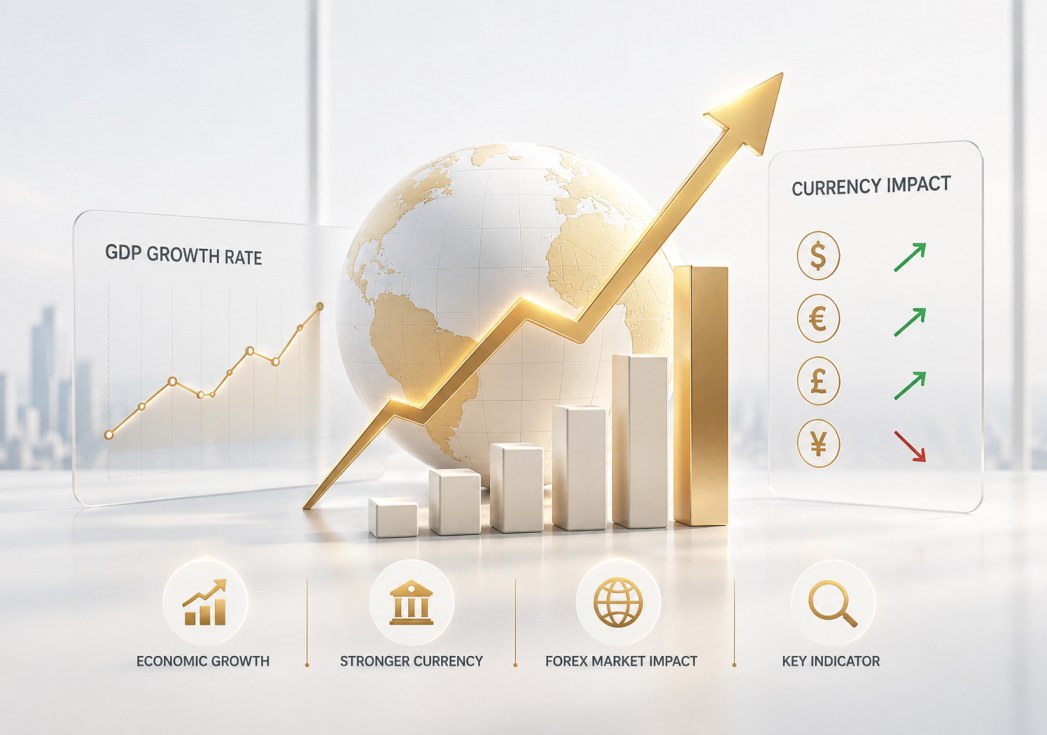
GDP Growth Rate Currency Impact Forex
GDP figures can trigger 50-100 pip moves in seconds upon release.
📈 Gross Domestic Product (GDP)

The single most comprehensive measure of economic health. Positive GDP growth typically strengthens the currency; contraction weakens it. Watch for quarterly revisions — they often surprise markets.

🔥 Consumer Price Index (CPI)

Measures inflation by tracking price changes across a basket of goods. When CPI runs hot, central banks raise rates — and higher rates attract foreign capital, boosting the currency.

🏦 Interest Rates

The most directly market-moving fundamental of all. Rate decisions by the Fed, ECB, BOE, or BOJ can shift major pairs by hundreds of pips instantly. Rate expectations matter just as much as the actual decision.

👷 Unemployment Rate

A tight labor market signals consumer spending power and economic strength. In the US, Non-Farm Payrolls (NFP) — released on the first Friday of each month — is the single biggest recurring market event.

Trade Balance: The Often Overlooked Indicator

A nation's trade balance — the difference between exports and imports — directly impacts currency demand. When a country exports more than it imports (a trade surplus), foreign buyers must purchase that nation's currency to pay for goods, creating organic buying pressure. Japan's persistent export surplus, for instance, has long been a structural support for the yen.

  • Surplus (exports > imports): Bullish for the currency — higher demand from trade partners
  • Deficit (imports > exports): Bearish pressure — domestic currency flows outward
  • Trend matters more than snapshot: A widening deficit signals deterioration even if current numbers look moderate
  • Trade war escalations: Can disrupt trade flows and introduce sudden volatility — always monitor tariff news

"Practical tip: Build an economic calendar into your daily routine. Sites like Forex Factory or the official release schedules from the BLS, Eurostat, or ONS give you exact release times. Trade the expectation, not just the number."

Geopolitical Events Forex Market Impact
Geopolitical uncertainty creates rapid, often unpredictable currency dislocations.

Geopolitical Analysis: When Politics Moves Pips

If you've ever watched the euro collapse on an election night or the British pound crater during Brexit negotiations, you already understand geopolitical risk. Political events create uncertainty, and currency markets — like all financial markets — hate uncertainty. When the future becomes unclear, capital flees toward safe-haven currencies like the US dollar, Japanese yen, and Swiss franc.

Three Geopolitical Factors That Move Currency Markets

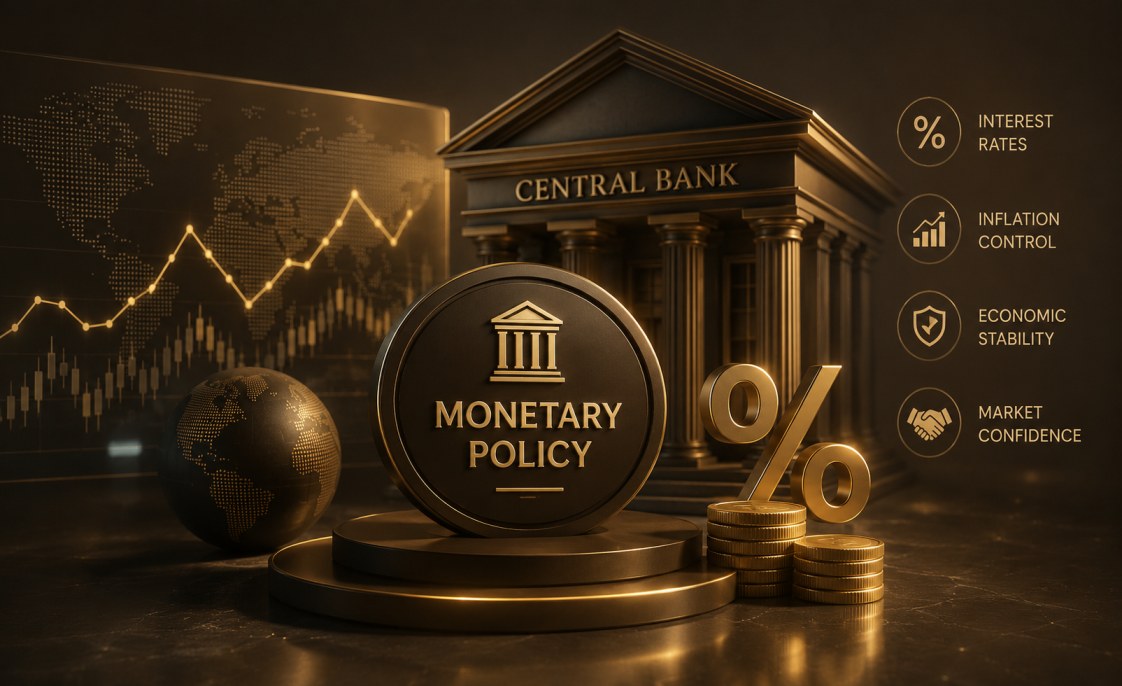
Central Bank Policy Monetary Policy Forex
Central bank press conferences can shift currency pairs before a single trade executes.

1. Elections & Political Transitions

Markets price in uncertainty before elections and relief (or panic) after results. The GBP/USD during the 2016 Brexit referendum dropped over 10% in a single night. Identifying pre-election sentiment shifts gives you a timing edge. Watch polls, prediction markets, and parliamentary vote counts alongside your charts.

2. Geopolitical Tensions & Trade Wars

Conflicts, sanctions, and trade disputes disrupt capital flows and supply chains. The USD/CNH pair, for example, has become highly sensitive to US-China trade headlines. Commodity-linked currencies like the AUD and CAD respond sharply to supply disruption narratives affecting oil, gas, and metals.

3. Central Bank Policy Shifts

Central bank communication — not just decisions — moves markets. Fed Chair press conferences, ECB forward guidance, and BOJ yield curve control adjustments create opportunities for traders who read between the lines. When a central bank "pivots," it signals months of directional momentum.

  • Follow central bank meeting calendars — scheduled communications offer predictable volatility windows
  • Monitor the CBOE Volatility Index (VIX) for broader risk-off sentiment that spills into forex
  • Track diplomatic relations and sanctions announcements for emerging market currency exposure
  • Build a "scenario map" before high-risk events: what happens to your position if outcome A, B, or C occurs?
  • Use reduced position sizes around binary political events — unpredictable gaps can bypass stop losses

"The most successful geopolitical trades aren't reactionary — they're anticipatory. When you understand what a political outcome means for monetary policy, you position before the crowd catches up."

Market Sentiment: The Psychology Layer That Technicals Can't Capture

Markets aren't rational. They're driven by the collective behavior of millions of traders — each with their own biases, fears, and convictions. Market sentiment is the aggregate emotional state of the market, and understanding it can give you a powerful edge that no chart pattern can match.

Think of fundamentals as the what (strong economy, rising rates), geopolitics as the why (policy stability, risk events), and sentiment as the how much and how quickly the market will react. All three work together.

Three Sentiment Tools That Actually Work in Forex

The Commitment of Traders (COT) Report

Published every Friday by the CFTC, the COT report breaks down futures market positioning by commercial traders (hedgers), non-commercial traders (speculators), and small traders. When large speculators hold extreme long or short positions, the market is often ripe for a reversal. It's one of the most reliable contrarian indicators available — and it's completely free.

How to use it: When net speculative positions hit multi-year extremes in one direction, look for a catalyst that could trigger a squeeze in the opposite direction. Pair COT data with economic calendar events for high-probability setups.

The VIX: Fear as a Forex Signal

The VIX measures expected volatility in the S&P 500 options market, but its influence extends across all risk assets including forex. When the VIX spikes above 25-30, risk-off flows typically push money into USD, JPY, and CHF. When the VIX is calm and declining, risk-on pairs like AUD/JPY and NZD/USD tend to outperform.

  • VIX above 30: Favor safe-haven currencies (USD, JPY, CHF)
  • VIX below 15: Risk appetite is high — look for carry trade opportunities
  • VIX rapidly rising: Reduce leverage immediately and reassess all open positions

"Don't ignore social media and news flow entirely. X (Twitter), Bloomberg terminals, and central bank speech transcripts all move markets in real time. The edge isn't just having the information — it's knowing what it means faster than everyone else."

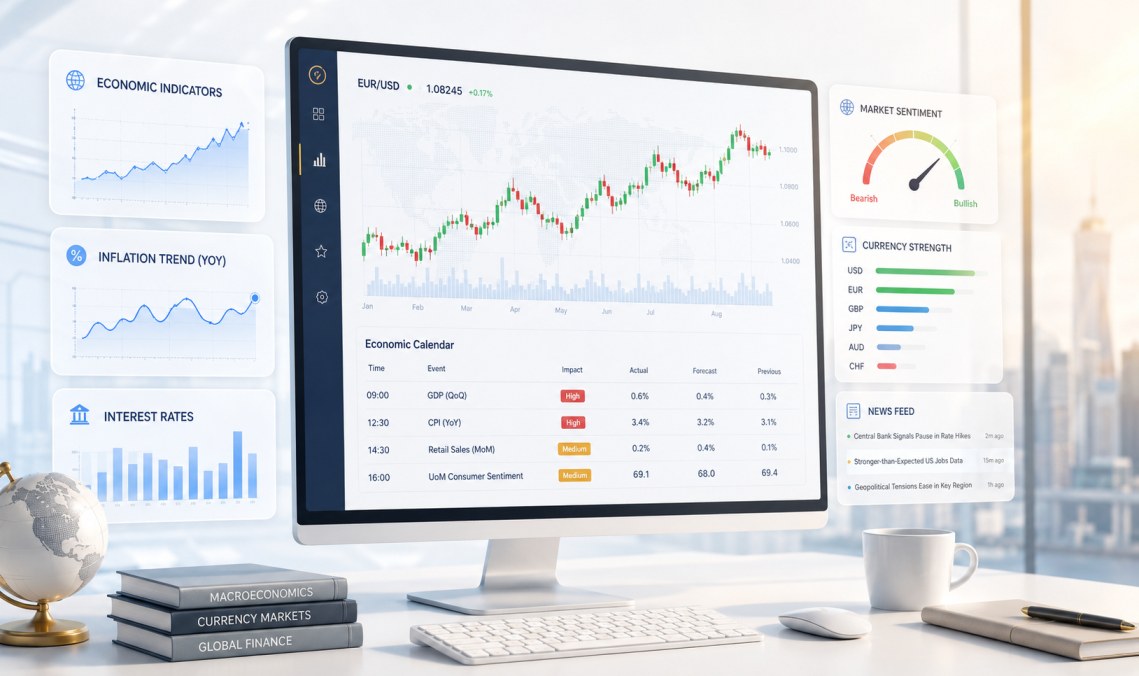
Professional Forex Trading Strategy Fundamental Analysis
Professional traders integrate economic, geopolitical, and sentiment data before every decision.

Putting It All Together: Your Fundamental Analysis Framework

Advanced fundamental analysis isn't about reading every economic report in existence. It's about building a systematic framework that tells you: is this currency fundamentally strong or weak right now? Is the political backdrop supportive or threatening? Is market sentiment aligned with the fundamentals, or diverging in a way that signals opportunity?


The traders who consistently profit in forex are those who ask these questions before they look at a single candlestick. Charts tell you the story that already happened. Fundamentals help you write the story before the market tells it.


Stay current. Stay curious. And trade with conviction — backed by evidence, not emotion. At fxTsignals.com, every signal we send is grounded in exactly this kind of layered analysis. Because in the currency market, knowledge isn't just power — it's profit.

Frequently Asked Questions

Common questions about fundamental analysis in forex trading

Interest rate decisions and forward guidance from central banks are generally the most impactful. However, for short-term volatility, employment data — especially the US Non-Farm Payrolls report — generates the largest and most immediate price moves across USD pairs. The key is understanding which indicator matters most for the specific currency pair you're trading.

Use fundamental analysis to determine the directional bias — is this currency fundamentally bullish or bearish? Then use technical analysis to time your entry and define your risk. For example, if rising US interest rates give you a bullish USD outlook, you'd look for technical pullbacks in DXY or USD pairs to enter in the direction of the fundamental trend rather than chasing breakouts.

Geopolitical risk triggers capital flight toward perceived safety. The US dollar, Japanese yen, and Swiss franc benefit most during global uncertainty because of their deep liquidity and historical stability. Conversely, emerging market currencies, commodity currencies (AUD, CAD, NOK), and currencies from politically unstable regions tend to depreciate rapidly during risk-off episodes. Monitoring geopolitical developments is essential for avoiding sudden adverse moves.

The Commitment of Traders (COT) report is a weekly publication from the US Commodity Futures Trading Commission that shows the aggregate positions of different market participant types in futures markets. Forex traders use it as a contrarian sentiment tool — when large speculative positions reach extreme levels in one direction, markets often reverse. It works best combined with price action at key technical levels and upcoming fundamental catalysts that could trigger a position unwind.

Fundamental analysis is most powerful for medium-to-long term positioning (days to months), as economic trends take time to fully materialize in exchange rates. However, it's also critical for short-term traders around scheduled economic releases, where fundamental surprises cause immediate price spikes. Day traders benefit from knowing the fundamental backdrop even if they don't hold positions overnight — it helps them trade in alignment with the dominant trend rather than against it.

Ready to Trade With Real Intelligence?

At fxTsignals.com, our signals are backed by the exact fundamental, geopolitical, and sentiment analysis you've just learned. Stop guessing. Start trading with clarity and confidence.

Get Professional Forex Signals

Join thousands of traders who trade smarter every day at fxTsignals.com

Professional forex signals, wealth management & trading education — empowering traders across the globe since 2018.

Copyright © fxTsignals.com · 2018 –  · All rights reserved.