Hedge Fund Risk Analysis:
How Smart Forex Traders
Protect Their Capital
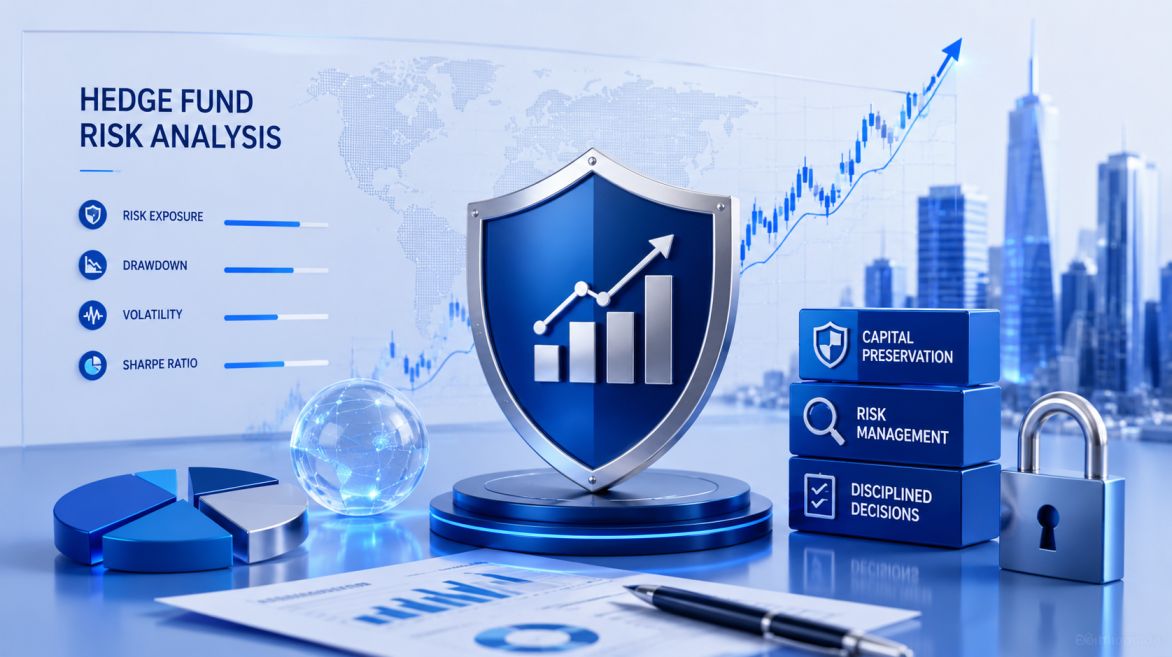
Let's be honest — most forex traders focus almost exclusively on entries, exits, and technical setups. But the investors who consistently build wealth over time? They obsess over risk. Hedge fund risk analysis isn't just for institutional giants on Wall Street. It's a framework that every serious forex trader can adopt to protect capital, sharpen decision-making, and navigate even the most volatile markets with confidence.
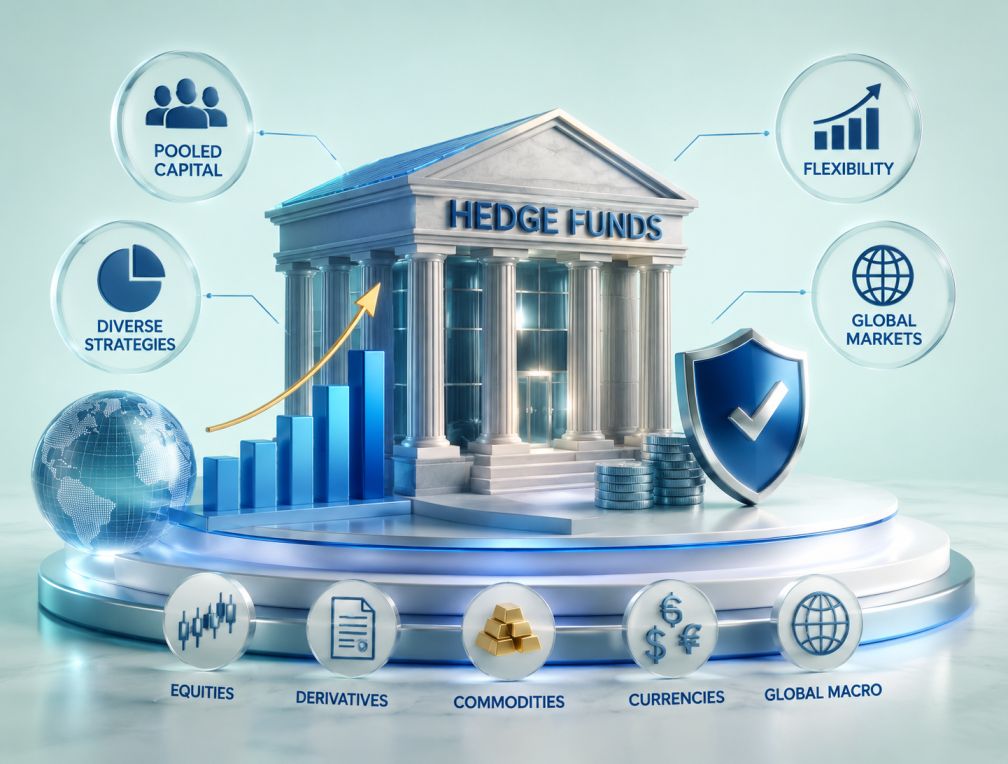
What Exactly Are Hedge Funds — And Why Should Forex Traders Care?
Hedge funds are pooled investment vehicles that bring together capital from multiple investors and deploy it across a wide range of strategies — from equity long/short to global macro, derivatives, commodities, and yes, currency markets. Unlike traditional mutual funds, hedge funds operate with far fewer regulatory constraints and significantly more flexibility in the instruments they can trade.
For forex traders, understanding how hedge funds think and manage risk is invaluable. These institutions move markets. Their risk frameworks are battle-tested. And the core principles they use — measuring volatility, stress-testing portfolios, diversifying exposures — translate directly into retail forex trading strategy.
Why Hedge Fund Risk Analysis Is Non-Negotiable in Today's Market
Markets today are more interconnected and reactive than ever before. A central bank decision in Tokyo can ripple through EUR/USD pairs within milliseconds. A geopolitical event can evaporate months of gains overnight. Without a structured approach to risk analysis, you're not trading — you're gambling with a technical chart overlay.
Hedge fund risk analysis gives you a systematic lens to evaluate every position, every exposure, and every scenario before it unfolds. Both fund managers and individual investors benefit from this discipline. It's what separates traders who compound wealth from those who blow up accounts chasing yield.
- Make smarter, evidence-based entry and exit decisions across currency pairs
- Protect your trading capital during unexpected market shocks and black swan events
- Build a portfolio of positions that genuinely diversify your risk exposure
- Identify weaknesses in your strategy before the market exposes them brutally
- Sleep better knowing your downside is measured, defined, and manageable
The Four Core Investment Risks in Hedge Funds — Mapped to Forex Trading
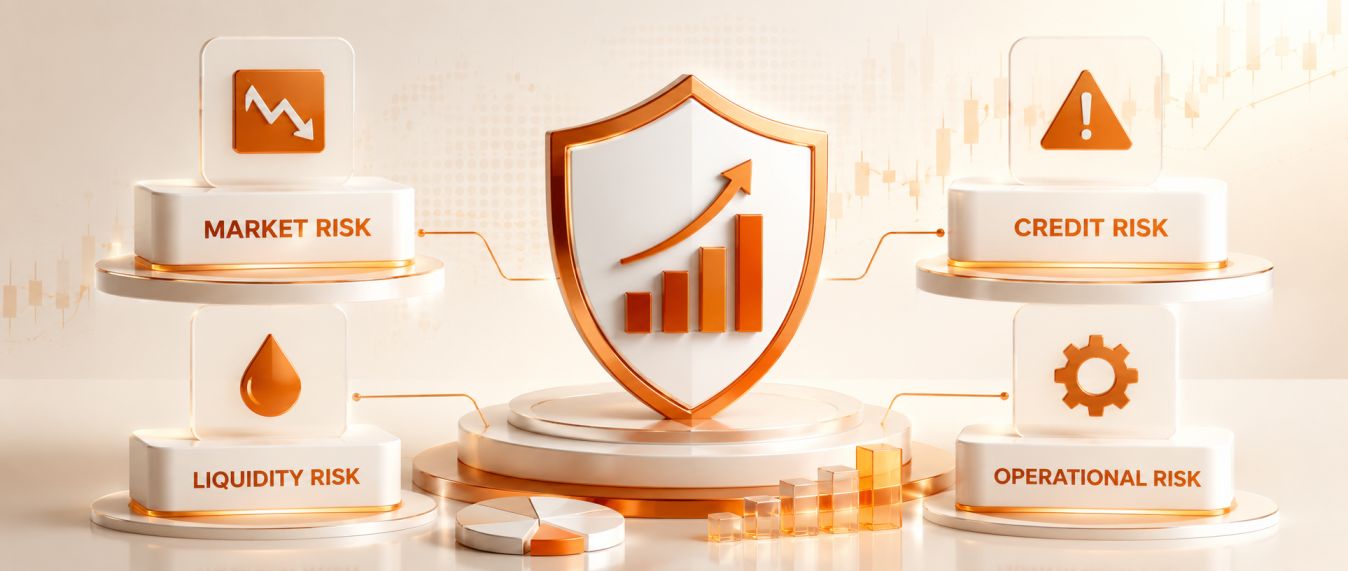
Before you can manage risk, you have to understand exactly what you're managing. Hedge funds categorize investment risks into four primary buckets. Here's what each means — and how it directly applies to your forex trading:
Market Risk
The danger of losses from adverse market moves — price shifts, interest rate changes, and exchange rate volatility. In forex, this is your daily reality. Monitoring macro trends and economic calendars is your first line of defense.
Credit Risk
The risk that counterparties or debt issuers default on obligations. For forex traders, this shows up in broker solvency risk and counterparty exposure in OTC markets. Always trade with regulated, well-capitalized brokers.
Liquidity Risk
The inability to enter or exit a position at a reasonable price. In forex, exotic pairs and news events can create dangerous liquidity gaps. Understanding the liquidity profile of your instruments is critical.
Operational Risk
Risks from internal failures — platform errors, fraud, compliance issues, or human mistakes. Using reliable platforms, maintaining proper records, and following disciplined processes keeps operational risk low.
Quantitative vs. Qualitative: The Two-Pillar Strategy for Risk Analysis
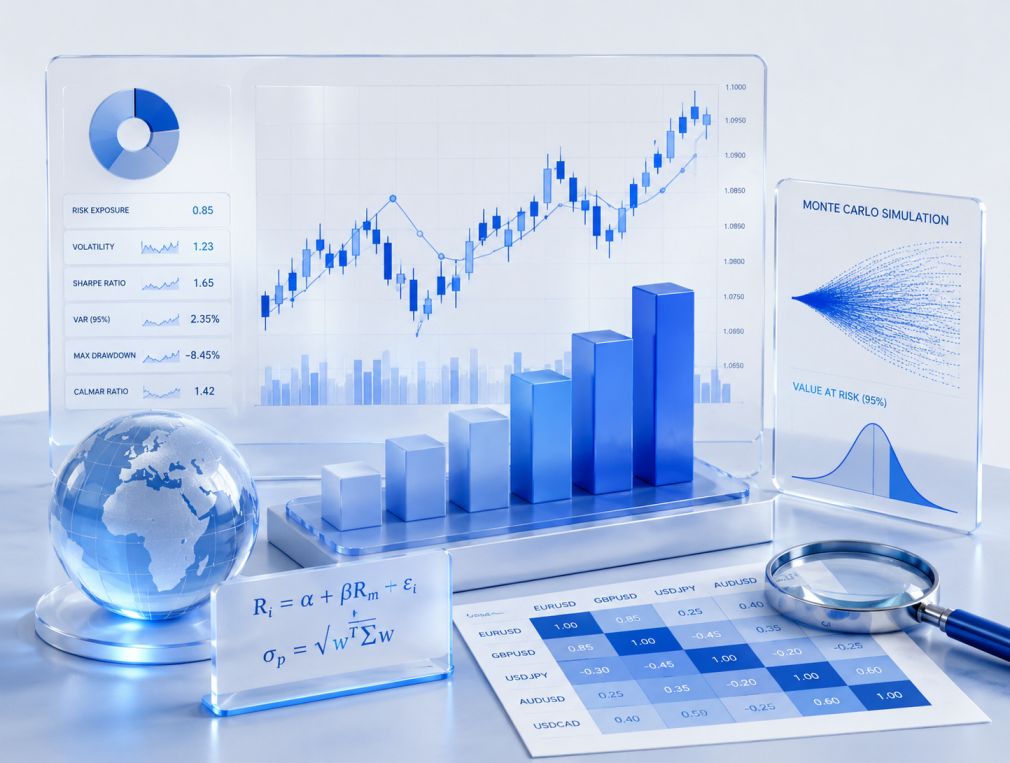
Effective hedge fund risk analysis isn't a one-size-fits-all formula. It requires combining two distinct analytical approaches — one that speaks the language of numbers, and one that reads between the lines.
Quantitative Analysis: Let the Data Drive Decisions
Quantitative analysis uses historical data, statistical models, and mathematical frameworks to measure risk exposures with precision. Think backtesting your strategy across 10 years of market data, calculating correlation coefficients between currency pairs, or running Monte Carlo simulations on your portfolio drawdown risk. For forex traders, quantitative methods reveal insights about risk-return trade-offs that gut instinct simply cannot provide.
Qualitative Analysis: The Human Edge Beyond the Numbers
Numbers alone don't tell the whole story. Qualitative analysis examines factors like the credibility of a central bank's guidance, geopolitical tensions affecting a currency pair, or the track record and philosophy of a fund manager. In forex terms, this means understanding the macro narrative behind price action — not just what the chart shows, but why the market is moving the way it is. The most sophisticated traders blend both approaches seamlessly.
Key Metrics Every Risk-Aware Forex Trader Must Know
Hedge funds live and die by their metrics. These measurements cut through the noise and give you a clear, objective picture of how a portfolio is truly performing relative to its risk exposure. Here are the four metrics you should be tracking:
Measuring the Swings That Could Hurt You
Volatility quantifies how much a currency pair or portfolio fluctuates over time. Higher volatility = higher potential reward, but also higher potential ruin. Track Average True Range (ATR) and implied volatility to size your positions intelligently and avoid overleveraging during turbulent sessions.
Are Your Returns Worth the Risk You're Taking?
The Sharpe Ratio measures return per unit of risk. A ratio above 1.0 is generally good; above 2.0 is excellent. If you're generating a 15% annual return but experiencing 25% drawdowns to get there, your Sharpe Ratio will reveal that the risk-adjusted performance is poor — a game-changer for evaluating strategies honestly.
Value at Risk — Define Your Maximum Exposure
Value at Risk estimates the maximum potential loss over a specific period at a given confidence level — typically 95% or 99%. For example, a 1-day 95% VaR of $500 means there's a 95% probability you won't lose more than $500 in a single day. This helps forex traders set position sizes and daily loss limits with mathematical precision.
How Much Can You Lose Before You Can't Come Back?
Maximum drawdown measures the largest peak-to-trough decline in account value over a given period. A 50% drawdown requires a 100% gain just to break even. Understanding your strategy's historical maximum drawdown tells you whether your risk tolerance and capital base can realistically survive its worst periods.
Three Powerful Tools for Deep Hedge Fund Risk Analysis
Historical Simulation
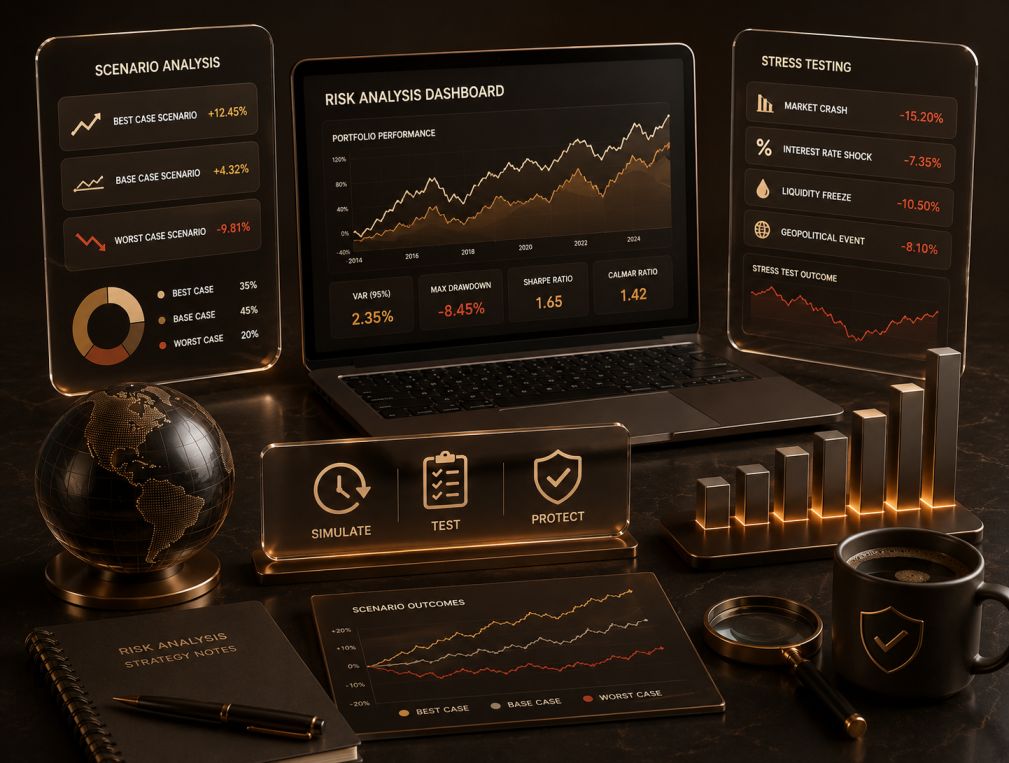
Historical simulation replays past market conditions against your current portfolio or strategy to see how it would have performed. Run your forex strategy through the 2008 financial crisis, the 2015 Swiss franc flash crash, or the COVID-19 volatility of 2020. If your strategy survives those scenarios with controlled drawdowns, you have real evidence of resilience — not just backtested optimism.
Scenario Analysis
Instead of using historical data, scenario analysis lets you build hypothetical situations and test your exposure. What happens to your EUR/USD positions if the Federal Reserve makes an emergency rate cut? What if oil spikes 40% and disrupts commodity-linked currencies? Creating best-case, base-case, and worst-case scenarios gives you a decision-making edge that purely reactive traders never have.
Stress Testing
Stress testing pushes your portfolio to the extreme. It deliberately applies the most adverse conditions imaginable — a simultaneous breakdown in three correlated pairs, a 300-pip gap open, a margin call cascade — to reveal structural weaknesses before they become catastrophic. Think of it as a fire drill for your trading account.
Best Practices to Manage Hedge Fund-Level Risks in Your Forex Portfolio
🔀 Diversification — Don't Put All Your Pips in One Basket
Diversification means spreading your trades across different currency pairs, timeframes, and even trading strategies. A trader running a trend-following system on EUR/USD alongside a mean-reversion approach on AUD/JPY has a more resilient portfolio than one who's all-in on a single pair. True diversification reduces the impact of any single loss on your overall account.
🔍 Due Diligence — Know What You're Trading and Why
Before entering any trade, conduct thorough due diligence. This means analyzing the fundamental backdrop, understanding the liquidity conditions, reviewing the technical structure, and assessing current market sentiment. Apply the same rigor to your own trading strategy that a hedge fund applies to its investment decisions.
📈 Regular Monitoring and Review — Risk Doesn't Sleep
Markets change. What worked last month may be dangerously outdated today. Establish a weekly or monthly review process where you examine your performance metrics, drawdown levels, win rates, and risk-adjusted returns. The traders who stay profitable long-term treat strategy review as a non-negotiable discipline.
Never risk more than 1–2% of your account on a single trade. Use stop-losses religiously — not as a suggestion but as a rule. Review your VaR weekly. Backtest every new strategy across at least five years of historical data. And always ask yourself: "If this trade goes wrong, can I survive it and come back stronger?"
Frequently Asked Questions
Hedge fund risk analysis is the systematic process of identifying, measuring, and managing investment risks within a portfolio. For forex traders, the principles are directly applicable — from measuring volatility and calculating VaR on your open positions, to stress-testing your strategy against historical market crashes. It transforms trading from reactive guesswork into a data-driven, repeatable process.
The Sharpe Ratio measures how much return you're generating for each unit of risk taken. A higher Sharpe Ratio means you're being well-compensated for the risk in your strategy. For forex traders, it's an honest way to compare two strategies — one that makes 20% annually with minimal drawdowns versus one that makes 25% but experiences brutal 40% drawdowns. The Sharpe Ratio reveals which is truly superior on a risk-adjusted basis.
To use VaR practically, calculate the maximum expected daily loss on your open positions at a 95% confidence level. If your VaR calculation shows a potential $300 daily loss and you're uncomfortable with that, reduce position sizes until the number is within your acceptable range. Setting a daily VaR limit is an excellent way to enforce account protection without relying purely on emotion-driven decisions in the heat of trading.
Scenario analysis tests your portfolio against specific hypothetical events — like a Fed rate hike or a geopolitical shock — to understand how your positions might respond. Stress testing goes further by applying extreme, multi-dimensional adverse conditions simultaneously to reveal structural weaknesses and worst-case exposure. Both are valuable; scenario analysis prepares you for likely events while stress testing prepares you for the unlikely ones that, when they happen, can be catastrophic.
At minimum, conduct a thorough risk review monthly. During high-volatility periods — major central bank cycles, geopolitical crises, earnings seasons for correlated assets — review weekly or even daily. Track your key metrics: win rate, average risk-reward ratio, maximum drawdown, and Sharpe Ratio. If any metric deviates significantly from your historical baseline, pause, diagnose, and adjust before the market forces an adjustment on your behalf.
Conclusion: Risk Analysis Is the Real Edge in Forex Trading
Hedge fund risk analysis isn't reserved for billion-dollar institutions. It's a mindset, a discipline, and a set of practical tools that any serious forex trader can implement starting today. By understanding the four core risk types, mastering key metrics like VaR, Sharpe Ratio, and maximum drawdown, and building habits around regular portfolio review and stress testing, you're no longer just trading currencies — you're managing risk like a professional.
The traders who build lasting wealth in forex aren't the ones who find some secret indicator or holy-grail entry system. They're the ones who understand risk deeply enough to stay in the game long enough for their edge to compound. That's the real secret. And now you have the framework to pursue it.
Ready to Trade Smarter with Professional Risk Signals?
Join thousands of forex traders who use fxTsignals to get institutional-grade market intelligence, risk-managed signal alerts, and expert analysis — delivered in real time.