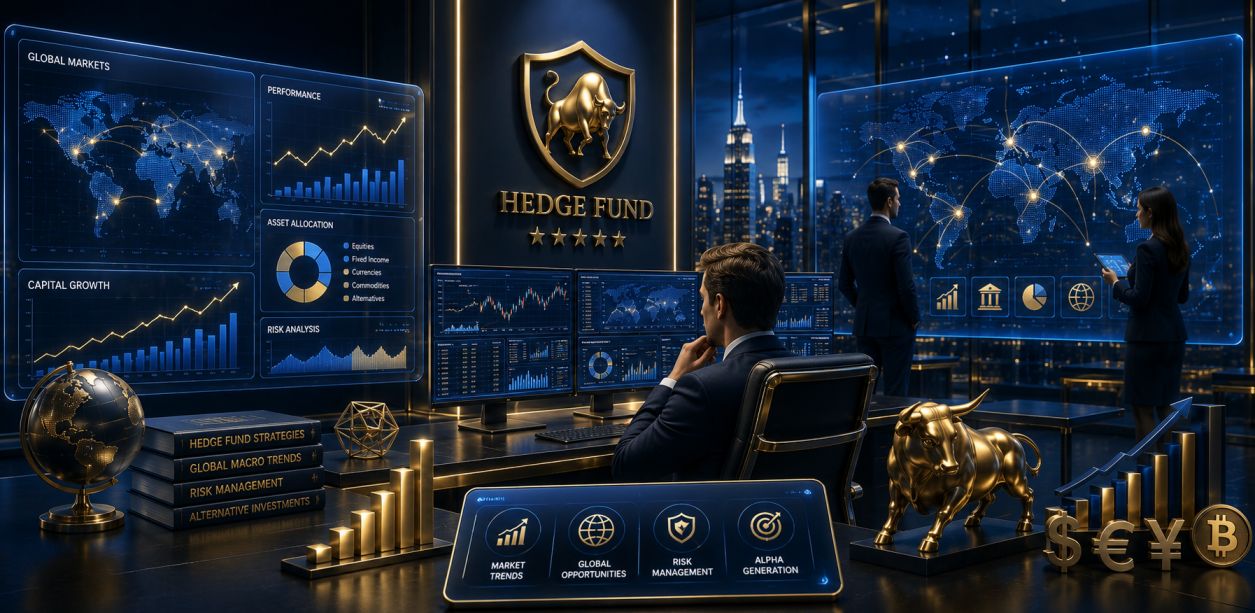
Where Smart Money Moves Next:
Hedge Fund Industry Trends
Every Forex Trader Must Know
The world's sharpest capital doesn't sit still. Hedge funds — the engines of institutional alpha — are reshaping investment playbooks right now, and every savvy forex trader needs to understand exactly why that matters for their portfolio.
Think hedge funds are a world away from your forex terminal? Think again. The strategies, capital flows, and risk frameworks that elite hedge funds use today directly influence currency markets, interest rate expectations, and the macro signals that every forex trader relies on. Understanding where this smart money is going — and why — is one of the most underused edges in retail trading.
In this deep-dive, we unpack the three defining trends reshaping the hedge fund landscape right now: the sweeping rise of ESG integration, the technology revolution inside trading floors, and the bold emerging themes that are drawing billions in fresh capital. For forex traders, each of these carries direct, actionable implications for how you read markets, time entries, and think about macro risk.
 01 — Big Picture Shift
The Rise of ESG Integration — and What It Means for Currency Markets
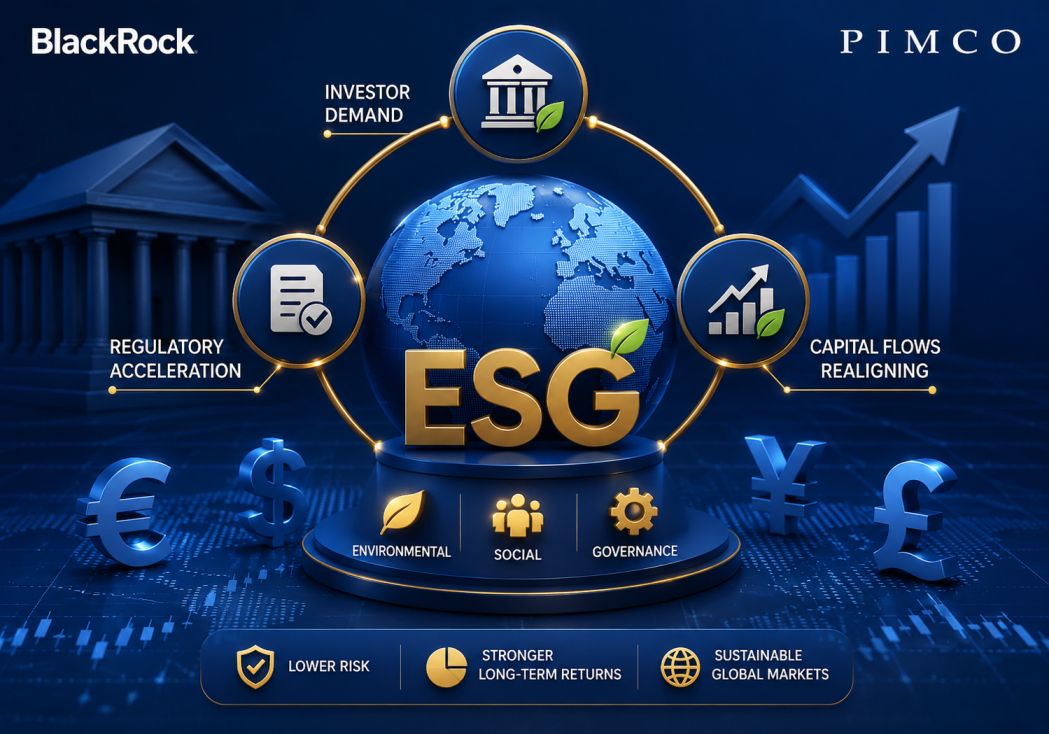
A few years ago, Environmental, Social, and Governance investing sounded like the niche concern of ethically-minded endowment funds. Today, it's a trillion-dollar mandate reshaping where hedge funds deploy capital globally. The data is hard to argue with: ESG-aligned hedge fund strategies have grown at roughly three times the pace of traditional funds over the past five years, and the reasons behind this acceleration matter deeply for macro traders.
Why Investor Demand Is Driving This Trend
Institutional investors — pension funds, sovereign wealth funds, family offices — are increasingly requiring ESG compliance before allocating capital. This is not idealism; it's fiduciary discipline. A pension fund managing liabilities 30 years into the future simply can't afford to ignore climate transition risk in its portfolio. As these massive capital pools redirect flows toward ESG-screened assets, entire sectors and currencies face structural shifts in demand. Currencies tied to high-carbon economies face growing headwinds, while currencies of nations leading the green transition attract fresh institutional appetite.
Regulation Is Accelerating the Shift — Fast
Governments across Europe, Asia, and North America are implementing mandatory ESG disclosure requirements that fund managers simply cannot ignore. For forex traders, the political and regulatory velocity around ESG creates a powerful macro signal: currencies of nations with progressive ESG frameworks — such as the euro and Scandinavian currencies — are increasingly attractive to institutional rebalancing flows. When a major hedge fund shifts $2 billion into ESG-compliant European equities, that's a currency flow worth tracking.
ESG integration isn't just about ethics — it's about identifying which economies and currencies will attract institutional capital over the next decade. For the informed forex trader, ESG is a macro lens, not a moral statement.
Performance Data Backs the Trend
Multiple peer-reviewed studies now confirm that incorporating ESG factors into investment decisions improves long-term risk-adjusted returns. This happens because ESG screening identifies companies — and by extension, economies — with resilient governance, lower regulatory exposure, and sustainable growth models. For forex traders, the takeaway is straightforward: economies scoring well on ESG benchmarks tend to attract sustained institutional inflows, supporting their currency over multi-month timeframes.
 02 — The Tech Revolution
Technology-Driven Investment Strategies: The New Trading Playbook
Walk into a leading hedge fund's technology floor today and it barely resembles a trading floor at all. It looks more like a data science lab. The integration of artificial intelligence, machine learning, and alternative data has fundamentally altered how institutional capital finds and executes its best ideas — and the speed and precision of these systems is raising the bar for every market participant.
AI and Machine Learning: Pattern Recognition at Scale
Hedge funds are deploying AI and machine learning algorithms to process enormous datasets — earnings calls, shipping data, patent filings, satellite imagery — and extract patterns that no human analyst could identify manually. In currency markets specifically, these systems can detect correlations between macro variables and FX moves weeks before they appear in traditional data releases. For retail forex traders, this is the new alpha frontier. You don't need to build an AI system to benefit from this trend — but understanding that institutional algos react faster to non-traditional signals helps you avoid fighting tape movements you don't yet understand.
Alternative Data: The Signal You're Missing
Satellite images of parking lots, aggregated credit card transaction data, social media sentiment scores — this is the alternative data revolution, and hedge funds are spending hundreds of millions to access it. When a fund's satellite team detects declining industrial activity in a major exporting economy before the official PMI prints, that's a currency signal. While retail traders rarely have access to these raw feeds, understanding that institutional orders are increasingly driven by non-traditional signals makes you a more adaptive, patient trader who isn't surprised when price moves ahead of headlines.
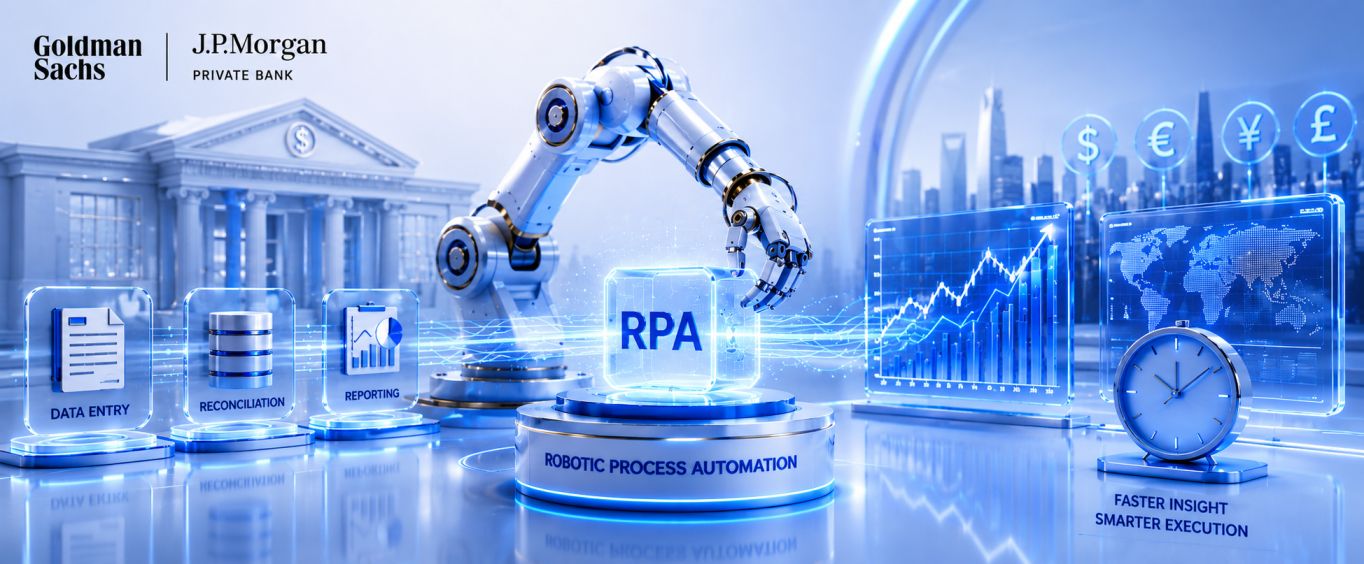
Robotic Process Automation: Compressing the Edge
While RPA may sound operational rather than strategic, its impact flows directly into market structure. Hedge funds using RPA to handle data entry, reconciliation, and reporting can reallocate human capital to high-value research and execution. This compresses the time between insight and action, making institutional participants faster and more precise in their market entries. For forex traders, tighter institutional execution means shorter windows of opportunity during high-conviction macro setups — a reason to sharpen your own execution discipline and reduce decision latency.
The finance-technology boundary is dissolving. Forex traders who understand how institutional systems consume data and generate orders will be better positioned to read price action in real time — not just react to it after the fact.
Emerging Investment Themes Driving Hedge Fund Capital Flows
Beyond ESG and technology, hedge funds are positioning aggressively in three thematic areas that will shape market dynamics — and currency flows — for years ahead.
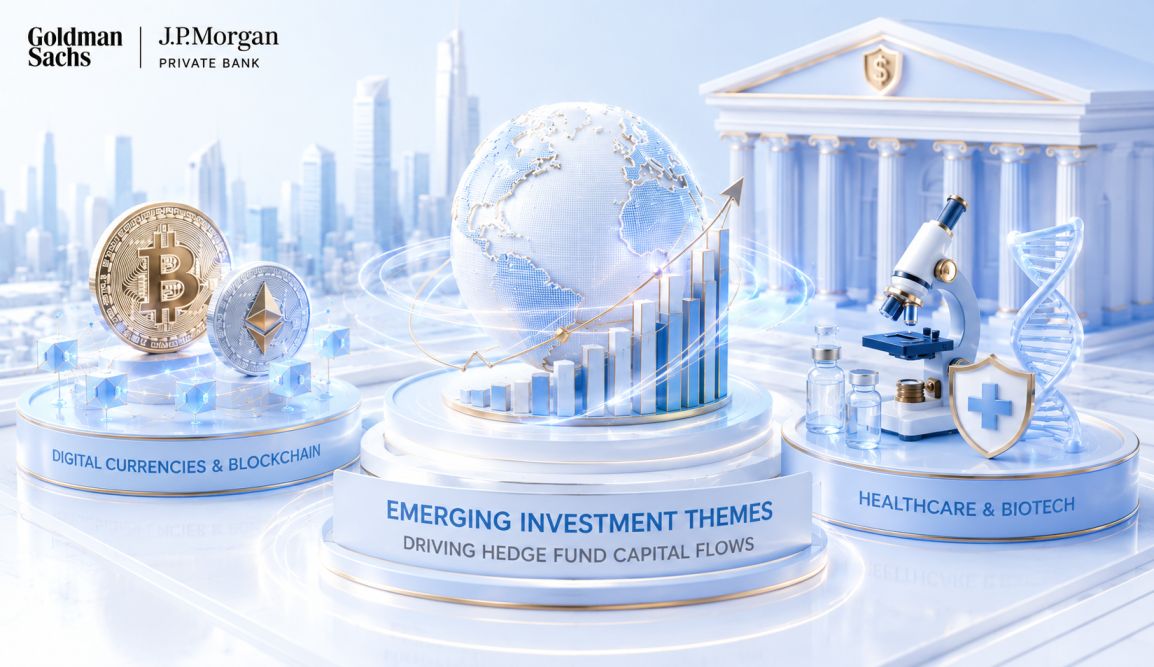
Digital Currencies and Blockchain: The Currency Layer Is Changing
The rise of digital assets is no longer a fringe bet for speculative funds. Institutional-grade crypto strategies — from bitcoin derivatives to tokenized real-world assets on blockchain rails — are becoming mainstream hedge fund allocations. For forex traders, this matters enormously. As central banks accelerate CBDC development in response to private crypto adoption, the structural demand dynamics for traditional fiat currencies are shifting. Monitoring hedge fund positioning in digital assets provides early signals on institutional risk appetite that often leads to broader currency market moves.
Healthcare and Biotech: Defensive Growth With Currency Implications
The pandemic-era acceleration in healthcare and biotech has proven durable. Hedge funds are maintaining heavy exposure to pharmaceutical innovation, genomics, and medical technology — sectors that attract global capital into specific equity markets. Economies with strong biotech sectors, like Switzerland and the United States, tend to see sustained current account improvements from intellectual property exports, which structurally supports their currencies. Watching where hedge funds concentrate healthcare bets gives forex traders a macro lens on durable current account trends.
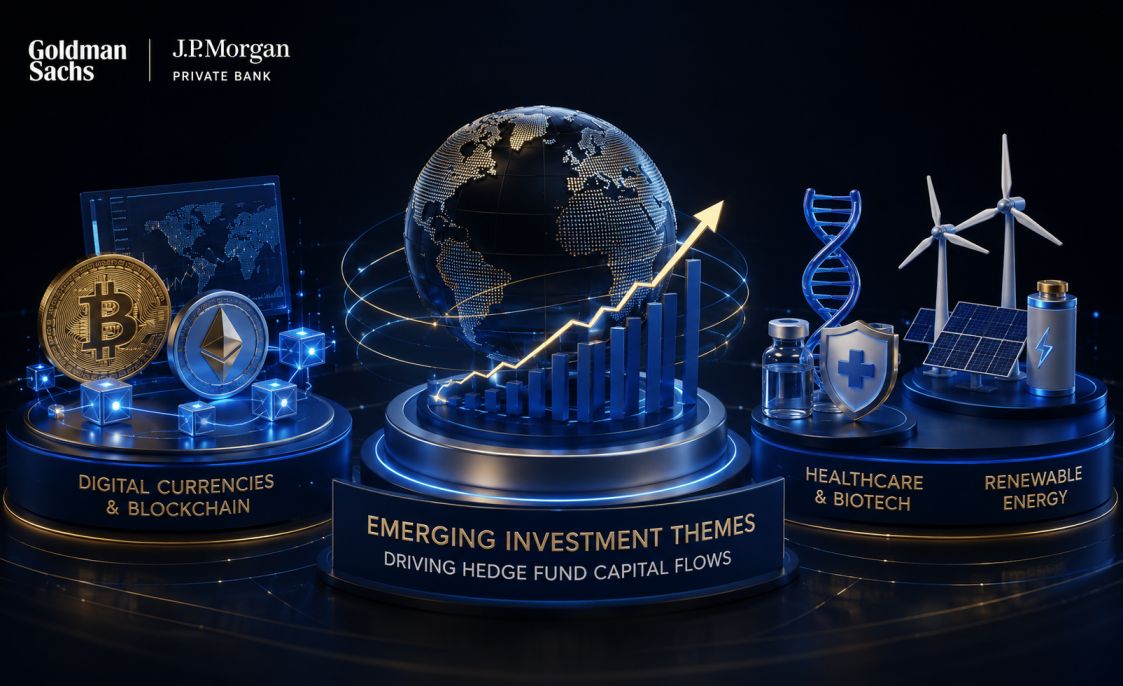
Renewable Energy: The Biggest Infrastructure Bet of the Decade
Climate anxiety plus policy tailwinds equals the biggest capital deployment cycle in renewable infrastructure the world has ever seen. Hedge funds are investing in solar, wind, energy storage, and green hydrogen at a pace that is rewriting the economic geography of energy production. For forex traders, this matters because energy exporters who fail to transition — economies whose currencies have historically correlated strongly with oil prices — face structural headwinds over medium-term horizons. Meanwhile, nations leading the energy transition attract patient institutional capital that supports their currencies even through short-term volatility.
04 — Your Action Plan5 Actionable Tips for Forex Traders to Use These Trends
Understanding hedge fund macro trends is powerful. Translating that understanding into trading edge is what separates readers from earners. Here's how to do it:
Monitor EU taxonomy updates, carbon pricing legislation, and G7 climate commitments. Regulatory ESG announcements reliably trigger institutional rebalancing flows — and currency movements that follow within days.
The CFTC Commitment of Traders report shows you where large institutional players are positioned. Combine COT divergences with macro ESG or tech themes to identify high-probability setups with institutional tailwinds.
You don't need satellite feeds. Global container shipping indexes, Google Trends for key commodities, and credit card spending trackers are freely available proxies for the signals institutional algos consume. Use them.
SEK, NOK transitioning toward green energy, EUR driven by ambitious climate targets — these currencies carry structural institutional demand tailwinds. Incorporate them into your medium-term macro framework.
With AI-driven institutional execution getting faster, the alpha window in breakout setups is compressing. Pre-plan your entries, set conditional orders, and reduce the gap between signal and execution in your trading workflow.
Frequently Asked Questions
Hedge funds are among the largest participants in global currency markets. When funds shift capital toward ESG-compliant economies, diversify into digital assets, or reallocate from energy exporters to renewable-energy leaders, these flows create sustained directional pressure on currency pairs. Retail traders who understand these macro themes gain an edge in reading medium-term currency trends — beyond what standard technical analysis can provide.
While institutional-grade satellite imagery or full credit card datasets remain expensive for retail traders, many useful proxies are freely accessible. Google Trends, Baltic Dry Index data, PMI sub-indices, shipping tracker websites, and publicly aggregated consumer spending indicators all provide signals similar to what alt-data systems process. The key is using them systematically as leading indicators rather than background noise.
ESG integration means incorporating Environmental, Social, and Governance criteria into investment screening and portfolio construction. For forex traders, it matters because multi-trillion-dollar institutional capital is being increasingly directed toward economies with strong ESG profiles — creating persistent, fundamental demand flows for their currencies. The euro, Scandinavian currencies, and the New Zealand dollar are all influenced by ESG-related institutional positioning in ways that go beyond traditional interest rate differentials.
AI-driven hedge fund systems can process thousands of data signals simultaneously and execute orders across multiple asset classes within milliseconds of identifying an opportunity. This has two implications for retail traders: breakout windows in trending currencies are shorter, and price-discovery following macro events happens faster. Adapting by pre-planning trade scenarios, using conditional orders, and focusing on higher-timeframe setups helps retail traders work with — rather than against — this institutional speed advantage.
Based on current hedge fund allocation themes: the EUR benefits from ESG leadership and green energy policy; CHF gains from biotech and healthcare sector strength; SEK and NOK are positioned as energy transition beneficiaries; while AUD faces headwinds from ESG screening of fossil fuel exposure. USD remains complex — benefiting from tech and healthcare thematic flows while facing ESG headwinds in some sub-sectors. Forex traders should view these as medium-to-long-term structural tilts, not short-term catalysts.
The Edge Is in Understanding the Big Picture
The hedge fund industry is not slowing down — it's accelerating into new strategies, new technologies, and new thematic frameworks at a pace that has no historical precedent. For forex traders, ignoring these macro shifts is trading blind. ESG capital flows are real and growing. AI-driven institutional execution is faster than ever. Blockchain and energy transition themes are rewiring the economic geography of entire currency zones.
The traders who outperform over the next decade will be those who do the uncomfortable work of understanding where the world's most sophisticated capital is flowing — and position themselves ahead of those currents rather than reacting after they've already moved. At fxTsignals.com, our signals are built on exactly this kind of macro-first, institutionally-informed thinking. Now you have the framework. Put it to work.
Ready to Trade Smarter in 2025?
Get institutional-grade forex signals, macro analysis, and real-time trade alerts — built for traders who want to stay ahead of the smart money, not behind it.