Smart Money Moves:
10 Hedge Fund Tips
Every Forex Trader Must Know
Hedge funds aren't just for billionaires. As a forex trader, understanding how institutional money moves gives you a decisive edge. From reading between the lines of fund performance to decoding fee structures, this guide breaks down the 10 most critical tips for navigating hedge fund investments — so you can trade smarter, protect your capital, and grow with confidence.
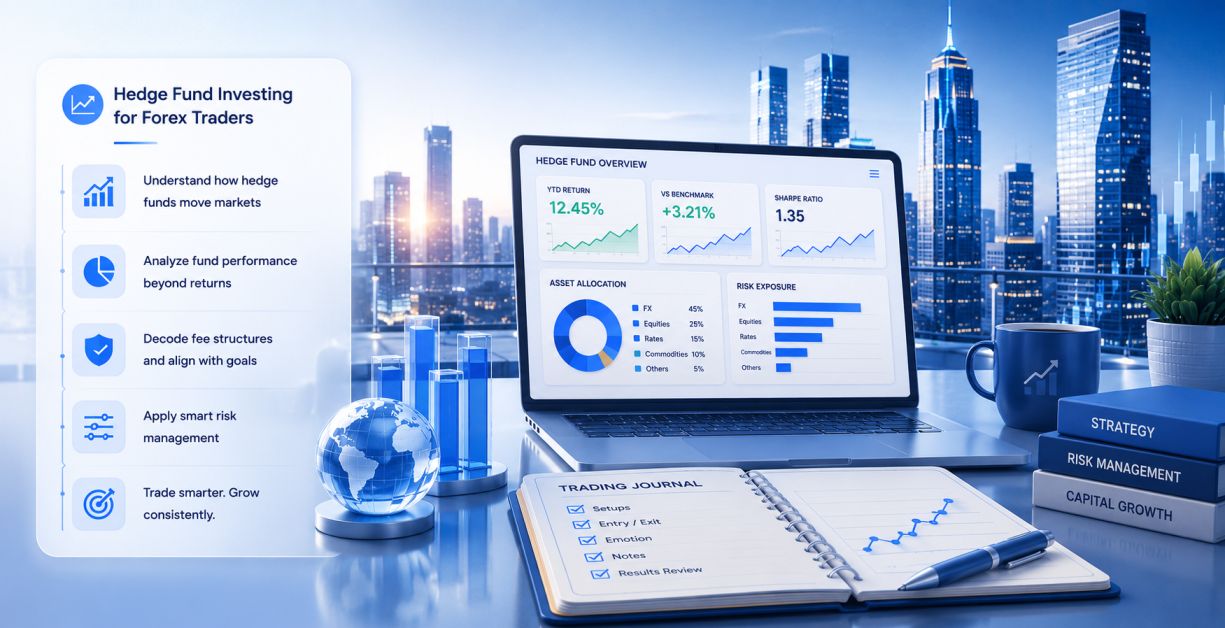
Assessing Hedge Fund Strategies

01Evaluate the Fund's Track Record
Before committing a single dollar to a hedge fund, dig deep into its history. Past performance across multiple market cycles is your clearest window into how fund managers actually operate under pressure — not just in bull markets, but when volatility spikes and liquidity dries up.
Compare the fund's returns against relevant benchmarks. A fund that consistently beats its index across bear markets, sideways trends, and rallies is demonstrating genuine skill — not just luck. As forex traders, you already understand that consistent edge over time is everything.
02Understand the Fund's Investment Strategy
Not all hedge funds are the same. Some trade long/short equities, others run event-driven plays or global macro bets — the very strategies that directly influence currency markets and the forex trades you make every day.
When you understand a fund's underlying methodology, you can gauge whether its risk profile matches yours. A global macro fund, for example, may take massive currency positions that ripple through forex markets — making it extremely relevant knowledge for active forex traders.
03Diversify Across Hedge Fund Strategies

The golden rule in any investment is diversification — and hedge fund investing is no exception. Concentrating all your capital in a single fund or strategy exposes you to unnecessary concentration risk. Instead, blend strategies strategically.
- Mix equity-focused funds with global macro funds for broader market exposure
- Combine long-only approaches with market-neutral strategies to smooth volatility
- Consider allocating across different geographies and asset class orientations
- Balance high-return aggressive strategies with more conservative capital-preservation plays
- Review correlation between your chosen funds — low correlation is the diversification sweet spot
Think of this the same way you build a forex portfolio — you wouldn't trade only one currency pair, right? Spreading across uncorrelated strategies creates a portfolio that can weather a wide range of market environments.
Due Diligence on Hedge Fund Managers
04Research the Fund Manager's Credentials
The fund is only as good as the person running it. Before you invest, research the manager's credentials, career history, and past track record at previous funds. Have they managed through at least one full market cycle? Did they preserve capital during a crisis like 2008 or the COVID crash?
Look for managers who have demonstrated adaptability — not just raw returns in rising markets. Regulatory disclosures, third-party audits, and industry databases can reveal red flags that marketing materials never will.
05Assess the Manager's Alignment of Interests
Here's a question every smart investor asks: does the fund manager have meaningful personal capital invested alongside yours? When a manager's own wealth is on the line, every investment decision suddenly becomes a lot more careful.

06Review the Fund Manager's Risk Management Processes
As a forex trader, you already know that risk management isn't optional — it's the entire game. The same logic applies to hedge funds. A rigorous risk framework should be non-negotiable. Ask specifically about position sizing protocols, stop-loss disciplines, maximum drawdown limits, and how the fund manages liquidity risk during extreme market events.
A fund manager who cannot clearly explain their risk processes in plain terms is a major warning sign. Complexity is not sophistication.
Understanding Fees and Costs
07Evaluate the Fee Structure
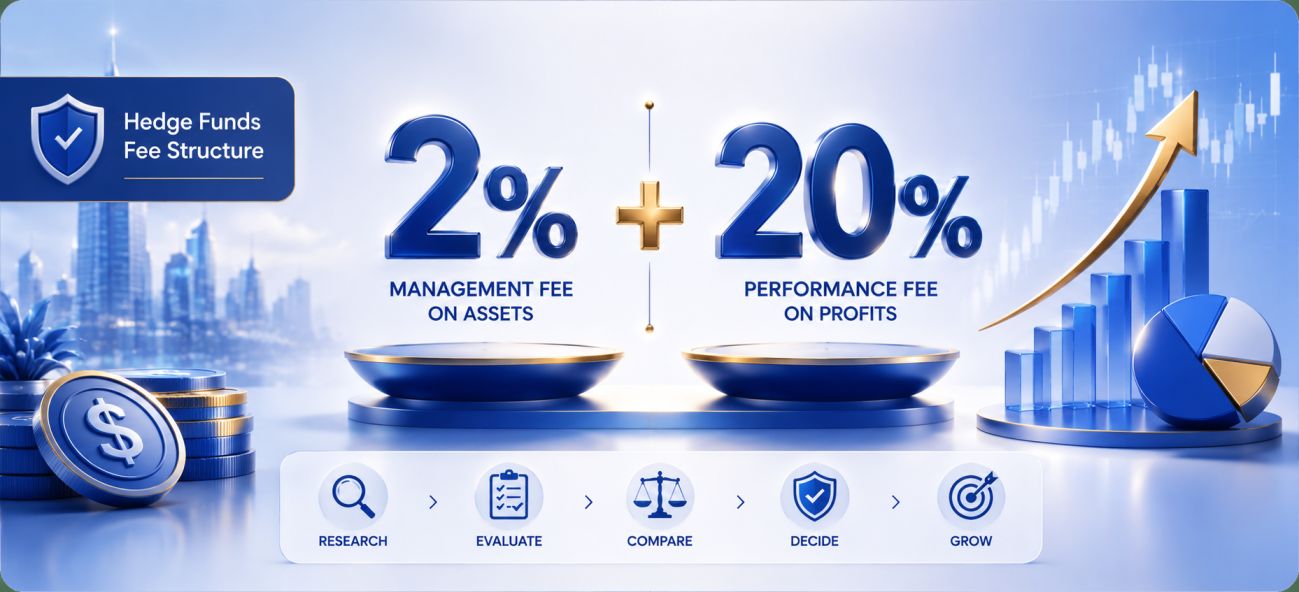
Hedge funds are notorious for their "2 and 20" fee model — 2% annual management fee on assets under management, plus 20% of any profits generated. While performance-based fees can align incentives, they can also dramatically erode your actual returns.
Here's the hard math: a fund that earns 15% gross returns but charges 2% management + 20% performance only delivers about 10.4% net to you. Over a decade, that difference is enormous. Always model fee impact before committing capital.
- Check whether a high-water mark provision is in place — it prevents managers from charging performance fees on recovery from losses
- Compare fee structures across similar funds before making a final decision
- Consider whether the net-of-fees return justifies the added complexity versus other investment vehicles
08Consider Other Associated Costs
Beyond the headline fees, a variety of operational costs quietly chip away at your returns — administration charges, legal fees, auditing costs, technology expenses, and fund-specific charges. These can add another 0.5–1% annually in hidden drag.
Regular Monitoring & Ongoing Due Diligence

09Monitor the Fund's Performance
Investing is not a "set and forget" activity — especially in hedge funds. Markets change, managers evolve (or decline), and strategies that worked in one regime may fail entirely in another. Build a disciplined review cadence into your investment process.
If a fund's results significantly diverge from its stated strategy or historical patterns, that's a red flag worth investigating thoroughly. Don't let complacency cost you capital that took years to build.
What to review quarterly:
- Absolute and relative performance versus benchmark
- Drawdown depth and duration compared to fund's historical average
- Any changes in fund personnel, especially at the PM level
- Investor letters and commentary for strategy consistency
10Stay Informed and Continuously Learn
The financial world never stops evolving, and neither should you. Macroeconomic shifts, regulatory changes, and emerging market dynamics constantly reshape the investment landscape — and as a forex trader at fxTsignals.com, you already know this better than most.
Subscribe to quality financial research, follow regulatory updates, study central bank policy shifts, and never stop sharpening your analytical edge. The traders and investors who thrive long-term are simply the ones who never stop learning.
"Successful investing in hedge funds demands diligent research, active ongoing monitoring, and an unwavering long-term perspective — not just at entry, but throughout the entire holding period."
— fxTsignals.com | Professional Trading InsightsFrequently Asked Questions
Got questions about hedge fund investing? Here are the answers traders ask us most often at fxTsignals.com.
Most hedge funds require a minimum investment between $100,000 and $1 million, and they are generally restricted to accredited investors — individuals with a net worth above $1 million or consistent high income. Some funds of funds offer lower entry points, typically $25,000–$50,000, allowing smaller investors a degree of access to the hedge fund universe.
Global macro hedge funds are among the biggest players in forex markets. They take large directional positions in currencies based on macroeconomic analysis — interest rate differentials, central bank policy, geopolitical events, and trade flows. Understanding their positioning can give forex traders valuable context for major currency pair moves, especially around high-impact economic events.
The "2 and 20" model has faced pressure and evolved significantly. Many mid-tier funds now charge closer to 1.5% management and 15–18% performance fees. Elite funds with strong track records still command the full 2 and 20 — or even higher. Always negotiate fee terms when possible, and never evaluate a fund without modeling the full net-of-fee return over a multi-year horizon.
Direct access is limited for most retail traders due to regulatory accreditation requirements and high minimums. However, retail traders can gain exposure through hedge fund ETFs, liquid alternatives mutual funds, and managed accounts that mimic hedge fund strategies. More importantly, understanding how hedge funds think and operate is a significant edge for any active trader — regardless of direct investment.
The most common mistake is chasing recent performance — investing after a fund has had its best years, only to experience the inevitable mean-reversion period. Strong short-term returns can mask strategy drift, excessive leverage, or simply a favorable market environment. The smartest investors look for funds with consistent long-term Sharpe ratios, disciplined risk management, and transparent manager communication — not just the biggest recent headline numbers.
Ready to Trade Like an Institutional Pro?
Join thousands of forex traders who sharpen their edge daily with fxTsignals.com — premium signals, real-time analysis, and a community built for serious traders.
Join Copy Trading fxTsignals →