Top 5 Major Mistakes in Forex Trading — And How Smart Traders Actually Avoid Them

Why Most Forex Traders Fail Before They Even Begin
The forex market is one of the most exciting financial arenas in the world — open 24 hours, 5 days a week, and packed with opportunity. But here's the uncomfortable truth: the vast majority of retail traders end up losing money, not because the market is rigged, but because they keep repeating the same costly mistakes.
Whether you're brand new to trading or you've been at it for a few years, understanding these five major pitfalls could be the difference between blowing your account and actually building consistent, long-term profits. At fxTsignals.com, we've seen these patterns play out time and time again — so let's break them down honestly, practically, and without the usual jargon.

Lack of Proper Risk Management
If there is one thing that separates traders who survive the long run from those who blow their accounts in three months, it's how they manage risk. This is not a boring, technical concept — it is literally the backbone of every professional trading career.
No Stop Loss Orders
Trading without a stop loss is like driving at high speed without a seatbelt. You might be fine for a while, but when something goes wrong — and in forex, it always eventually does — the consequences can be devastating. Stop loss orders automatically close a trade when it hits a predetermined level, capping your downside before it spirals out of control.
Overleveraging Your Account
Leverage is a double-edged sword. A 1:500 leverage ratio sounds thrilling until a 0.2% move wipes you out. Professional traders routinely use leverage conservatively — often no more than 1:10 or 1:20 — precisely because they know that protecting capital is the first rule of the game.
Ignoring the Risk-Reward Ratio
Before entering any trade, ask yourself: how much am I risking, and what's my potential reward? A healthy risk-reward ratio of at least 1:2 means even if you win only half your trades, you'll still come out ahead over time.
Never risk more than 1–2% of your total account balance on a single trade. This simple rule alone can extend your trading life dramatically.
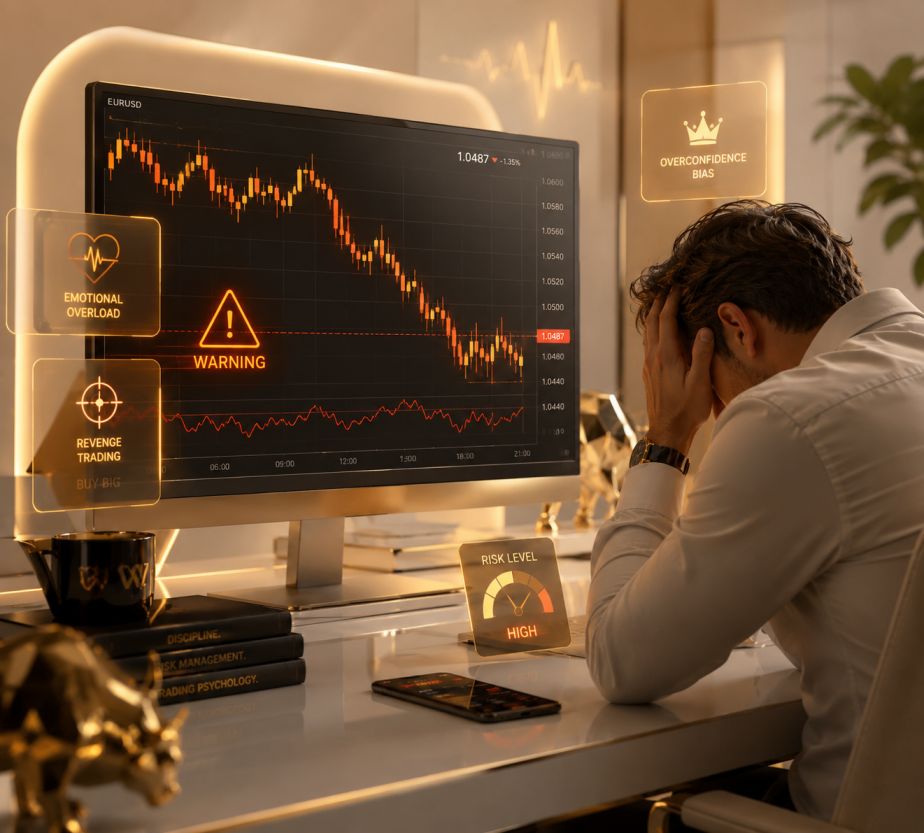
Emotional Trading — The Silent Account Killer
Let's be real for a moment: every trader, no matter how experienced, has made an emotion-driven trade at some point. The problem isn't feeling emotions — it's letting them drive your decisions at the chart.
Trading Out of Fear
Fear shows up in two damaging ways. First, it causes you to exit winning trades too early because you're afraid the market will reverse. Second, it stops you from entering perfectly good setups because of a recent loss. In both cases, fear is quietly sabotaging your edge.
Chasing Losses
You've just taken a loss. The instinct to immediately re-enter the market and "win it back" is one of the most dangerous impulses in trading. This behavior — known as revenge trading — leads traders to increase their position sizes at the worst possible moments, turning a manageable loss into an account-threatening one.
Overconfidence After a Winning Streak
A string of wins can be just as dangerous as a string of losses. When everything seems to be going right, it's easy to start deviating from your plan, taking larger positions, or ignoring warning signs in the market.
- Keep a trading journal to track emotional patterns alongside trade results
- Set a daily loss limit and walk away when you hit it — no exceptions
- Wait at least 15 minutes after a loss before considering any new trade
- Follow your system mechanically, not your mood
Lack of Education and Preparation
Forex trading is not a lottery. It's a skill — one that takes real time and genuine effort to develop. Yet, a staggering number of traders dive in with little more than a YouTube video under their belt and a dream of financial freedom. The result is almost always painful.
Insufficient Market Research
Understanding what moves currency pairs requires knowledge of economic indicators like GDP, inflation data, interest rate decisions, and central bank policy. Traders who skip this homework are essentially guessing — and the market doesn't reward guessing.
Neglecting Technical Analysis
Price action, support and resistance levels, moving averages, RSI, MACD — these aren't just buzzwords. They're tools that, when used correctly, provide genuine insight into where a market might be heading.
Trading Without a Written Plan
A trading plan isn't just a nice-to-have — it's your operational manual. It should define your entry and exit criteria, the currency pairs you trade, your risk parameters, and your daily routine. Without it, every session becomes improvised, and improvisation in forex is rarely profitable.
Spend at least 90 days on a demo account before going live. Use that time to test your strategy rigorously and build a documented trading plan.

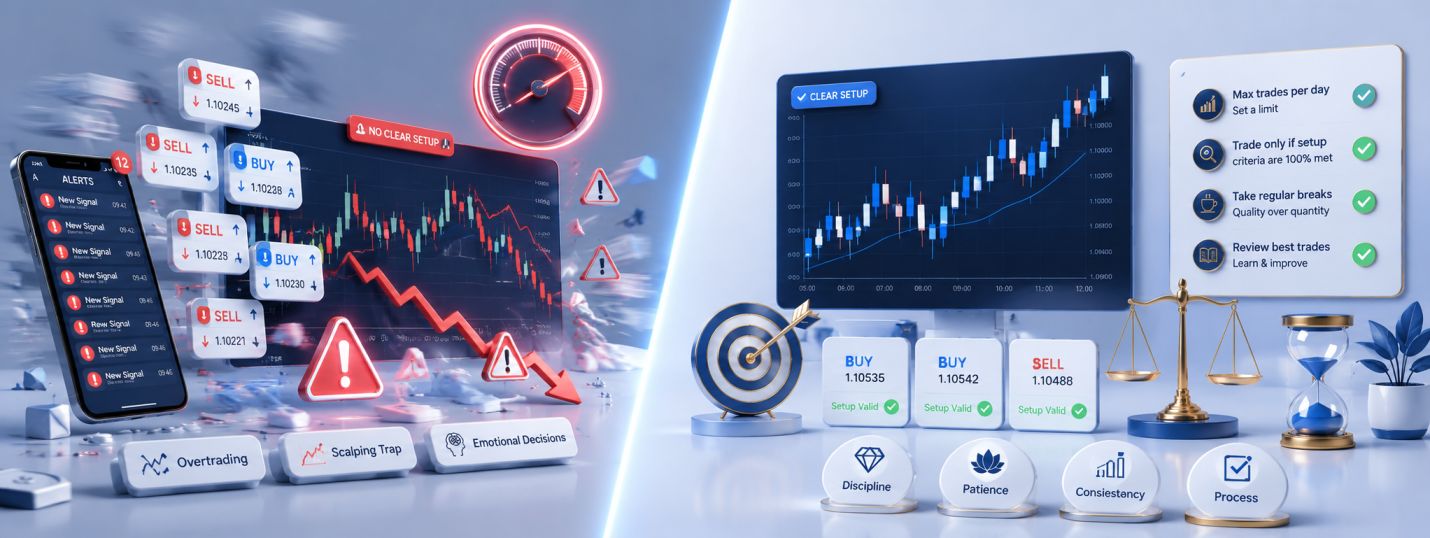
Overtrading and Impatience
More trades do not equal more profits. In fact, for most traders, the opposite is true. The relentless urge to be in the market at all times is one of the clearest signs that a trader is operating emotionally rather than strategically.
Trading Without Clear Setups
If you can't clearly articulate why you're entering a trade before you enter it, you probably shouldn't. A valid setup has specific criteria: a particular chart pattern, a confluence of indicators, a key level being respected. If those criteria aren't met, there is no trade — simple as that.
The Scalping and Day Trading Trap
Short-term trading strategies like scalping can work, but they demand extraordinary discipline and precision. Many traders are drawn to the excitement of constant activity rather than the methodology of a sound strategy.
The Power of Patience
Some of the best traders in the world freely admit they spend most of their time watching, not trading. Patience — waiting for the highest-probability setups — is arguably the most underrated skill in forex.
- Set a maximum number of trades per day — and enforce it strictly
- Only trade when your pre-defined setup criteria are 100% met
- Take regular breaks from the screens — market fatigue is real
- Review your best trades — they were likely your most patient ones
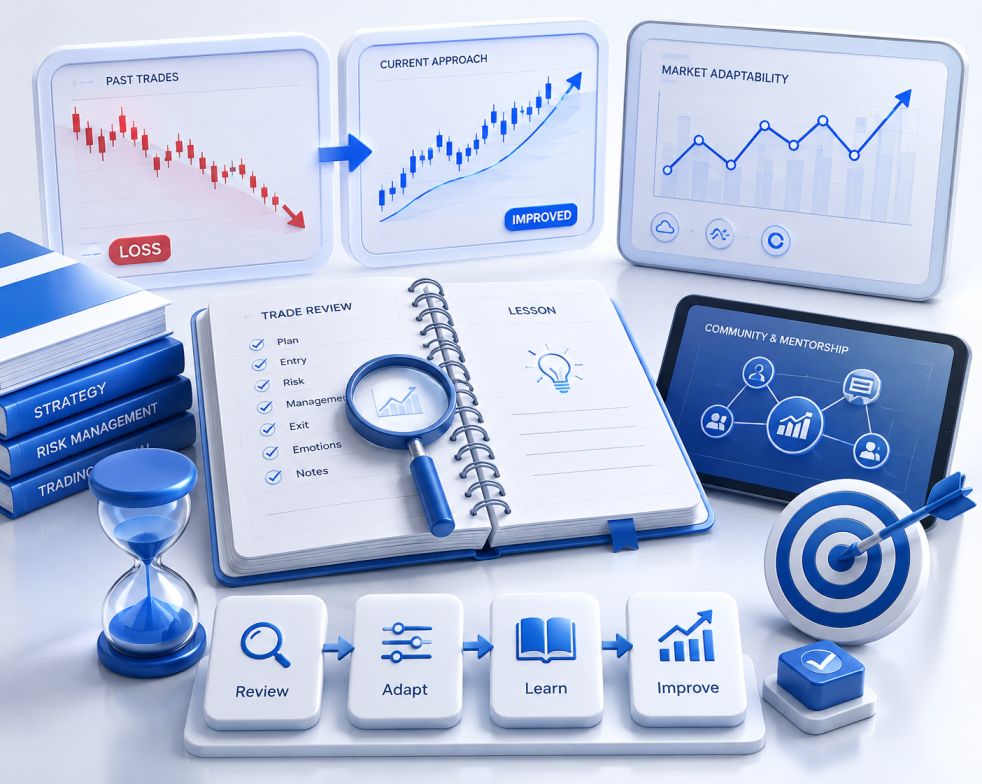
Failure to Adapt and Learn from Mistakes
The forex market is a living, breathing entity. It shifts, evolves, and regularly humbles those who refuse to evolve with it. Traders who find a strategy that works in a trending market and then blindly apply it during a range-bound market will quickly discover why adaptability is non-negotiable.
Skipping the Post-Trade Review
Every closed trade — win or loss — contains valuable data. Without reviewing your trades regularly, you're essentially ignoring the feedback the market is giving you. Successful traders maintain detailed journals and routinely analyze what worked, what didn't, and why.
Refusing to Evolve with the Market
A strategy that worked brilliantly during 2020's volatility may be completely useless in today's market environment. Good traders constantly monitor their performance metrics and aren't afraid to retire or adjust strategies that are no longer delivering results.
Going It Alone When You Don't Have To
There's a certain ego attached to trading — the lone-wolf narrative. The truth is that mentors, communities, and signal services like fxTsignals.com can genuinely shorten your learning curve. Learning from someone who has already made the mistakes you're about to make is simply smart.
Frequently Asked Questions
Trading without proper risk management — specifically, trading without stop loss orders and overleveraging — is the most dangerous combination for beginners. It only takes one bad trade with no stop loss and excessive leverage to wipe out an entire account. Building strong risk habits from day one is the foundation everything else rests on.
The most effective approach is a combination of process and discipline: have a written trading plan with specific rules, set a daily loss limit, keep a trade journal, and step away from screens when you feel agitated. Over time, consistently following a rules-based system reduces the emotional highs and lows that cause poor decision-making.
Most professionals recommend a minimum of 3–6 months of consistent demo trading before going live, coupled with solid study of technical analysis, fundamental analysis, and risk management. The goal isn't just to learn concepts — it's to develop tested, repeatable habits under realistic market conditions.
It entirely depends on your strategy and timeframe. A swing trader might take 3–5 trades per week; a day trader might take 2–4 per day. The key is that every trade must meet your full setup criteria. Many experienced traders find that reducing trade frequency while improving setup selectivity actually increases overall profitability significantly.
A reputable signal service can be a powerful learning tool, especially for newer traders. At fxTsignals.com, signals come with analysis and reasoning — which means you're not just copying trades but understanding the logic behind them. Over time, studying professional setups alongside your own analysis builds the skills needed for independent trading success.
The Bottom Line: Trade Smarter, Not Harder
Forex trading is one of the few arenas where discipline consistently beats talent. The five mistakes covered in this guide — poor risk management, emotional trading, lack of education, overtrading, and refusing to adapt — are not random. They form a predictable cycle that traps the majority of traders who enter this market.
The good news? Every single one of them is avoidable. Not through some secret strategy or exotic indicator, but through intentional practice, honest self-reflection, and a genuine commitment to the craft of trading.
At fxTsignals.com, we exist to help traders at every level make smarter, more informed decisions. Whether you're just starting out or looking to refine an already-solid approach, the principles outlined here are timeless. Come back to them often. The market will keep testing you on all of them.
Ready to Trade with Confidence?
Join thousands of traders who use fxTsignals.com to access professional-grade signals, real-time market analysis, and a community that helps you grow. Stop making the mistakes that cost most traders their accounts — start trading smarter today.
Get Copy Trading →