Hedging Forex: The Smart Trader's Complete Guide to Managing Currency Risk
Discover proven forex hedging strategies that protect your capital, reduce exposure to market volatility, and keep you trading confidently — no matter what the market throws at you.

Why Every Forex Trader Needs a Hedging Strategy
Picture this: You've analyzed the market, placed your trades carefully, and everything looks good — then a surprise central bank announcement sends your currency pair into freefall. Sound familiar? In the world of foreign exchange trading, these moments don't just happen occasionally. They happen regularly, and often without warning.
This is exactly why hedging forex has become one of the most essential skills in a trader's toolkit. Whether you're managing a modest personal account or overseeing larger institutional positions, understanding how to hedge your forex trades can be the difference between a manageable loss and a devastating one.
In this comprehensive guide, we'll walk you through everything you need to know about forex hedging — from the core concept to practical strategies you can implement today. Let's get into it.
What Is Hedging Forex — And How Does It Actually Work?
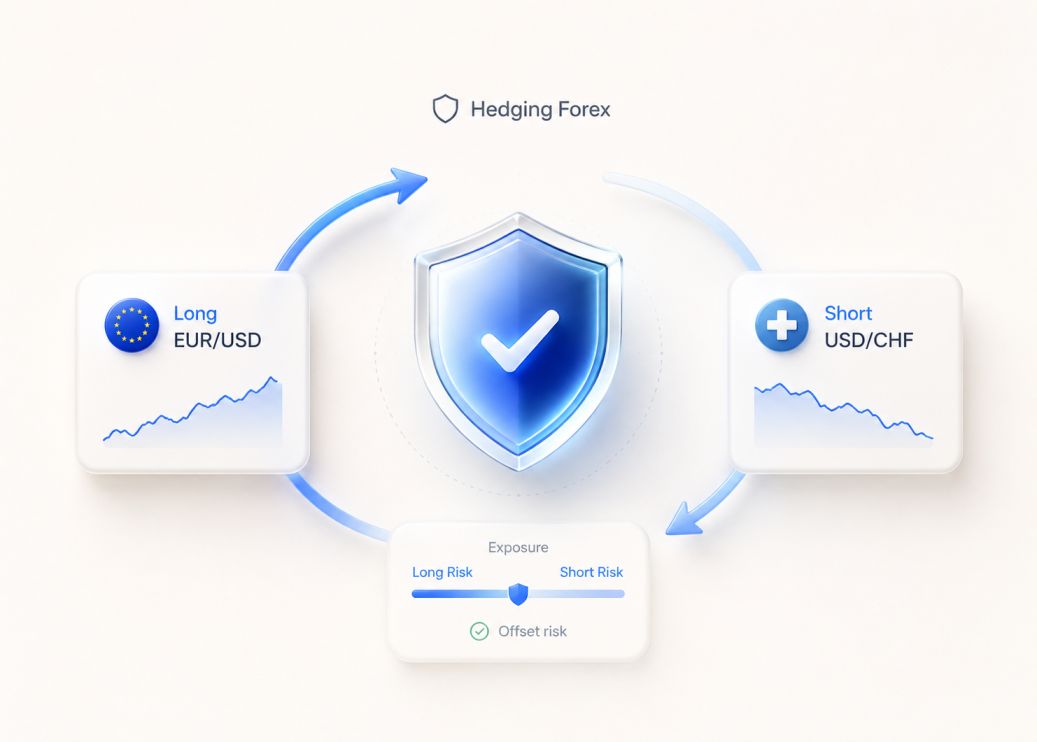
At its heart, hedging forex is a risk management strategy where traders open offsetting positions in correlated currency pairs or other financial instruments to reduce potential losses. Think of it like buying insurance for your car — you hope you never need it, but you're glad it's there when something goes wrong.
When you hedge a forex position, you're essentially placing a counterbalancing trade. If your primary position moves against you, your hedge position gains value, cushioning the blow. The goal isn't necessarily to make a profit from the hedge itself — it's to limit how much you can lose.
A Simple Real-World Example
Say you hold a long position on EUR/USD, expecting the Euro to strengthen. But uncertainty around upcoming European economic data makes you nervous. To hedge, you could simultaneously open a short position on a correlated pair like USD/CHF. If the Euro weakens and your long position loses, the USD/CHF short can offset some of those losses. Clean, practical, effective.
4 Proven Forex Hedging Strategies You Can Use Right Now
There's no single "best" hedging strategy for all situations. The right approach depends on your trading style, risk tolerance, and current market conditions. Here are the four most widely used techniques:
Spot Contracts
The simplest hedging method. Buy or sell currency pairs at the current market rate to offset losses in another open position. Ideal for short-term traders who want quick, straightforward protection without complex instruments.
Forward Contracts
Lock in a specific exchange rate for a future date, regardless of where the market moves. Perfect when you anticipate a potential currency depreciation and want to guarantee a rate before it shifts against you.
Options Contracts
Buy the right — but not the obligation — to buy or sell at a set price within a specified window. Put options protect against downside moves; call options guard against unexpected upside spikes. More flexible, but comes with a premium cost.
Cross Hedging
Hedge using a correlated but different currency pair. For example, hedging a long EUR/JPY position by shorting USD/JPY, leveraging the natural correlation between these pairs to reduce overall exposure.


The Real Benefits of Hedging Your Forex Positions
Beyond just protecting against losses, a well-executed hedging strategy offers several meaningful advantages that can genuinely transform how you trade:
- Minimize Risk Exposure — Cap your potential losses during high-volatility events like central bank meetings, geopolitical surprises, or major economic data releases.
- Increased Flexibility — React to fast-changing market conditions without having to close your primary positions entirely. Hedging gives you breathing room.
- Preserve Capital — Protect your trading account from significant drawdowns, ensuring you always have enough liquidity to trade another day.
- Enhance Profit Potential — When used strategically, hedging lets you stay in profitable longer-term positions without being forced out by short-term volatility.
- Peace of Mind — Knowing your downside is capped allows you to make more rational, less emotion-driven trading decisions.
Hedging is like having an insurance policy for your forex trades — it cushions the blow and protects your financial wellbeing. In the realm of forex trading, hedging separates the cautious from the careless, the prepared from the vulnerable.— Forex Risk Management Expert
Actionable Tips to Start Hedging Smarter Today
Knowing the strategies is one thing. Applying them correctly is another. Here's what experienced traders at fxTsignals.com recommend when implementing a forex hedging plan:
Start With Correlation Analysis
Before placing any hedge, understand how your currency pairs move relative to each other. Pairs with high positive or negative correlation make the best hedging candidates. Tools like currency correlation matrices are freely available and should be part of your regular analysis routine.
Don't Over-Hedge
Hedging every single position defeats the purpose of trading. The goal is strategic risk reduction, not eliminating all exposure. Over-hedging can eat into your profits through spread costs and reduced position efficiency. Be selective — only hedge when your risk analysis genuinely justifies it.
Monitor the Cost of Your Hedge
Every hedge has a cost — whether it's the spread on a spot contract, the premium on an options contract, or the swap rates on held positions. Always calculate whether the protection is worth the expense relative to your potential loss exposure.
Use Hedging Around High-Impact Events
The best time to hedge is before major market-moving events: NFP reports, FOMC decisions, ECB announcements, or unexpected geopolitical developments. Setting up your hedge before these events (not during) gives you the cleanest entry and most effective protection.
- Always check an economic calendar before major positions
- Pre-plan your hedge entry and exit criteria
- Review correlation data weekly, as relationships can shift
- Test your hedging logic on a demo account before going live
- Keep a trading journal that tracks hedging performance over time

Common Hedging Mistakes Traders Make (And How to Avoid Them)
Even seasoned traders slip up when it comes to hedging. Here are the most common errors to watch for:
- Hedging too late — Waiting until a trade is already deep in the red makes hedging far less effective. Build your hedge plan before entering the primary trade.
- Ignoring swap rates — Holding hedged positions overnight accumulates swap charges that can quietly erode your capital over days or weeks.
- Using uncorrelated pairs — Hedging with pairs that don't have a strong correlation provides false security. Always verify correlation before execution.
- Treating hedging as a fix-all solution — Hedging manages risk; it doesn't eliminate it. It's one tool among many in a complete risk management framework.
Frequently Asked Questions About Forex Hedging
Hedging is legal in most jurisdictions and permitted by the majority of international forex brokers. However, brokers regulated in the United States under FIFO (First In, First Out) rules may restrict direct hedging of the same pair. Always check your broker's terms and conditions before implementing a hedging strategy.
Yes, but beginners should start with simpler methods like spot contract hedging before progressing to options or cross-hedging. It's strongly recommended to practice on a demo account first, and to study currency correlations thoroughly before risking real capital on a hedge.
No strategy guarantees a profit. Hedging significantly reduces your risk exposure, but it comes with costs — spreads, premiums, and swap fees. An imperfect or poorly timed hedge can still result in losses. The goal of hedging is loss limitation, not loss elimination. It's risk management, not a guarantee.
It depends on your primary position. EUR/JPY and USD/JPY are commonly used together due to their high historical correlation. Similarly, AUD/USD and NZD/USD often move in tandem. Always check current correlation data — relationships shift over time, especially during major macroeconomic events.
A stop-loss exits your trade when it hits a predetermined loss level — you're out of the market. Hedging keeps both your primary and offsetting positions open simultaneously. This means you remain in the market and can benefit if conditions reverse, while still being protected against continued adverse moves. They serve different purposes and many traders use both together.
Final Thoughts: Make Hedging Part of Your Trading DNA
Forex markets reward those who are prepared. The traders who consistently survive and thrive aren't necessarily the ones who predict the market perfectly — they're the ones who know how to manage risk when the market moves against them.
Hedging forex isn't just a technique for the pros. It's an essential risk management mindset that every serious trader should develop. Whether you use spot contracts for quick protection, forward contracts to lock in future rates, or options for flexible coverage, the key is to have a plan before you need it.
The strategies covered in this guide — from simple spot hedging to sophisticated cross-hedging techniques — give you a practical starting point. Study them, test them, and make them your own. Your trading account will thank you for it.

Ready to Trade Smarter with Expert Signals?
Join thousands of traders who use fxTsignals.com to stay ahead of the market, manage risk confidently, and never get caught off guard again.
Trade with fxTsignals →